{config.cms_name} Home / Polyester Yarn Products / Polyester DTY / Semi-Dull Polyester DTY
ZHENYI CHEMICAL FIBER
Semi-Dull Polyester DTY

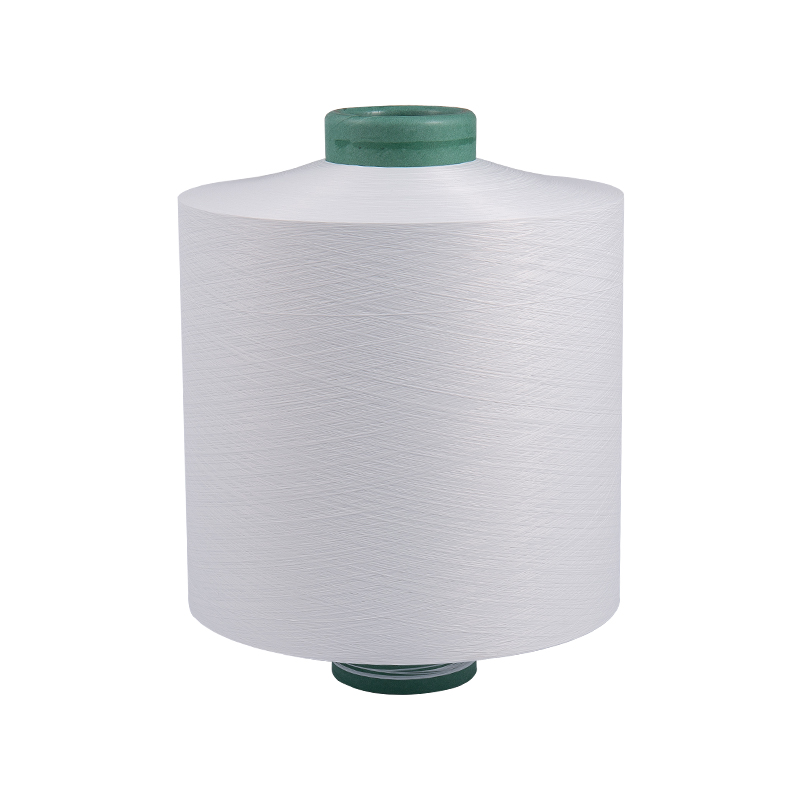
Semi-dull polyester DTY (SD) has a low-luster appearance and is used in apparel and home-textile fabrics. Available specifications vary by denier, filament count, color and intermingling level.

ABOUT ZHENYI CHEMICAL FIBER

Built on manufacturing experience dating back to 2007, Zhenyi Chemical Fiber brings together the Weien and Baoyi production bases under an integrated business system. We specialize in the production and sales of polyester DTY, while international trade and customer support are provided by Shoyee International Trading Co., Ltd.

Weien Intelligent Manufacturing (Jiaxing) Co., Ltd. operates the Weien production facility, with a site area of approximately 13,300 m² (20 mu). Tongxiang Baoyi Textile Co., Ltd. operates the Baoyi production facility, with a site area of approximately 10,000 m² (15 mu).

Together, the two facilities have a total production workshop floor area of approximately 100,000 m² and are equipped with 100 draw-texturing machines, providing a combined polyester DTY production capacity of up to 400 metric tons per day. They manufacture DTY in a range of deniers, filament counts, luster types and intermingling levels for customers in China and overseas.

2007

MANUFACTURING SINCE

INDUSTRY KNOWLEDGE
  • Why Semi-Dull Is the Default Choice for General Apparel Fabric
  • TiO₂ Content and Why It Isn't Just About Color
  • HIM vs SIM for Semi-Dull: A Practical Selection Guide
  • Ordering Notes Specific to This Finish
  • Why Semi-Dull Is the Default Choice for General Apparel Fabric

    Semi-dull sits between bright and full-dull on the luster scale, which is exactly why it's the most frequently ordered finish across knitting mills. Semi-Dull Polyester DTY reflects enough light to avoid the flat, chalky look of full-dull yarn, while staying subdued enough not to read as "shiny" or synthetic-looking on finished garments. Zhenyi Chemical Fiber produces this finish across raw-white, HIM and SIM constructions specifically because it covers the widest range of downstream fabric types without special-order lead time.

  • TiO₂ Content and Why It Isn't Just About Color

    The "semi" in semi-dull refers to a mid-level titanium dioxide (TiO₂) delustering agent added during melt spinning, which scatters light without fully blocking it. This TiO₂ level also has a secondary effect on dyeing: it changes how light penetrates the filament during dye uptake, which is part of why semi-dull and bright yarns of the identical color recipe can still read as slightly different shades on the loom. If color-matching across a bright and semi-dull component is critical to your design, plan a joint dye lab dip rather than assuming the recipe transfers directly.

  • HIM vs SIM for Semi-Dull: A Practical Selection Guide

    Between the HIM and SIM options offered here, the decision usually comes down to machine speed and downstream tension. HIM's tighter intermingle points hold up better on high-speed circular knitting and warping, resisting filament splay during unwinding. SIM allows a slightly softer hand and more filament mobility, which some weft-knit constructions prefer for drape. If your mill hasn't specified a preference, HIM is the safer default for high-speed production runs.

  • Ordering Notes Specific to This Finish

    Because Zhenyi Chemical Fiber runs this finish across three item variants, quotations move faster when the RFQ already specifies which of the three — raw white, HIM or SIM — is intended, alongside denier and filament count. Requesting a physical shade card or raw-yarn sample before bulk order is a standard step, and one worth taking even for a well-known specification like Semi-Dull Polyester DTY, since batch-to-batch luster can shift very slightly with TiO₂ dispersion.