
{config.cms_name} Home / Polyester Yarn Products / Polyester DTY / Cationic Polyester DTY
ZHENYI CHEMICAL FIBER
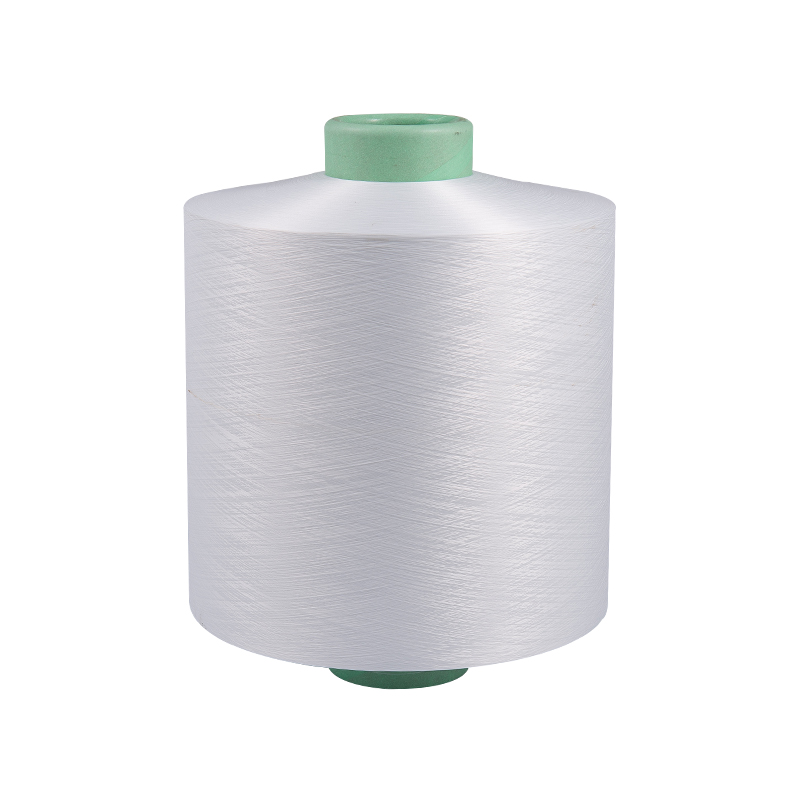
Cationic Polyester DTY

Cationic polyester DTY is used for cationic-dyeable fabrics. Available specifications vary by denier, filament count and intermingling level.

ABOUT ZHENYI CHEMICAL FIBER

Built on manufacturing experience dating back to 2007, Zhenyi Chemical Fiber brings together the Weien and Baoyi production bases under an integrated business system. We specialize in the production and sales of polyester DTY, while international trade and customer support are provided by Shoyee International Trading Co., Ltd.

Weien Intelligent Manufacturing (Jiaxing) Co., Ltd. operates the Weien production facility, with a site area of approximately 13,300 m² (20 mu). Tongxiang Baoyi Textile Co., Ltd. operates the Baoyi production facility, with a site area of approximately 10,000 m² (15 mu).

Together, the two facilities have a total production workshop floor area of approximately 100,000 m² and are equipped with 100 draw-texturing machines, providing a combined polyester DTY production capacity of up to 400 metric tons per day. They manufacture DTY in a range of deniers, filament counts, luster types and intermingling levels for customers in China and overseas.

2007

MANUFACTURING SINCE

INDUSTRY KNOWLEDGE
  • What Actually Makes a Yarn "Cationic Dyeable"
  • Why Cationic Yarn Enables Deeper, More Saturated Shades
  • Raw White vs HIM: Matching Construction to Dye Method
  • A Note on Post-Finishing Compatibility
  • What Actually Makes a Yarn "Cationic Dyeable"

    Standard polyester filament resists cationic (basic) dyes because its polymer chain lacks the acidic dye sites those dyes bind to. Cationic Polyester DTY is spun from a modified copolymer — typically with a sulfonate co-monomer built into the chain — that creates those binding sites during polymerization, at the chip stage, long before the yarn is textured. Zhenyi Chemical Fiber sources this modified chip specifically to produce cationic-dyeable yarn rather than attempting to treat standard polyester after the fact, which does not achieve the same colorfastness.

  • Why Cationic Yarn Enables Deeper, More Saturated Shades

    Because cationic dyes bond more strongly to the modified polymer's dye sites than disperse dyes bond to standard polyester, cationic yarn can typically achieve deeper navy, black and saturated color tones with less dye and shorter dyeing cycles. This is one reason cationic DTY is popular for space-dyed or heather-effect yarns blended with standard polyester in the same fabric — the two fiber types take dye differently in the same bath, producing a two-tone or melange effect from a single dye recipe.

  • Raw White vs HIM: Matching Construction to Dye Method

    Raw white cationic DTY suits piece-dyed fabric where color is applied after knitting or weaving, while HIM (heavy intermingle) construction is generally chosen when the fabric will run at higher machine speeds or undergo more mechanical handling before dyeing. Confirming which dyeing route your mill plans to use — piece dye, yarn dye or space dye — before ordering helps determine which of these two constructions is the better fit.

  • A Note on Post-Finishing Compatibility

    Because the base chip modification only affects dye affinity, cationic yarn remains fully compatible with standard post-processing such as anti-pilling or anti-static finishing applied at the fabric stage. If your application needs both deep, fast color and a specific hand-feel finish, Zhenyi Chemical Fiber's Baoyi Textile production line can advise on which finishing sequence — before or after dyeing — gives the most stable result for Cationic Polyester DTY specifically.