

 English
 Home / News / Industry News / OEKO-TEX 100 Certification: What Yarn and Fabric Buyers Need to Know Today
Industry News
OEKO-TEX 100 Certification: What Yarn and Fabric Buyers Need to Know Today
2026-10-09
Walk into a fabric showroom in Europe or North America and the same small label keeps turning up next to the care label: a short certificate number, a testing institute logo, and the words STANDARD 100 by OEKO-TEX. Buyers ask us about it almost every week. We are a polyester yarn mill that has been spinning DTY, monofilament, chenille and fancy yarns since 2007, and over the years we have answered a great many questions about this certification, while also running into a fair number of misunderstandings. This article explains what the certification really is, how it applies to yarn rather than finished fabric, and what is worth checking before you accept a certificate copy from any supplier. The short version: it is a harmful-substances test, it is renewed every year, and it is issued for a specific article rather than for a company. If you would like the background on our two production sites in Tongxiang first, that page covers the mill side of the story.
Content
- 1 What OEKO-TEX STANDARD 100 Actually Certifies
- 2 Product Classes and the Appendix Numbers
- 3 Why a Yarn Mill Pays Attention to This Label
- 4 Which of Our Yarns Come Up in Certification Conversations
- 5 Reading a Certificate: Three Things to Check First
- 6 What the Label Does Not Say
- 7 Questions We Hear From Yarn Buyers
What OEKO-TEX STANDARD 100 Actually Certifies
STANDARD 100 is an independent testing and certification system for harmful substances in textile products. It applies to raw materials, semi-finished goods and finished articles at every stage of processing, which means a cone of yarn, a roll of greige fabric, a zipper and a finished jacket can all be certified under the same system. The testing criteria cover roughly a hundred parameters, including azo colorants, formaldehyde, heavy metals, pesticides, chlorinated phenols, phthalates and PFAS-related substances, together with a number of legally regulated and non-regulated chemicals that are considered harmful to health.
The limit values are not arbitrary. They are based on scientific criteria and are reviewed at least once a year, which is why a certificate issued three years ago tells you very little about today's requirements. When an article passes, the testing institute issues a certificate, and the licensee is allowed to carry the STANDARD 100 label on that article and on its packaging. Two things follow from this. First, the label is about human safety, not about environmental performance, working conditions or recycled content. Second, it is a chemical test rather than a quality grade: it says nothing about how even the yarn is, how strong it is, or how well it will run on your knitting machine.
Product Classes and the Appendix Numbers
One detail that surprises people outside the textile chain is that there is no single pass mark. The standard divides articles into four product classes according to how much skin contact they involve, and the stricter the class, the longer the list of restricted substances and the lower the permitted limit values. The table below sums up how the classes are usually applied.
| Product class | Typical articles | Why it matters for yarn |
|---|---|---|
| Class I | Baby and toddler articles, including sleepwear and bedding | The widest parameter list and the tightest limits; colour choice matters enormously |
| Class II | Articles worn close to the skin: underwear, shirts, dresses, socks | The most common target for apparel yarns such as DTY and crochet yarn |
| Class III | Articles worn away from the skin: jackets, coats, outerwear | Allows more freedom in dyestuffs and finishing routes |
| Class IV | Furnishing and decorative materials: curtains, upholstery, table linen | Relevant to chenille and fancy yarns used in home textiles |
Alongside the classes you may also see references to appendices, for example Appendix 4 and 5, or Appendix 6 and 7. In practice the appendix tells you which requirement set was applied: the earlier numbers cover the standard parameter lists, while the newer ones address production that is free from PFAS substances. Because the wording changes between editions of the standard, the safest approach is to ask the testing institute which appendix applies to your article and what it means for the chemicals used upstream. If your yarn is dyed, coated or treated, that question reaches back to us as the spinner.
Why a Yarn Mill Pays Attention to This Label
We sit several steps upstream of the shop floor. Nobody hangs a cone of polyester DTY in a shop window, yet the certification of the garment often depends on it. The standard requires that all components of an article meet the requirements, so an otherwise compliant jacket can fail because of a lining, a sewing thread or a metal zip. When a brand asks its fabric supplier for documentation, the request travels backwards through the fabric mill, the knitter or weaver, and finally to the spinner.
That is why we keep composition data, colour route information and technical sheets for every article number we produce, and why we treat the choice between raw white, black and dope-dyed yarn as a certification question and not only a commercial one. A polyester yarn that is coloured by adding pigment in the melt follows a different chemical route from one that is dyed afterwards, and although the testing scope stays the same, the substances your institute will look at are not identical. Our two plants in Weien and Baoyi, around 100 draw texturing machines and a daily capacity of up to 400 metric tons, exist to keep those routes consistent batch after batch, which is exactly what makes documentation possible in the first place.
Which of Our Yarns Come Up in Certification Conversations
Our product range is built on polyester, and it is not one product but five families. The draw textured yarn line covers bright, semi-dull, full-dull, cationic and coloured DTY, with the intermingling level (HIM or SIM), lustre level and elastic behaviour recorded in the article name. Monofilament comes in bright, semibright and coloured versions, in round-hole and special-shape cross sections. Chenille yarn, crochet yarn and specialty fancy yarn complete the range, and each one reaches a different kind of buyer with a different certification pressure.
Two patterns are worth noting from our own order history. Chenille yarn, used heavily in upholstery, toys and home textiles, tends to be pulled into Class IV and sometimes Class I conversations, so lustre and colour are chosen early in the project. Cationic and solution-dyed yarns, on the other hand, attract attention from buyers who want colour without a conventional dyeing step, and they usually want the article scope clarified before sampling begins.
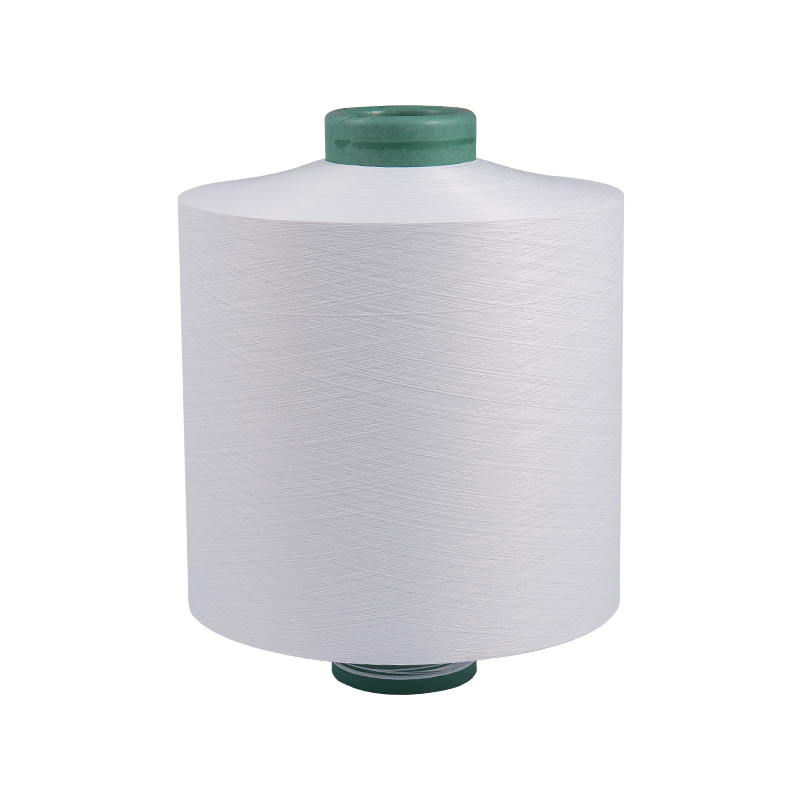
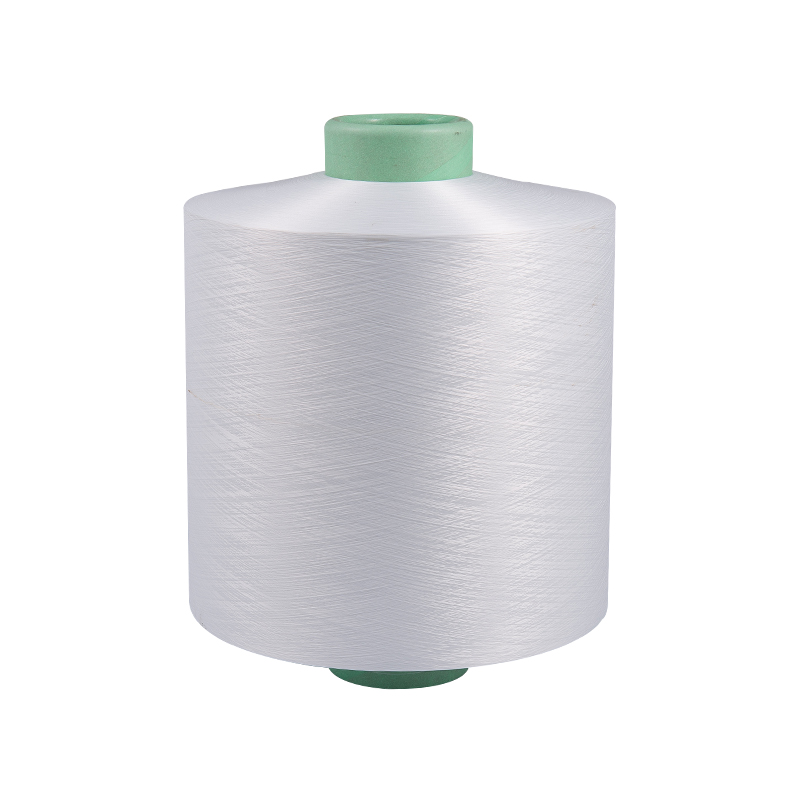
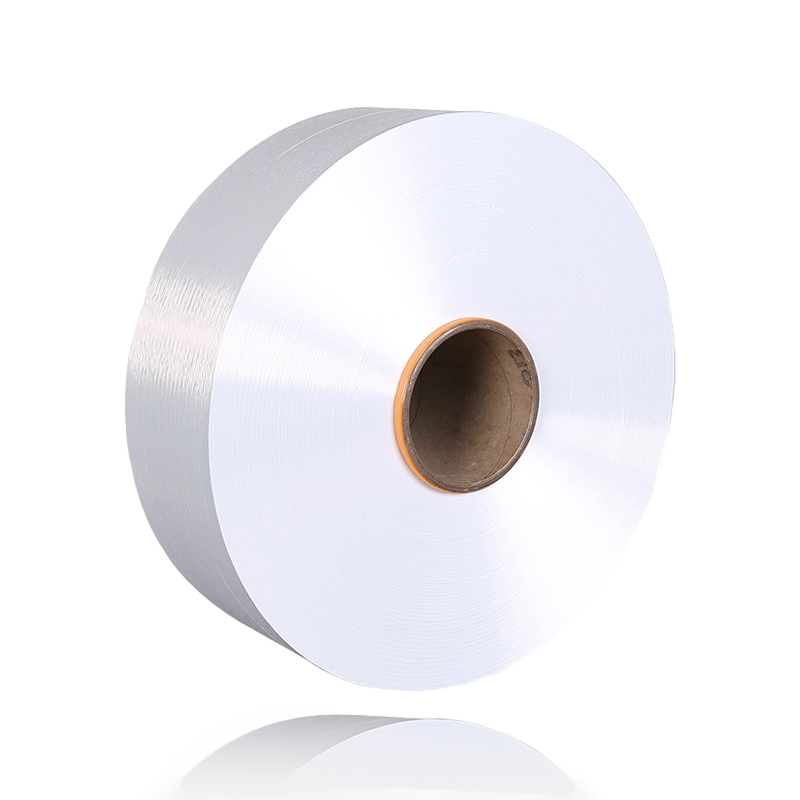
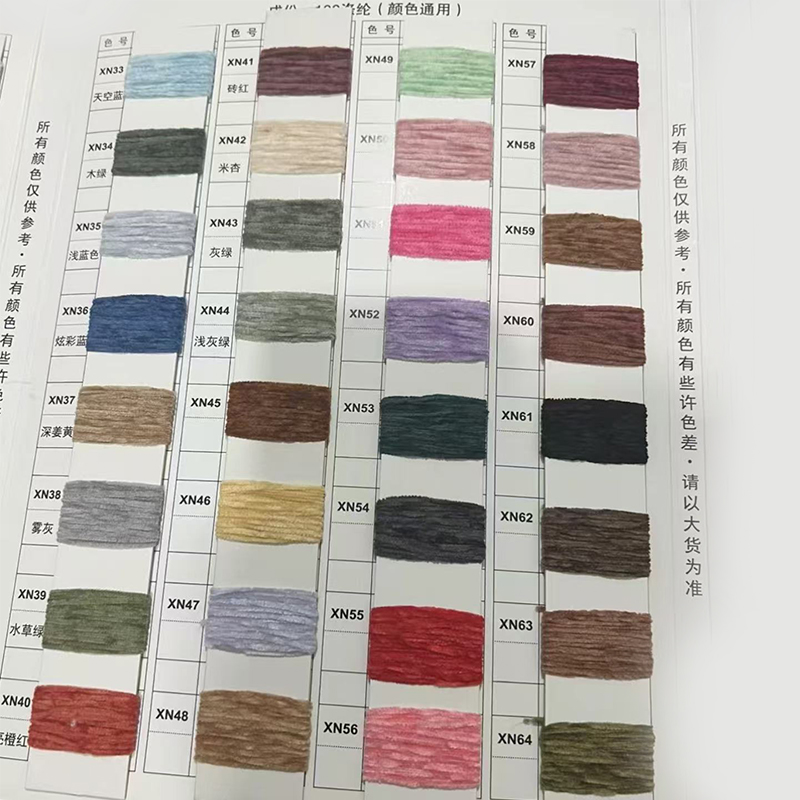 Bright Polyester DTY for Chenille YarnBright polyester DTY for chenille yarn production, with variable denier, filament count, and intermingling options; suited to projects where lustre and colour are chosen early.View Product →
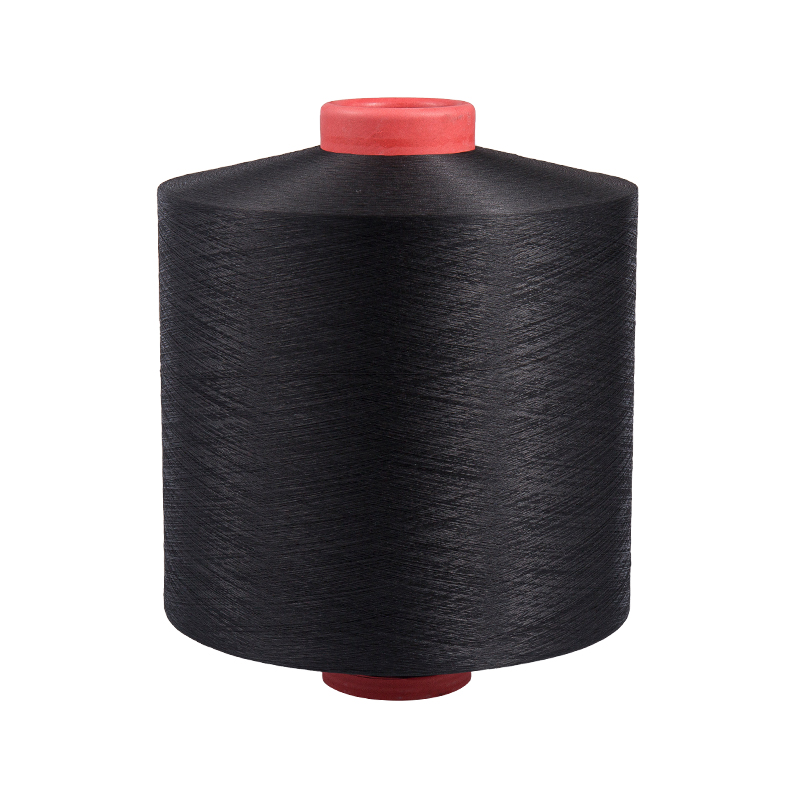
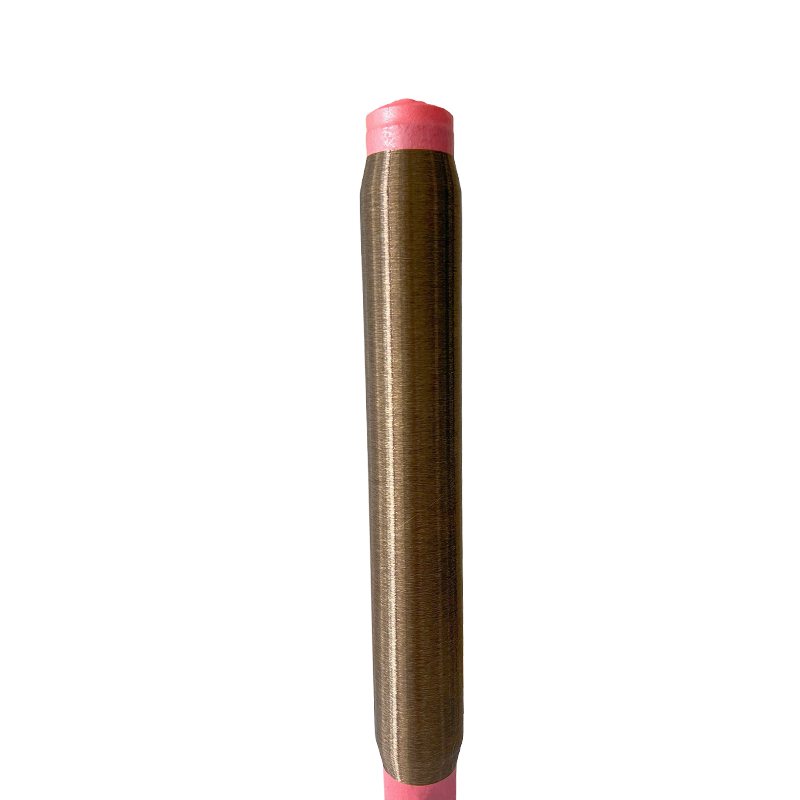
 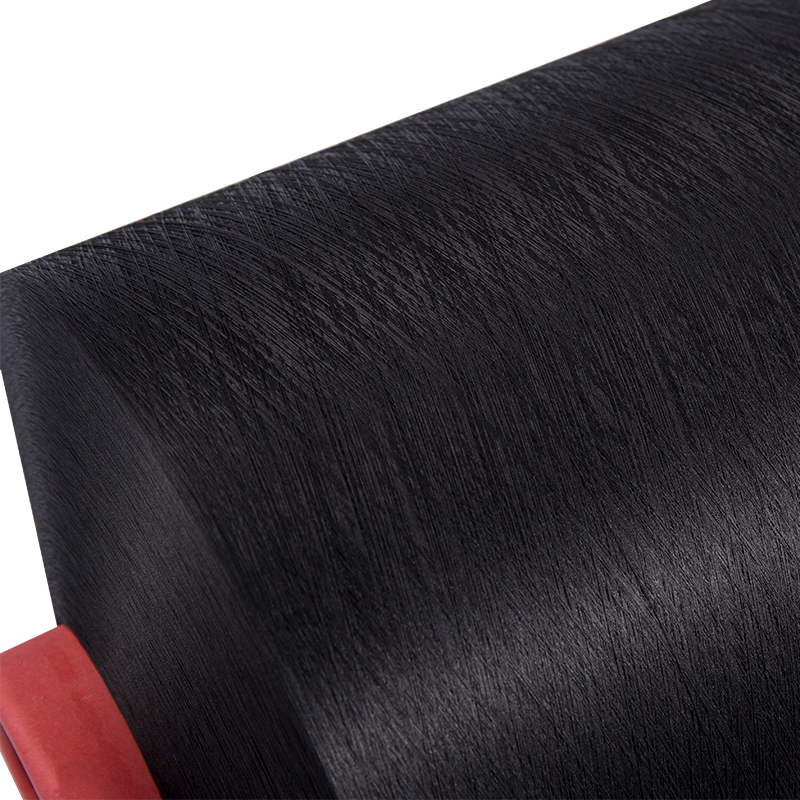 Dope-Dyed Black Polyester Draw Textured YarnDope-dyed black polyester draw textured yarn for weaving, knitting, and specialty-yarn applications, available in listed denier/filament specifications for sampling discussions.View Product →
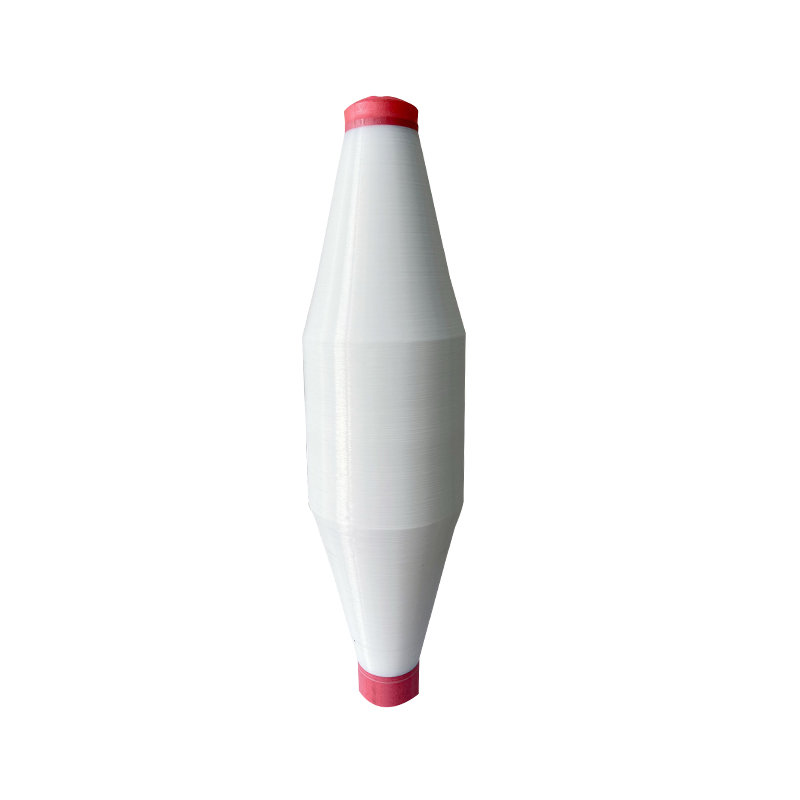
 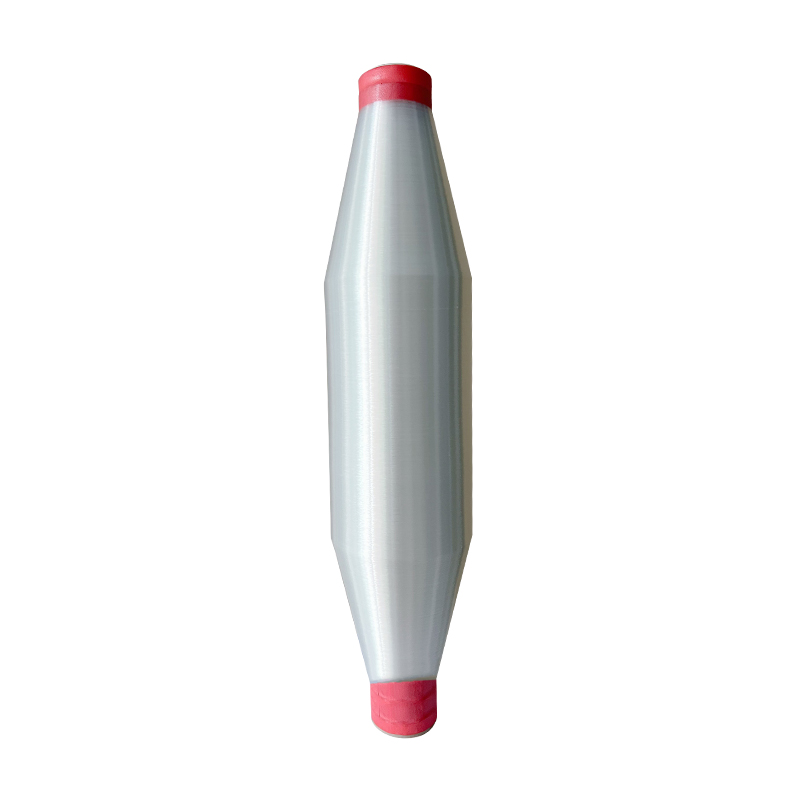 Round-Section Bright Polyester Monofilament YarnRound-section bright polyester monofilament with a smooth, lustrous surface, listed in 20D/1F through 40D/1F specifications within the bright monofilament group.View Product →
Specifications across the range generally run from 50D to 600D, with black, white and dope-dyed colours as the standard palette and custom spinning available when a project needs something outside it.
Reading a Certificate: Three Things to Check First
A certificate is only useful if it actually matches the goods in front of you. These are the three checks we recommend to anyone receiving documentation from a supplier.
Check the article scope
The certificate should name the article, the material composition and the colour range it covers. A certificate for a white polyester DTY does not automatically extend to a black version of the same yarn, and a certificate for one count does not usually cover the whole denier range. If the scope is described in broad terms, ask for the underlying article list.
Check the product class
Class I, II, III and IV are not interchangeable. A certificate issued for Class III outerwear does not support a claim for Class II underwear, even if the yarn itself is identical. Where a buyer intends to use the same yarn in several end uses, the certification should be requested at the strictest class that will be needed.
Check the date and the traceability
A STANDARD 100 certificate is valid for twelve months and must be renewed annually, and renewal is normally started around three months before expiry because limit values may have changed in the meantime. Most certificates also carry a number or label ID that can be checked against the issuing institute's database, which is the quickest way to confirm that a document is current and genuine.
What the Label Does Not Say
Because the label is so widely recognised, it is often asked to carry claims it was never designed for. It does not certify that a product is sustainable, that recycled polyester was used, that water consumption is low, or that workers were treated fairly. It does not verify that a fabric meets every legal requirement in every market, and it does not say anything about the physical performance of the yarn. Even the safety claim is narrow by design: it confirms that the tested article, in the tested composition and colour, passed the harmful-substances limits that applied on the date of issue. Everything beyond that belongs to a different scheme or a different document.
Questions We Hear From Yarn Buyers
- Does the certification prove that polyester is safe? No. It certifies a specific article, composition and colour, not a polymer family.
- If our fabric mill already holds a certificate, do we need anything from the spinner? Often yes, in the form of composition data, colour information and test reports for the raw materials, so the mill's certificate scope can be extended correctly.
- How long do we have before renewal? Twelve months from issue, and the renewal process is best started about three months before the expiry date.
- Is the certification legally required? No, it is a market requirement driven by brands and retailers, but in many apparel and home textile programmes it is effectively mandatory.
- Do coloured or dope-dyed yarns need separate certification? The colour range determines the article scope, so a new colour generally means a new or extended certificate.
In our experience, the smooth projects are the ones where documentation is discussed before the first sample rather than after the first shipment. Tell us the end use, the target product class and the colour range you have in mind, and we will tell you honestly what we can support, which test reports we can share, and where a testing institute needs to be involved. If you would like to see the yarn side of this in more detail, from lustre and cross section to intermingling level (HIM/SIM), the product pages above are a good place to start, and our technical team is happy to walk through the certification questions with you directly through our contact page. We would rather answer one extra question at the sampling stage than explain a missing document three months later.

GLOBAL BUSINESS
Backed by stable production capacity and integrated manufacturing and trading capabilities, Zhenyi Chemical Fiber is committed to serving customers in international markets. Our team provides responsive support throughout product selection, order coordination, export documentation and shipment arrangements. We aim to build long-term partnerships through consistent product quality, clear communication and dependable service.
Ready to Begin?
Categories
Contact Information

 +86-18258373586
 No. 318 Huiye Road, Fengming Subdistrict, Tongxiang, Jiaxing, Zhejiang, China.
Copyright © ZHENYI CHEMICAL FIBER All rights reserved.
