

 English


Industry News
Flame Retardant Fabrics: Choosing DTY for Home Textiles and Workwear
2026-10-14
If you are developing flame retardant fabrics for curtains or for protective workwear, you have probably noticed that most technical writing on the subject is about fabric rather than yarn. There is a good reason for that: flame retardancy is a property of the finished textile system, and it is the fabric, or sometimes the whole garment, that actually gets tested. But the yarn you choose still shapes what the fabric can achieve. This article looks at where DTY fits in flame retardant home textile and workwear programs, how the two end uses pull the specification in different directions, and which yarn parameters are worth deciding before you place an order.
Content
- 1 What "Flame Retardant DTY" Actually Means
- 2 Home Textiles and Workwear Ask Different Things of the Same Yarn
- 3 Flame Retardant Fabrics in Home Textile Applications
- 4 Flame Retardant Fabrics for Workwear
- 5 Specifying a DTY: The Parameters Worth Deciding Early
- 6 How Zhenyi Chemical Fiber Fits Into a Flame Retardant Program
- 7 Questions That Come Up Most Often
What "Flame Retardant DTY" Actually Means
DTY, or draw textured yarn, is polyester filament that has been drawn and textured to give it bulk, crimp and a softer hand than flat filament. Standard polyester is thermoplastic: it pulls back from a small flame, melts and can drip. It does not ignite as readily as cotton, but with enough heat behind it, it will burn. When a supplier says flame retardant DTY, they are usually describing one of two routes, and it is worth knowing which one your program is on. Zhenyi Chemical Fiber supplies polyester DTY; in a finished flame retardant fabric, the effect comes from one of the two routes below, chosen and validated by your fabric supplier and finisher.
Inherent flame retardant fiber
Inherently flame retardant polyester fiber has the flame retardant built into the polymer, typically a phosphorus-based chemistry introduced during polymerization or added to the melt before spinning. Because it is part of the filament rather than a coating on its surface, the effect does not depend on a finishing step and is generally considered durable to repeated laundering, which is why this route is common in workwear. Such fiber comes from specialist producers, so confirm the supply route and the fiber's own test data with your fabric supplier.
Topical finishing on the fabric
The second route applies chemistry to the woven or knitted fabric, usually through a pad-dry-cure process or as a back coating on drapery and upholstery. This is common in home textiles, where the tested article is the panel itself and the fabric weight can carry the required add-on. Durability depends on the chemistry, the add-on level, the curing conditions and, above all, the wash regime the product is heading into.
What the yarn still influences
Even when the flame retardant comes entirely from the finish, the yarn choice influences weight per square meter, cover factor, tear strength, seam strength and drape, the variables that quietly shape the outcome of a vertical flame test. Luster is a commercial variable too: Full-Dull Polyester DTY gives a matte fabric, Semi-Dull Polyester DTY a subtle sheen, and Bright Polyester DTY carries a stronger sheen through to the finished panel.
Home Textiles and Workwear Ask Different Things of the Same Yarn
Both end uses draw on the same DTY family, but their priorities diverge quickly. The table below is the short version.
| Consideration | Home textiles | Workwear |
|---|---|---|
| Main exposure | Small flame contact on a hanging panel or upholstered surface | Sustained flame, radiant heat, molten splash or arc |
| Commonly referenced standards | NFPA 701, EN 13773, BS 5867-2, IMO FTP Code Part 7 | EN ISO 11612, EN ISO 11611, IEC 61482-2, NFPA 2112 |
| Color priority | Light fastness through years of sun exposure | Color retention through industrial laundering and abrasion |
| Care regime | Domestic or light commercial washing | Frequent industrial laundering, often to ISO 15797 |
| Typical DTY direction | Semi-Dull or Full-Dull DTY, medium to heavy denier | Dope-Dyed or Low-Elasticity DTY, heavier denier |
| Where flame retardancy usually sits | Often a topical finish or back coating, sometimes an inherent fiber in the blend | Usually an inherent fiber, alone or in a blend |
Flame Retardant Fabrics in Home Textile Applications
Home textile uses for polyester yarn include woven curtains, sofa and upholstery fabrics and other decorative textiles, as well as knitted blankets and soft furnishings, and contract interiors such as hotels and cinemas where flame retardant requirements are common.
Curtains and drapery
A curtain is a large, light, vertical panel, and that geometry drives the specification. Light fastness matters because the fabric hangs in front of a window for years, and the panel itself is often the tested article, so the flame retardant route has to suit the fabric weight. NFPA 701 and EN 13773 are the names that appear most often in tenders, with BS 5867-2 common in the UK market and IMO FTP Code Part 7 for marine interiors. If you would like to go deeper into how yarn choices map onto these constructions, our note on DTY performance requirements for curtains and upholstery covers it in detail.
Upholstery, sofa fabrics and contract textiles
Upholstery shifts the emphasis from flame spread to abrasion, seam slippage and long-term appearance. Heavier deniers are common, and a back coating is often where the flame retardant is applied. Dope-Dyed Polyester DTY is useful here because the color is set at the spinning stage, which helps keep shades consistent across a large contract and can reduce the dyeing burden on the finishing line.
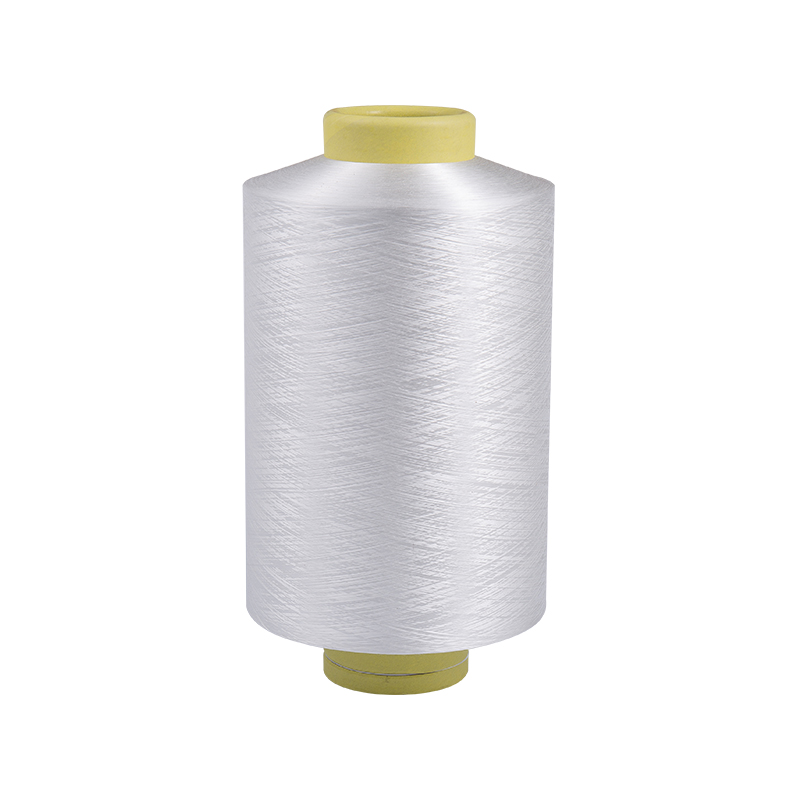
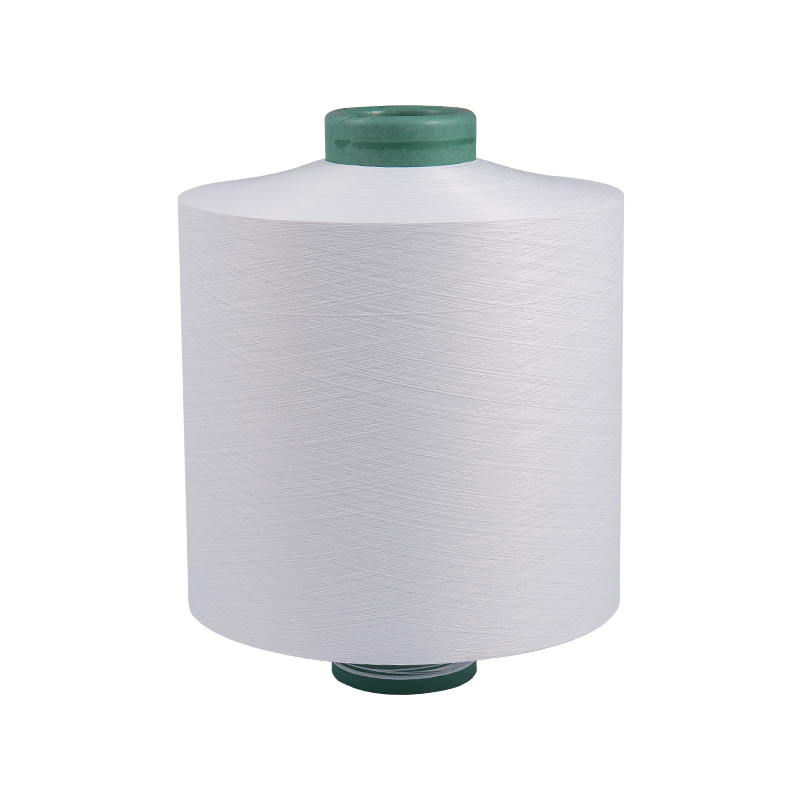 Semi-Dull SIM DTYSemi-dull, semi-intermingled (SIM) polyester DTY for weaving and knitting, offered in several denier and filament specifications; a starting point for curtain, sofa and decorative fabrics.View Product →
Flame Retardant Fabrics for Workwear
Workwear is judged on the person rather than the panel. EN ISO 11612 covers heat and flame, EN ISO 11611 welding, IEC 61482-2 arc flash and NFPA 2112 flash fire. Nearly all of these standards include a laundering or conditioning step before testing, which is why the durability of the flame retardant effect and the color matters as much as the initial result.
Why dope-dyed and low-elasticity DTY come up so often
Protective garments are washed far more aggressively than home textiles, often to ISO 15797 at high temperature with industrial detergents, so color has to hold alongside flame retardant performance. Dope-Dyed Polyester DTY, where pigment is introduced during spinning rather than applied to the fabric later, fits that brief: the shade is set at the yarn stage, which helps keep it consistent from lot to lot. Low-Elasticity Polyester DTY is specified where the fabric construction calls for reduced stretch and steadier dimensional behavior through weaving or knitting.
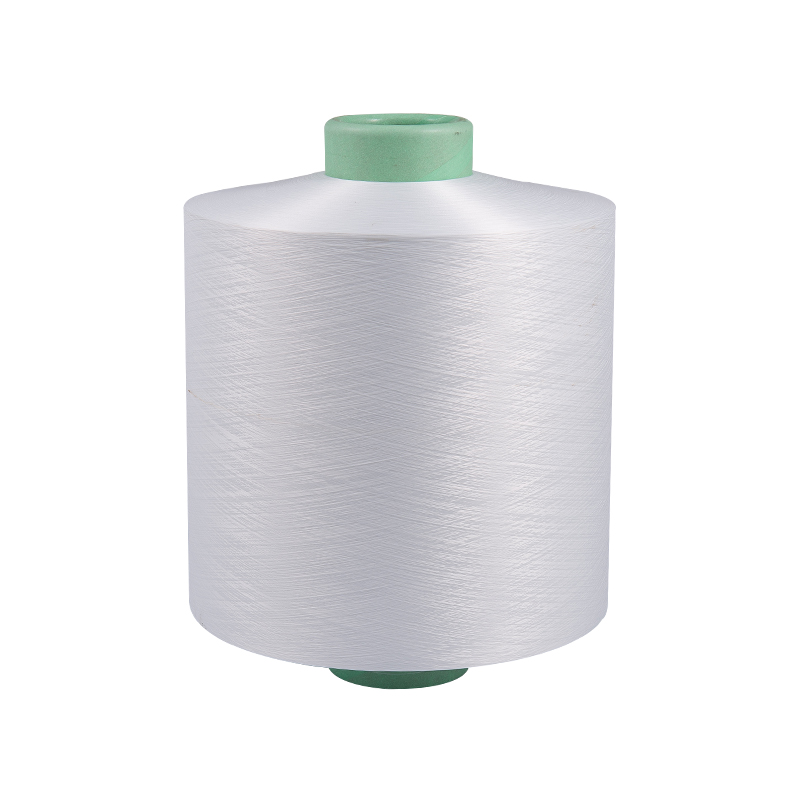
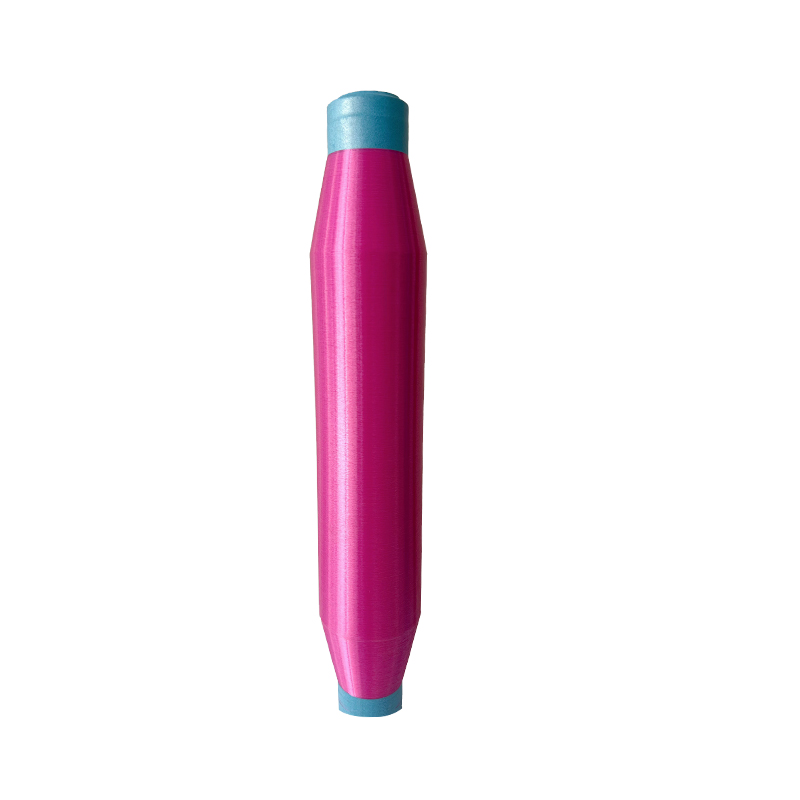
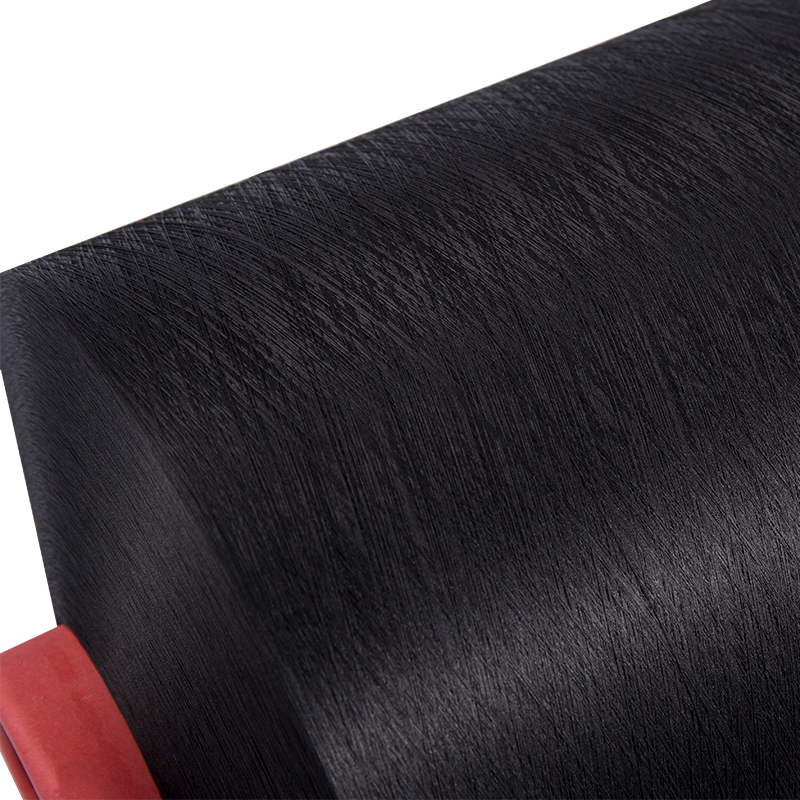 Dope-Dyed Black DTYDope-dyed black polyester DTY for weaving, knitting and specialty-yarn applications, offered in several denier and filament specifications; color is set at the yarn stage.View Product →
Blends are the rule, not the exception
Few protective fabrics are 100% polyester. Polyester is frequently blended with cotton, viscose, modacrylic or aramid to balance comfort, char behavior and cost, and the blend ratio changes the outcome of the flame test. The yarn specification and the blend specification need to be settled together, with your fabric supplier involved.
Specifying a DTY: The Parameters Worth Deciding Early
Whether the flame retardant comes from the fiber or from a finish, the yarn order is built from the same short list.
- Denier (D): the linear density of the yarn, chosen with fabric weight and cover in mind.
- Filament count (F): how many filaments make up the yarn, which influences softness and how the fabric handles.
- Luster: Semi-Dull, Bright or Full-Dull Polyester DTY, depending on whether the target is a matte fabric or one with sheen.
- Color: raw white, black, or selected dope-dyed colors when you want the color set at the yarn stage.
- Intermingling level: SIM (semi-intermingled) or HIM (high-intermingled), selected to suit the fabric construction and downstream process.
- Elasticity and shrinkage: standard DTY or Low-Elasticity DTY for constructions that need less stretch, with shrinkage adjusted to the fabric process where required.
- Cone type, cone weight and packaging: decided with your knitting or weaving setup and your handling requirements.
Not every combination is practical to produce, and a specification that looks straightforward on paper can be difficult to run. We confirm final specifications, cone types and packaging according to production feasibility and order requirements, which is better discovered before a sample is woven than after.
If your brief leans toward a low-sheen, matte fabric, a direction that appears in both drapery and protective workwear, Full-Dull Polyester DTY is usually the starting point, and it is produced across a range of deniers, filament counts and intermingling levels.
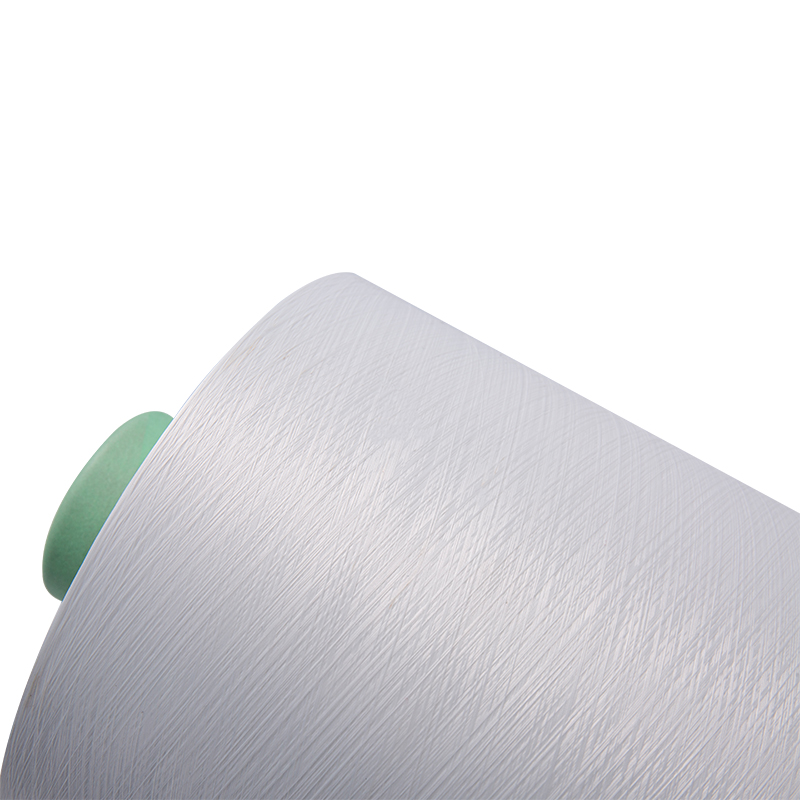 Full-Dull SIM DTYFull-dull, semi-intermingled (SIM) polyester DTY for matte woven and knitted fabrics, offered in several denier and filament specifications; a starting point for low-sheen drapery or workwear.View Product →
How Zhenyi Chemical Fiber Fits Into a Flame Retardant Program
Built on manufacturing experience dating back to 2007, Zhenyi Chemical Fiber brings together the Weien and Baoyi production bases under an integrated business system. Weien Intelligent Manufacturing (Jiaxing) Co., Ltd. and Tongxiang Baoyi Textile Co., Ltd. operate the two facilities, which together have a production workshop floor area of approximately 100,000 m² and 100 draw-texturing machines, with a combined polyester DTY capacity of up to 400 metric tons per day. International trade and customer support are provided by Shuoyi International Trading Co., Ltd. You can see our production facilities and equipment in more detail.
That position shapes what we can do on a flame retardant project. We specialize in polyester DTY, and we can match the yarn to the fabric you are building across denier, filament count, luster, color, intermingling level, elasticity and shrinkage. We offer fast sample testing, and our technical team supports process adjustment for samples, so your finisher and testing lab have something real to work with, from small trial batches to mass production. What we cannot do is certify your fabric: flame retardancy is approved against the finished article, in the construction and standard your customer actually named. If the effect comes from another fiber in your blend or from a topical finish, tell us what your fabric supplier and finisher need from the yarn.
Questions That Come Up Most Often
- Will DTY pass a flame retardant standard on its own? No. Standards are certified on the finished fabric or garment, in a specific construction and often after a specified wash cycle.
- Does the flame retardant wash out? If it is built into the fiber, it is generally considered durable to washing. If it is a topical finish, durability depends on the chemistry, the add-on and the wash regime, so test after the cycles your customer will use.
- Can flame retardant and standard yarns be mixed in one fabric? They often are, but the ratio affects performance, so the blend should be fixed before testing rather than after.
- How do we choose between inherent and topical flame retardancy? It depends on the standard, the wash regime and the fabric weight. The decision usually involves your fabric supplier and finisher, and we can align the yarn specification to either route.
The yarn is one line in a flame retardant specification, but it is the line everything else is built on. Get the denier, filament count, luster, color and intermingling level right, agree the flame retardant route with your fabric supplier, and test the finished article against the standard your customer named. If you would like to talk through a specification, our team is glad to look at it with you.

GLOBAL BUSINESS
Backed by stable production capacity and integrated manufacturing and trading capabilities, Zhenyi Chemical Fiber is committed to serving customers in international markets. Our team provides responsive support throughout product selection, order coordination, export documentation and shipment arrangements. We aim to build long-term partnerships through consistent product quality, clear communication and dependable service.
Ready to Begin?
Categories
Contact Information

 +86-18258373586
 No. 318 Huiye Road, Fengming Subdistrict, Tongxiang, Jiaxing, Zhejiang, China.
Copyright © ZHENYI CHEMICAL FIBER All rights reserved.
