

 English
 中文简体
中文简体 Español
 عربى
عربى
 Home / News / Industry News / DTY for Home Textiles: Performance Requirements for Curtains and Upholstery
Industry News
DTY for Home Textiles: Performance Requirements for Curtains and Upholstery
2026-09-04
A curtain panel that looked flawless in the showroom can fade unevenly along its sun-facing edge within a single summer, and a sofa seat can start pilling within months of delivery. Both failures usually trace back to decisions made at the yarn stage, long before the fabric was ever woven. Draw textured yarn (DTY) is a workhorse in home textiles, but the version that drapes beautifully at a window is rarely the version that survives a busy sofa seat.
The short version: curtains live or die by lightfastness, drape, and dimensional stability, while upholstery depends on abrasion resistance, pilling control, and luster management. Matching denier, network density, gloss level, and dyeing method to the end use is what separates a specification that works from a costly re-run. The sections below break those requirements down and translate them into concrete yarn choices.
Content
What DTY Actually Brings to Home Textiles
DTY is made by drawing and false-twist texturing polyester POY, which gives the filament permanent crimp, bulk, and a controlled degree of stretch. An interlacing stage then ties the filaments together at intervals. Heavy mesh yarn carries more nodes per meter, which stabilizes weaving and knitting and reduces the need for twisting; light mesh yarn keeps the hand softer and the drape more fluid. These two variables, texture and network, explain most of the performance differences you will feel in the finished fabric.
For home textiles, DTY offers three practical advantages: bulk that builds fuller fabrics at lower weight, a luster range running from bright to full matte, and flexible coloration through piece dyeing, cationic dyeing, or solution dyeing. If you want to compare structures across the spectrum, our polyester DTY range shows how gloss, mesh, and elastic grade are organized into distinct product families.
Performance Requirements for Curtain Yarns
Lightfastness Comes First
A window concentrates the problem: curtains may sit in direct or filtered sunlight for six to eight hours a day, every day. The governing specification is color fastness to light, tested to ISO 105-B02 against the blue wool scale. Residential curtain programs generally target grade 4 or above, while sunroom, hotel, and warm-climate projects should push toward grade 5. Conventional disperse-dyed DTY can reach these levels, but a shade holds longest when the color is locked into the filament itself. That is why solution-dyed colored DTY, with pigment added during spinning, dominates high-exposure curtain programs; this guide to solution-dyed polyester yarn explains how the cost-benefit math works out. Cationic DTY is the other frequent choice when the design calls for deep, brilliant shades dyed at atmospheric boil.
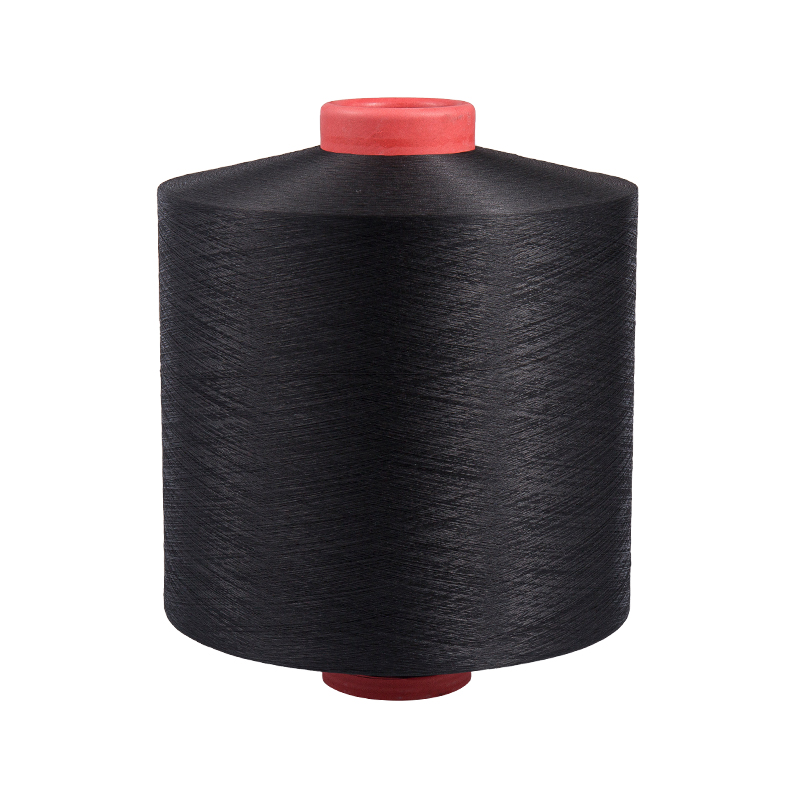
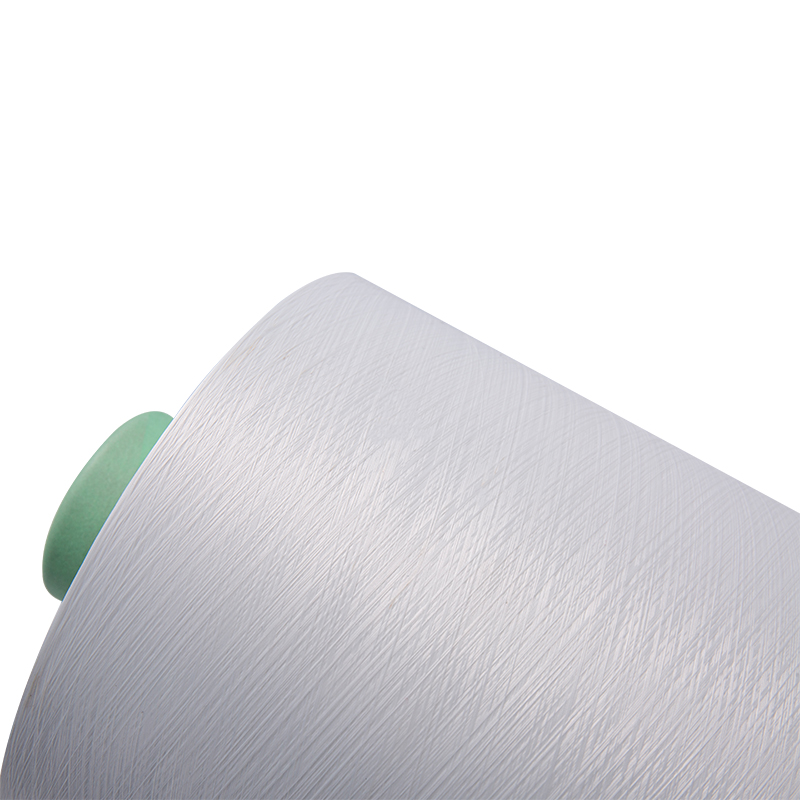 Heavy-Mesh Cationic DTYThis heavy-mesh cationic draw textured yarn offers strength, breathability, and vibrant dyeable shades. It fits the discussion of cationic DTY for deep, brilliant colors and durable constructions in curtain and textile programs.View Product →
Drape and Hand Feel
Curtain fabric is judged by how it hangs. Bulk from texturing helps the fabric fall in soft folds instead of stiff panels, but too much network or too coarse a denier will fight the drape. As a working range, 75D-150D DTY suits sheers and lightweight drapery, while 150D-300D covers lined and blackout constructions. Light mesh preserves softness; where the design needs more body, a low-elastic grade adds fullness without the springiness that makes panels ride up. A light mesh semigloss DTY sits at the sweet spot for decorative drapery, which is why it appears in so many curtain specifications.
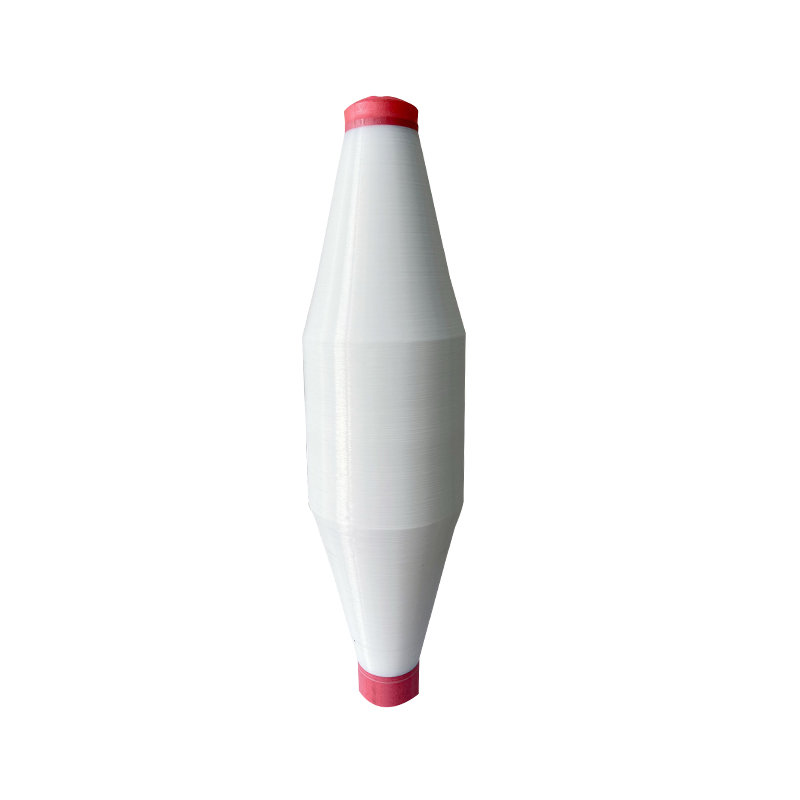
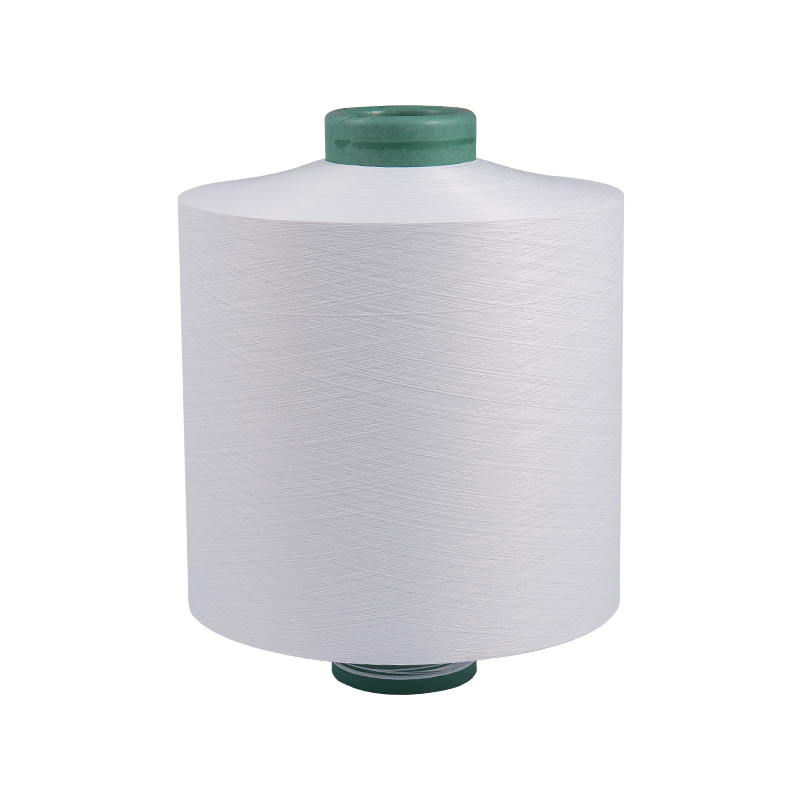 Light Mesh Semi-Gloss DTYA lightweight, softly sheened DTY available in fine counts like 100D/48F/144F. It matches the surrounding guidance that light mesh semigloss yarn delivers ideal drape and fullness for decorative drapery and sheer curtains.View Product →
Dimensional Stability Over Years of Hanging
Curtains hang under their own weight for years and are occasionally washed or steam cleaned. Shrinkage in boiling water and hot air therefore has to be tightly controlled, and most buyers work to roughly 1-2% after heat setting. Elastic recovery must stay moderate: too much stretch and the panels sag out of shape. Pleat retention is a fabric-level property, but it starts with yarn that has stable, evenly distributed crimp.
Performance Requirements for Upholstery Yarns
Abrasion Resistance and Structural Strength
Upholstery is a mechanical service, not just a visual one. Seat cushions compress, shift, and rub thousands of times a month, which is why Martindale abrasion is the central acceptance criterion: roughly 15,000-25,000 cycles for residential use and 30,000 cycles or more for contract and hospitality work. The yarn-level levers are higher denier, with 300D-600D common in upholstery weaves against fabric weights of about 250-400 gsm; heavier mesh for weave stability; and consistent tenacity and elongation from lot to lot. Weak or irregular yarn shows up quickly as breakages on the loom and thin patches in worn fabric.
Pilling and Fuzzing Control
Textured filament holds a paradox: strong filaments anchor pills to the surface instead of letting them break off, so an unbalanced DTY can pill worse than expected. The countermeasures are lower crimp where the design allows, controlled network density, and constructions that bury the textured surface inside the weave. A pilling grade of 3-4 or better on the ISO 12945-2 Martindale test is a reasonable benchmark for seat fabrics.
Luster Management and Surface Effects
Large upholstered surfaces amplify gloss, so full matte DTY is preferred whenever the design calls for a flat, premium look, especially in darker shades where bright filament reads as streaky. For chenille-effect and velvet-look upholstery, the pile is often built from fine DTY or dedicated chenille yarns, and the luster choice determines whether the fabric reads as soft velvet or shiny velour.
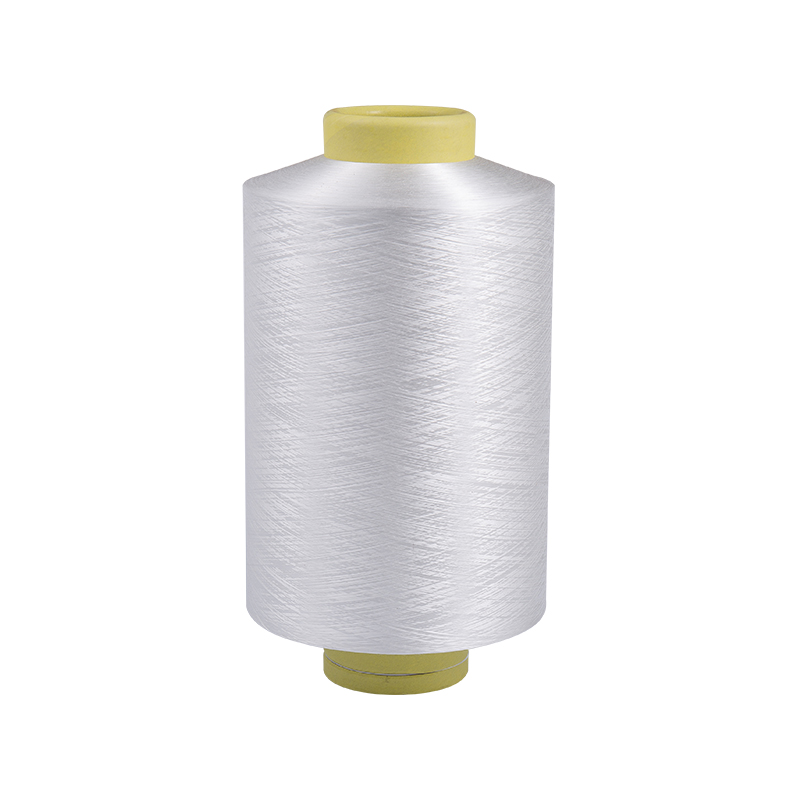
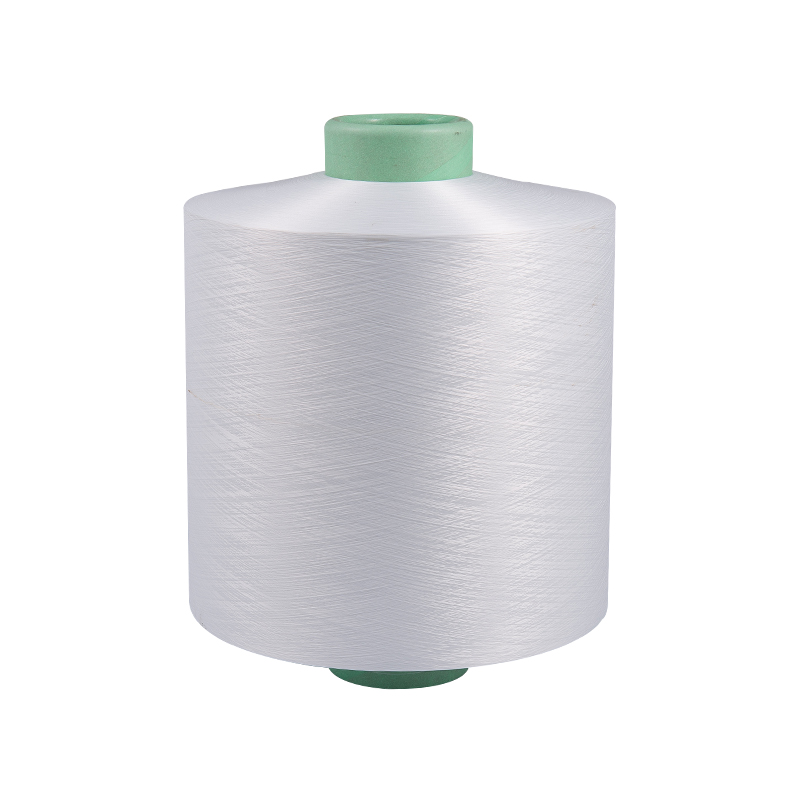
Heavy Grid Full Matte DTYThis full matte DTY with a heavy grid structure suppresses sheen for a flat, premium appearance. It suits the matte luster preferences and durability demands outlined for upholstery and contract-grade textile applications.View Product →
One further consideration for contract projects: hotels, theaters, and public buildings usually fall under flame retardancy regulations, and the required performance must be engineered either through modified, inherently FR polyester or through finishing at the fabric stage. Confirm the applicable standard early, because it can restrict both yarn choice and dyeing method.
Matching Specs to the End Use
The table below condenses the starting points we recommend when a customer specifies DTY for these two applications.
| Specification | Curtain-Grade DTY | Upholstery-Grade DTY |
|---|---|---|
| Yarn count | 75D-300D | 300D-600D |
| Fabric weight target | 80-250 gsm | 250-400 gsm |
| Network structure | Light mesh for soft drape | Heavy mesh for weave stability |
| Preferred luster | Semigloss or full dull | Full matte or semigloss |
| Coloration route | Solution-dyed or cationic | Solution-dyed, cationic, or piece-dyed |
| Key acceptance tests | Light fastness (ISO 105-B02), shrinkage, drape | Martindale abrasion, pilling (ISO 12945-2), tensile |
What to Confirm with Your Yarn Supplier
Most curtain and upholstery failures in the market are not exotic. They come from three ordinary gaps: shade drift between dye lots, unreported variation in tenacity or elongation, and network density that differs from the approved sample. Each is preventable with a short checklist:
- Agree on physical specifications in writing, covering denier, filament count, tenacity and elongation ranges, boiling-water shrinkage, and network pitch, then require lot test reports against them.
- Set a color tolerance, ideally a Delta E limit under a defined illuminant, and approve a sealed lab dip or color card before bulk production.
- Run a pilot weave on the actual loom and finishing route, then test the fabric rather than the yarn alone.
- For project business, confirm light fastness, abrasion, pilling, and any flame retardancy requirements before the yarn order is placed.
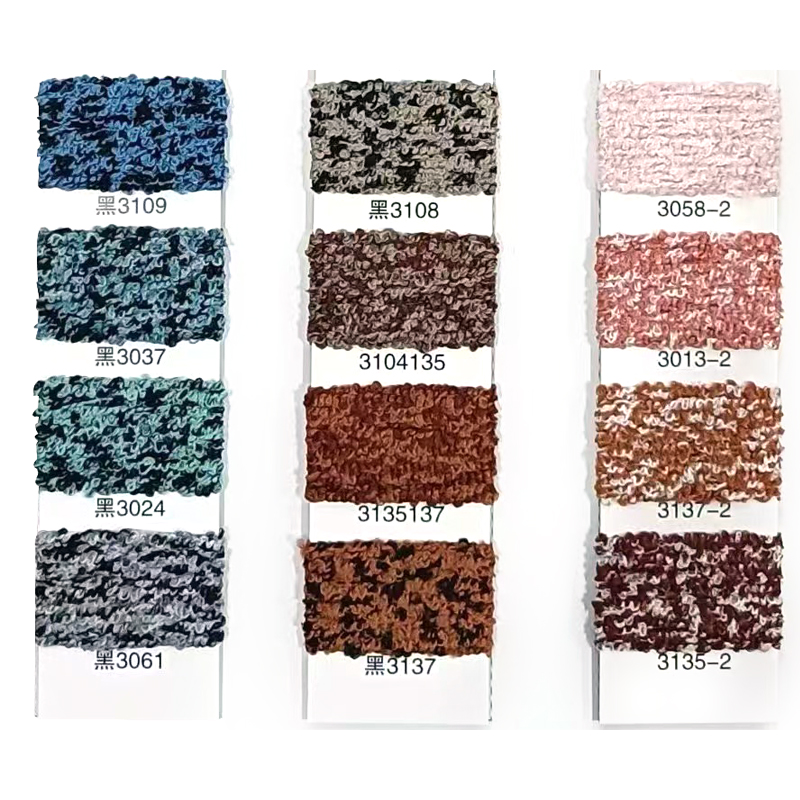
Because every mill's looms and finishes differ, flexibility at the yarn stage matters. We support customized spinning across a 50D-600D base range, adjusting denier, filament count, mesh density, luster, and color, and we supply color charts and samples so development teams can validate hand feel and shade before committing to bulk. For curtains and upholstery alike, the cheapest specification change is the one made at the yarn stage, and the most expensive is the one discovered after the fabric is cut.




GLOBAL BUSINESS
Backed by stable production capacity and integrated manufacturing and trading capabilities, Zhenyi Chemical Fiber is committed to serving customers in international markets. Our team provides responsive support throughout product selection, order coordination, export documentation and shipment arrangements. We aim to build long-term partnerships through consistent product quality, clear communication and dependable service.
Ready to Begin?
Categories
Contact Information

 +86-18258373586
 No. 318 Huiye Road, Fengming Subdistrict, Tongxiang, Jiaxing, Zhejiang, China.
Copyright © ZHENYI CHEMICAL FIBER All rights reserved.
