

 English
 Home / News / Industry News / Quiet Luxury Fabrics: How Specialty Polyester Yarn Shapes Understated Elegance
Industry News
Quiet Luxury Fabrics: How Specialty Polyester Yarn Shapes Understated Elegance
2026-09-29
Quiet luxury is one of those phrases that sounds like a trend but behaves more like a standard. It describes an aesthetic of dress and consumption built on understated elegance, high-quality materials, and timeless styling, with no visible logos doing the talking. In fashion, that often means tailored silhouettes in neutral colors, natural fabrics, and a level of finish that rewards a second look rather than a first glance.
For those of us who make yarn for a living, quiet luxury is not only a styling decision. It is a materials problem, and it starts long before the garment reaches a runway or a retail floor. The surface of a fabric, the way it catches light, the softness of its hand, and the consistency of its color all come down to the yarn that was chosen. When a designer asks for a fabric that looks expensive without looking loud, the answer is usually hiding in the fiber, the finish, and the texture.
We have spent years producing polyester DTY, chenille yarn, crochet yarn, monofilament, and specialty fancy yarns for mills and brands that care about exactly this kind of detail. This article explains how quiet luxury translates into yarn selection, and what to look for when you want understated fabrics that still feel rich.
Content
- 1 What Quiet Luxury Actually Asks of a Fabric
- 2 The Yarn Foundation of Quiet Luxury Fabrics
- 3 Why Matte and Low-Luster Yarns Read as Expensive
- 4 Texture Without Noise: Chenille and Fancy Yarns
- 5 Color Discipline and the Neutral Palette
- 6 Sourcing Quiet Luxury Yarn: A Practical Checklist
- 7 Building Quiet Luxury Without the Logo
What Quiet Luxury Actually Asks of a Fabric
Quiet luxury is a minimalist approach to fashion that emphasizes timeless elegance, quality, and everyday versatility. On the fabric level, that definition becomes surprisingly practical. A quiet luxury fabric usually has to satisfy three conditions at once:
- Surface restraint: the fabric should not rely on shine, logos, or exaggerated texture to communicate value.
- Tactile depth: it must feel substantial, soft, or smooth in a way that invites touch rather than display.
- Consistency: color, denier, and hand feel should remain stable from sample to bulk, because inconsistency reads as cheapness.
These three conditions explain why quiet luxury has become more than a runway story. It is a supply chain story. A mill can design a beautiful matte fabric, but if the yarn lot varies in luster or dye uptake, the final garment will look uneven under store lighting. A brand can choose a perfect neutral palette, but if the colored yarn is not engineered for consistency, the collection will drift from its intended mood. Quiet luxury rewards control.
The Yarn Foundation of Quiet Luxury Fabrics
Yarn is where the visual and tactile identity of a fabric begins. Luster, bulk, elasticity, and texture are not added later by finishing alone; they are built into the filament and the texturing process. This is why two fabrics with the same construction can read completely differently. One looks bright and commercial. The other looks quietly expensive.
In our experience, the most useful way to think about quiet luxury is to separate yarns by surface character rather than by price. A matte yarn is not automatically more luxurious than a glossy one, but it usually supports a quieter visual language. A textured yarn is not automatically better than a flat one, but it can add depth without adding noise. The table below summarizes how common polyester yarn families behave in this context.
| Yarn type | Surface character | Quiet luxury role |
|---|---|---|
| Fully matte DTY | Low luster, soft depth | Understated tailoring, matte drape |
| Semigloss DTY | Subtle sheen | Refined knits and quiet eveningwear |
| Glossy DTY | Visible shine | Used sparingly for accent panels |
| Polyester chenille yarn | Soft, velvety texture | Quiet dimension in knitwear and upholstery |
| Colored DTY | Even, saturated color | Consistent neutral palettes without dye variation |
| Polyester monofilament | Fine, clean lines | Crisp structure and subtle detail |
The table is not a ranking. It is a map. A quiet luxury collection might use fully matte DTY for its main fabric, a touch of semigloss DTY for a lining, and chenille yarn for a single textural piece. The goal is coherence, not uniformity.
Why Matte and Low-Luster Yarns Read as Expensive
If there is one yarn decision that consistently supports quiet luxury, it is the move toward low-luster surfaces. Bright yarns have their place, especially in activewear and technical textiles, but they tend to announce themselves. Matte yarns absorb light rather than reflect it, which gives a fabric a calmer, more dimensional appearance. Under indoor lighting, that difference is subtle but powerful. The garment looks considered rather than flashy.
Fully matte polyester DTY is one of the most reliable options in this space. It can be woven or knitted into fabrics that resemble wool, cotton, or silk blends while keeping the durability and color consistency of polyester. For brands building quiet luxury capsules, this is often the yarn that makes the difference between a garment that looks like a fast-fashion interpretation and one that looks like a long-term investment.
We produce heavy and light grid full matte DTY for exactly this purpose. The heavier mesh versions offer a denser surface for structured fabrics, while lighter versions keep drape and softness. If you want to understand the engineering behind that low-luster effect, our article on fully matte polyester DTY walks through the relationship between polymer, cross-section, and surface finish.
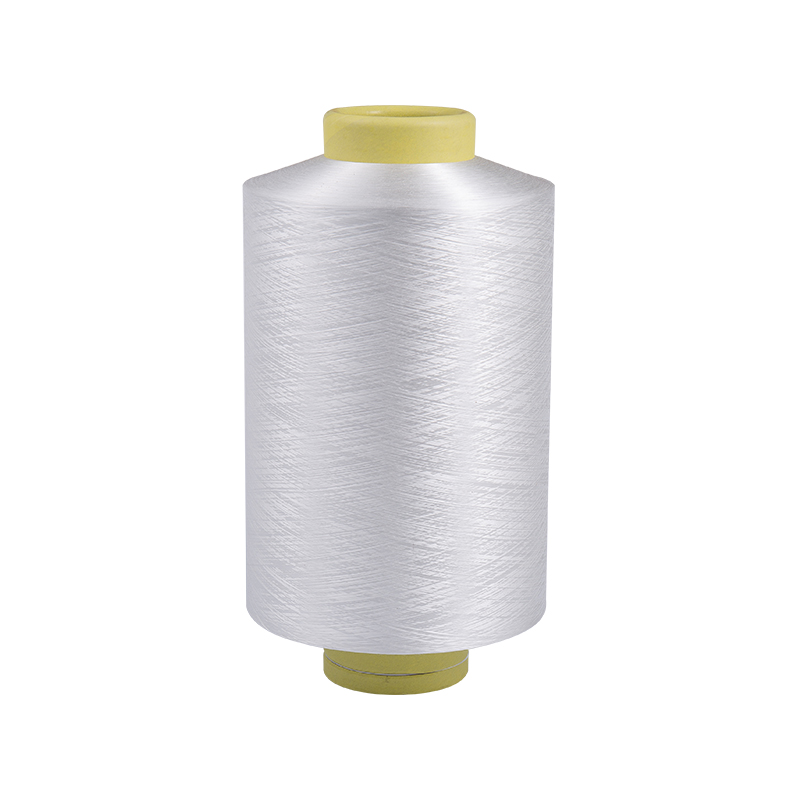
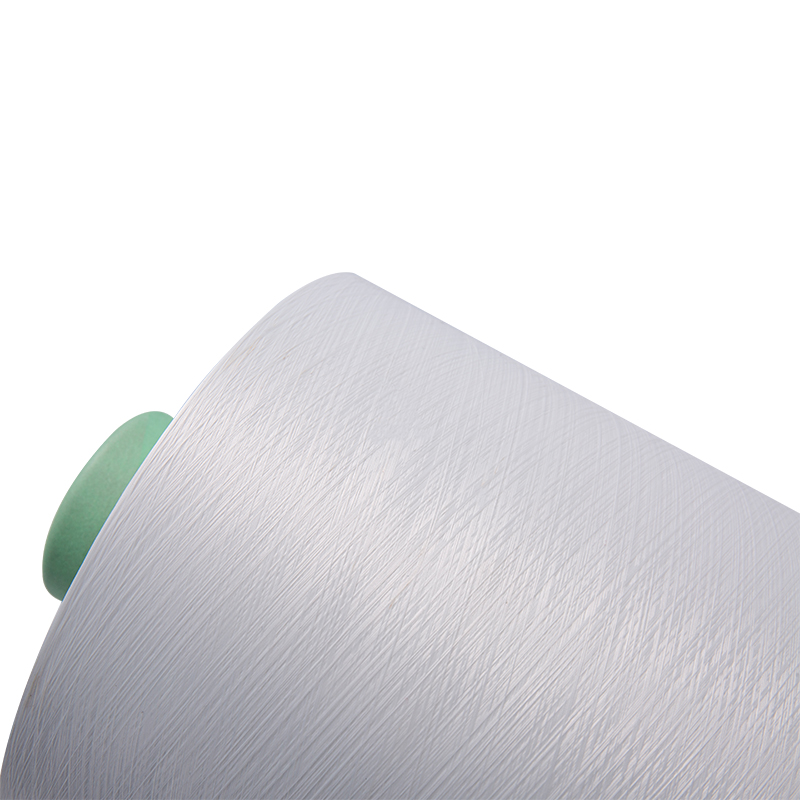 Full-Dull HIM DTYFull-dull high-intermingled polyester DTY (HIM) for matte woven and knitted fabrics. Current listed specifications: 75D/72F; 100D/72F; 150D/72F/144F; and 300D/72F/144F.View Product →
Texture Without Noise: Chenille and Fancy Yarns
Quiet luxury is not always smooth. Some of the most refined fabrics in the category rely on texture, but they use it carefully. Chenille is a good example. A chenille yarn has a soft, velvety surface that adds depth without adding sheen. In knitwear, it creates a hand feel that suggests warmth and quality. In upholstery, it provides a quiet richness that does not compete with the rest of a room.
Polyester chenille yarn has become a practical choice for these applications because it combines that soft hand with durability and color retention. A fully matte chenille yarn, in particular, avoids the faint shine that can make decorative fabrics look synthetic. We often recommend it for brands that want the emotional warmth of a natural fiber with the performance profile of polyester.
Crochet yarn and specialty fancy yarns follow a similar logic. They are not necessarily designed to be the loudest element in a collection. Instead, they create small moments of texture: a raised stitch, a subtle slub, a soft ridge. In a quiet luxury context, those details do the work that logos used to do. They signal care, craftsmanship, and a human hand.
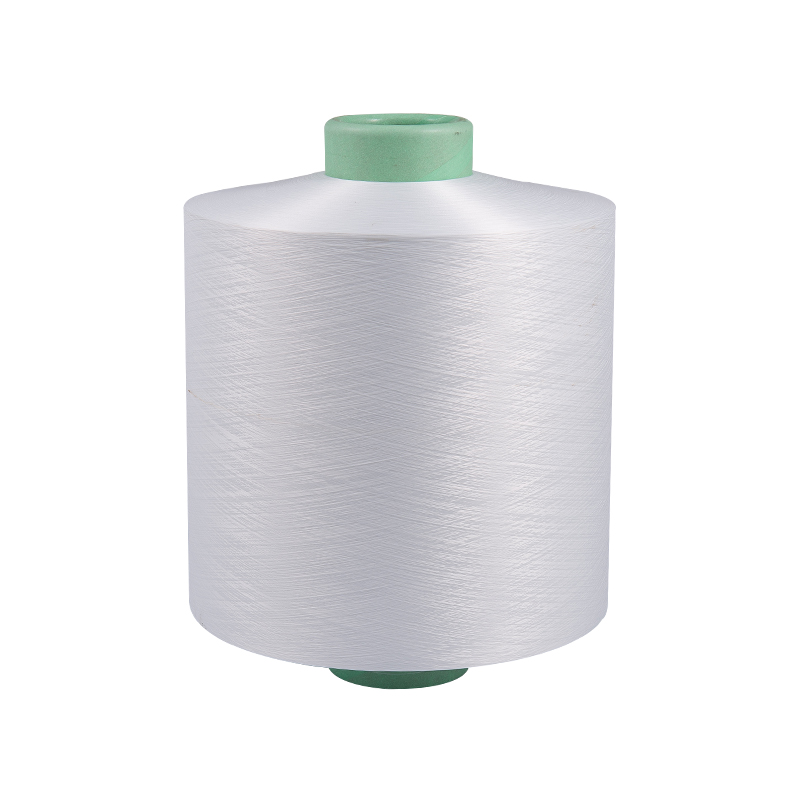
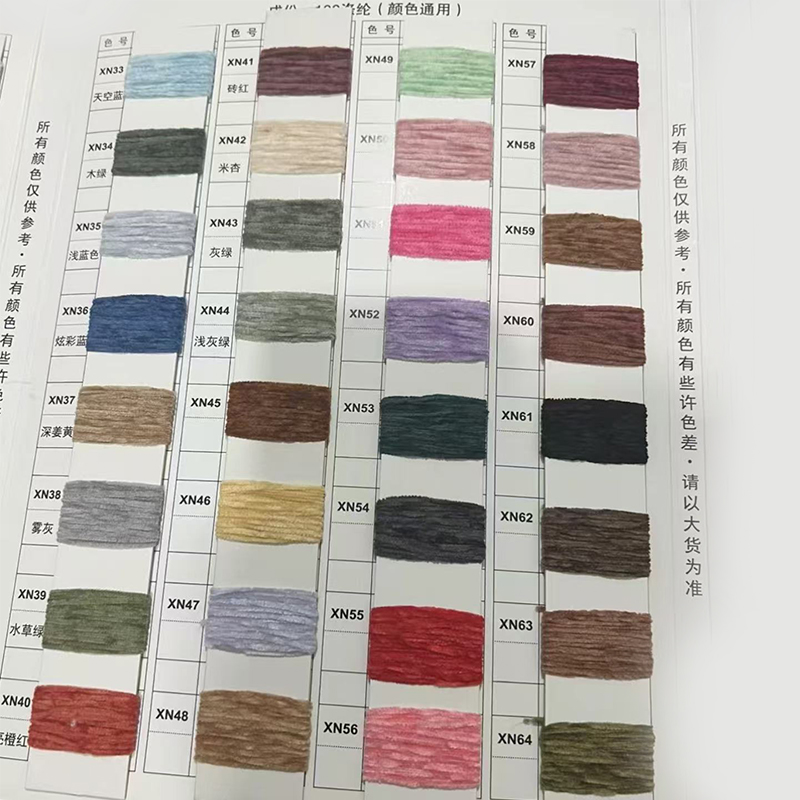 Full-Dull DTY for Chenille YarnFull-dull polyester DTY for chenille yarn production. Available specifications vary by denier, filament count and intermingling level.View Product →
Color Discipline and the Neutral Palette
Quiet luxury palettes tend to be narrow: black, ivory, camel, grey, navy, and muted earth tones. That narrowness is not a lack of imagination. It is a demand for precision. When a collection relies on a few neutrals, any variation in dye level or luster becomes immediately visible. A batch of black yarn that runs slightly brown, or an ivory yarn that shifts between lots, can break the entire visual story.
This is why color consistency matters as much as color choice. Solution-dyed and colored polyester DTY can help mills achieve stable, repeatable shades without the variables of piece dyeing. Black low-elasticity DTY, for example, is a workhorse for quiet luxury fabrics because it delivers a deep, even black that holds its appearance across different fabric weights. It supports the kind of understated garment that does not need to shout to be noticed.
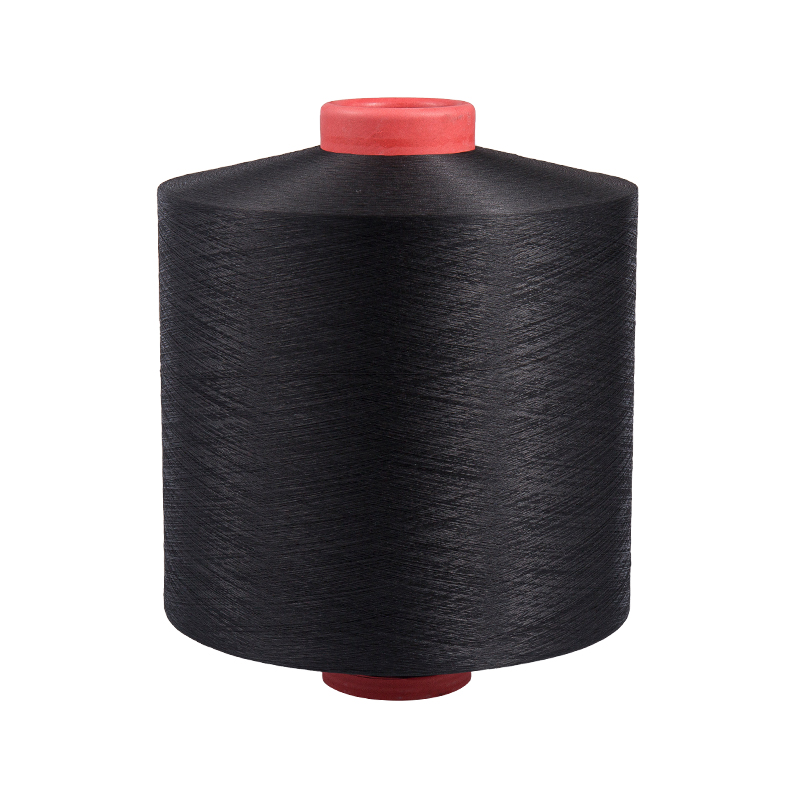
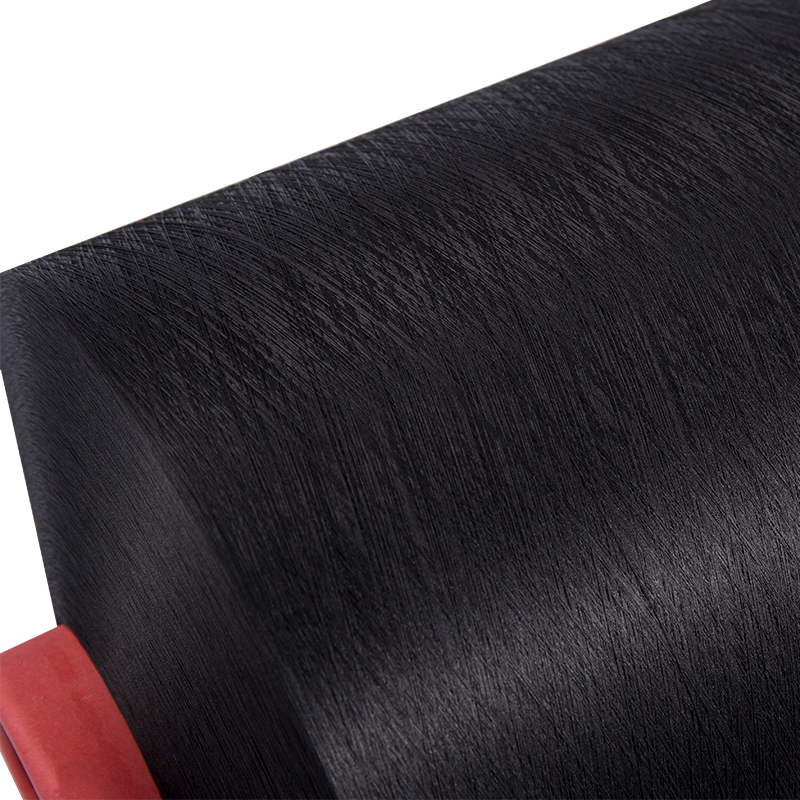 Dope-Dyed Black DTYDope-dyed black polyester DTY for weaving, knitting and specialty-yarn applications. Current listed specifications include 100D/48F/144F, 150D/48F/144F, 200D/96F/144F ...View Product →
Sourcing Quiet Luxury Yarn: A Practical Checklist
If you are sourcing yarn for a quiet luxury fabric program, the evaluation criteria are slightly different from those used for performance textiles. You are still looking for strength, consistency, and delivery reliability, but you are also looking for subtlety. Here is a short checklist we use with customers:
- Confirm the target luster. Decide whether the fabric should be fully matte, semigloss, or selectively glossy before choosing the yarn family.
- Test under real lighting. Quiet luxury fabrics are often judged in warm retail light, not in a laboratory. Evaluate samples in the environment where the final product will be seen.
- Check lot-to-lot color stability. Ask for two production lots and compare them side by side, especially for black and ivory.
- Evaluate hand feel after finishing. A yarn that feels right in greige form may behave differently after dyeing, heat setting, or washing.
- Match texture to the end use. Chenille and fancy yarns add depth, but they can also add weight. Confirm that the texture supports the silhouette.
We work with mills and brands at each of these stages, from selecting a DTY specification to adjusting a chenille yarn for a specific knit structure. You can learn more about our production capacity, equipment, and customization options on our about page. Whether you are developing a single capsule collection or a full seasonal range, the same principle applies: the quieter the aesthetic, the more the yarn has to carry.
Building Quiet Luxury Without the Logo
Quiet luxury is often described as a reaction against logo-heavy fashion, but it is also a return to fundamentals. It asks designers and mills to communicate value through material quality, construction, and consistency rather than through branding. That is a demanding standard, and it puts more pressure on the yarn than many people realize.
In practical terms, that means selecting yarns for their surface behavior, not just their price per kilogram. It means testing color and luster in real conditions. It means treating consistency as a design feature. And it means working with a supplier who understands that a matte finish, a soft hand, or a stable black shade can be just as important as tensile strength.
We have been producing polyester yarns for customers in China and around the world since 2007. Our product range covers DTY, monofilament, chenille, crochet, and specialty fancy yarns, with customization across denier, luster, color, and texture. If your next collection is built on understatement, we would be glad to help you find the yarn that makes it feel effortless.



GLOBAL BUSINESS
Backed by stable production capacity and integrated manufacturing and trading capabilities, Zhenyi Chemical Fiber is committed to serving customers in international markets. Our team provides responsive support throughout product selection, order coordination, export documentation and shipment arrangements. We aim to build long-term partnerships through consistent product quality, clear communication and dependable service.
Ready to Begin?
Categories
Contact Information

 +86-18258373586
 No. 318 Huiye Road, Fengming Subdistrict, Tongxiang, Jiaxing, Zhejiang, China.
Copyright © ZHENYI CHEMICAL FIBER CO., LTD. All rights reserved.
