

 English
 中文简体
 Español
 عربى

 Home / News / Industry News / why can't machines crochet: Applications, Selection Criteria, and Practical Guidance

Industry News
why can't machines crochet: Applications, Selection Criteria, and Practical Guidance
2026-10-20
People ask this question because the answer seems like it should be simple. Knitting machines have been around for centuries, and industrial robots can weld cars and assemble phones. Why can't a machine crochet? The short answer is that crochet is not a row of loops held on needles. It is a sequence of movements around a single live loop, and each stitch depends on the one before it. A crochet hook has to enter the fabric, catch yarn, pull it through one or more loops, and leave a new loop at the right tension. That sounds easy in a pair of human hands. In a machine, it becomes a difficult problem in soft-material handling, sensing, and motion control.
Simple crochet-like actions do exist in industry. Chain-stitch machines, warp-knit machines, and trimming equipment can imitate some crochet textures. The gap between those machines and hand crochet is not one missing motor. It is the combination of geometry, yarn behavior, and feedback.
Content
Crochet Is Built on One Live Loop, Not a Needle Bed
In hand crochet, the hook holds one live loop. The working yarn is wrapped and drawn through the fabric to create a new loop. The old loop may be released, kept, or combined with others. A single crochet, half double crochet, double crochet, and treble differ in how many times the yarn is wrapped and how many loops are drawn through. A pattern may switch among them in one row, turn the work, increase, decrease, or join a round. The machine must know where the next stitch is, how tall it is, and how much yarn to pull. That is a different problem from knitting, where loops are held in fixed positions on a needle bed.
Machine knitting succeeds because the needle bed does most of the organizing. Each needle holds a loop; cams move needles; yarn carriers feed yarn across a row. The structure is regular, and the machine can repeat it at speed. Crochet has no equivalent needle bed holding every loop in a known place. The live loop moves, the fabric turns, and the hook may enter the side of a stitch or the top of a chain. The machine has to create the structure and hold it at the same time.
Soft Yarn Refuses to Behave Like Metal
Yarn is a flexible, twisted assembly of filaments. Its thickness varies slightly, its twist may be lively, and its surface may be hairy or smooth. Friction changes as it rubs against the hook and against previous stitches. Polyester DTY, for example, can be engineered for bulk, stretch, and intermingling, but it still deforms under tension. A machine can be programmed to pull a certain length of yarn, yet the actual loop may sit differently because the yarn has compressed, twisted, or caught on a neighbor.
Human crocheters handle this with touch. We feel when a loop is tight, when the yarn splits, when the hook has missed a strand. We adjust without thinking. A robot needs sensors that can feel something similar and a control system that can correct in real time. Vision helps, but cameras struggle when yarn covers the hook or when one loop overlaps another. Tactile sensors can detect force, but placing them on a tiny hook without changing the stitch is difficult.
| Demand on the system | Hand crochet | Machine knitting | Current robotic crochet |
|---|---|---|---|
| Loop control | One live loop is moved and rebuilt each stitch | Many loops are held on needles | Flexible loop handling is still experimental |
| Stitch placement | The hook enters fabric at changing angles | Needle positions are fixed | Vision and tactile sensing remain limited |
| Tension | Fingers feel and adjust continuously | Yarn carriers and cams control feed | Feedback loops struggle with soft yarn |
| Pattern variety | Turns, rounds, tall stitches, and openwork | Mostly regular rows and repeats | Simple chains and trims are easier |
Why Machine Knitting Succeeded Where Crochet Has Not
Machine knitting is not magic; it is a constrained process. It works best with smooth, consistent yarn and regular patterns. Crochet's flexibility is exactly what makes it attractive to makers and difficult to automate. The same stitch can be worked tightly for amigurumi or loosely for a lacy shawl. The hook can go under one loop, both loops, or a space. A pattern may require counting, turning, and changing direction. These are decisions, not just motions.
Some industrial machines make crochet-like cord, trim, or net. They are useful, but they are not general crochet. For a manufacturer, the economics are also difficult. A dedicated machine may cost more than the labor it replaces, especially when the market values the handmade look. Hand crochet has irregularity, and that irregularity is part of the product.
What Yarn Choice Changes for Crochet
Even without a crochet machine, yarn choice matters. For hand crochet, a consistent yarn lets the hook move smoothly and helps stitch definition. For chenille and fancy yarns, the pile or loop structure adds softness and texture, but it also creates more places for a hook or a machine to catch. If a yarn is intended for crochet, the supplier should control denier, filament count, twist, intermingling, and color consistency. A yarn that looks fine on a cone can behave differently in a tight amigurumi round than in a loose garment.
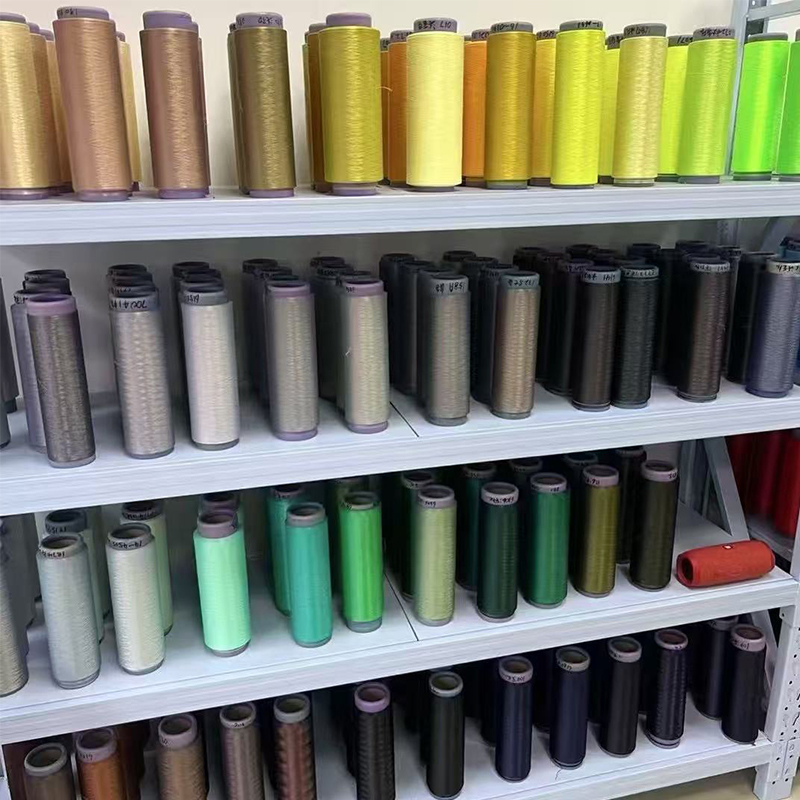
From our side of the industry, we see how much of crochet quality begins at the yarn stage. Polyester DTY can be made in semi-dull, bright, full-dull, cationic, and dope-dyed versions, with different levels of intermingling. Those choices affect how the yarn feels, how it reflects light, and how it behaves under tension. Chenille-style yarns need a stable core and a well-controlled pile so the crocheter gets a clean stitch rather than a shedding surface. Crochet yarn is not one specification; it is a balance between softness, strength, and consistency.
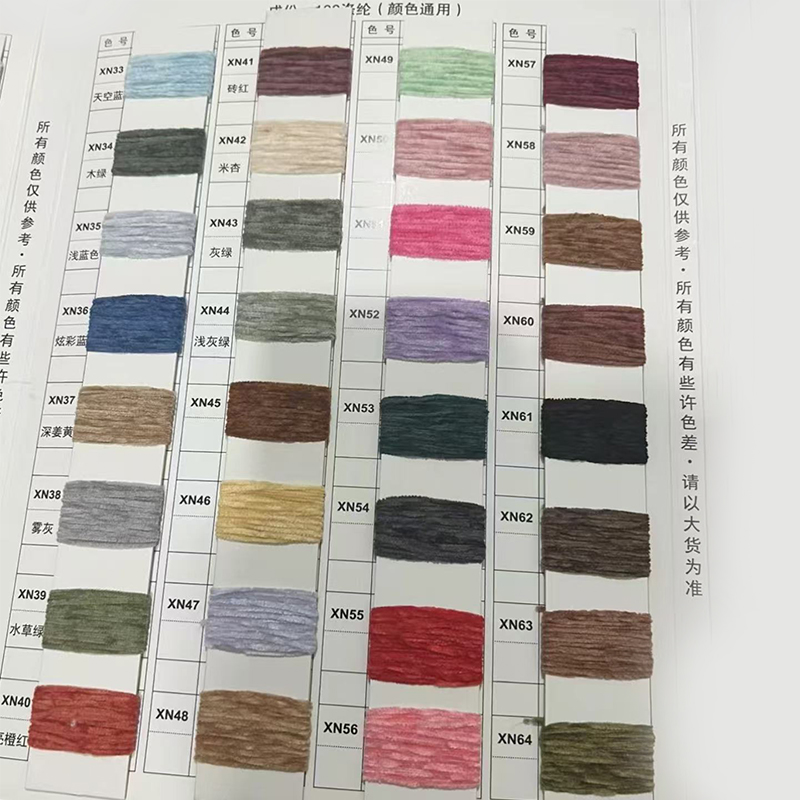
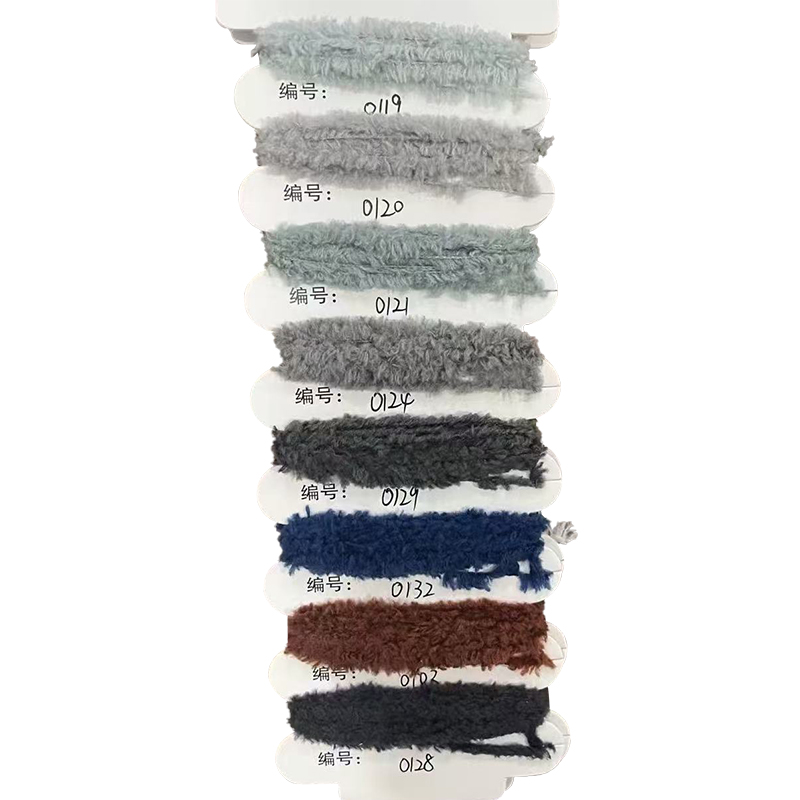 Polyester Imitation Chenille Yarn for Crochet and Decorative TextilesPile-effect fancy yarn available in varied specifications, colors, and packaging for knitted and decorative products; request details on suitable options.View Product →
What This Means for Crochet Yarn Buyers
If you are sourcing yarn for crochet products, test the yarn in the actual stitch pattern. A swatch in single crochet will not tell you everything about a double-crochet garment or a tight amigurumi figure. Check for splitting, elasticity, recovery, color consistency, and how the yarn behaves after handling. For chenille-style projects, look at pile retention and stitch definition. For smooth DTY, look at intermingling and lot-to-lot consistency.
Machines may not crochet like hands, but they can knit, weave, and produce many textile structures that sit close to crochet in appearance. The practical question for buyers is not whether a robot can replace every crocheter. It is whether the yarn is consistent enough for the process you use, whether it is hand crochet or a machine-made alternative. A good yarn partner will ask about the stitch, the hook size, the finished density, and the care requirements before recommending a specification.
For a closer look at one popular use, see why polyester chenille yarn has become so popular for amigurumi.
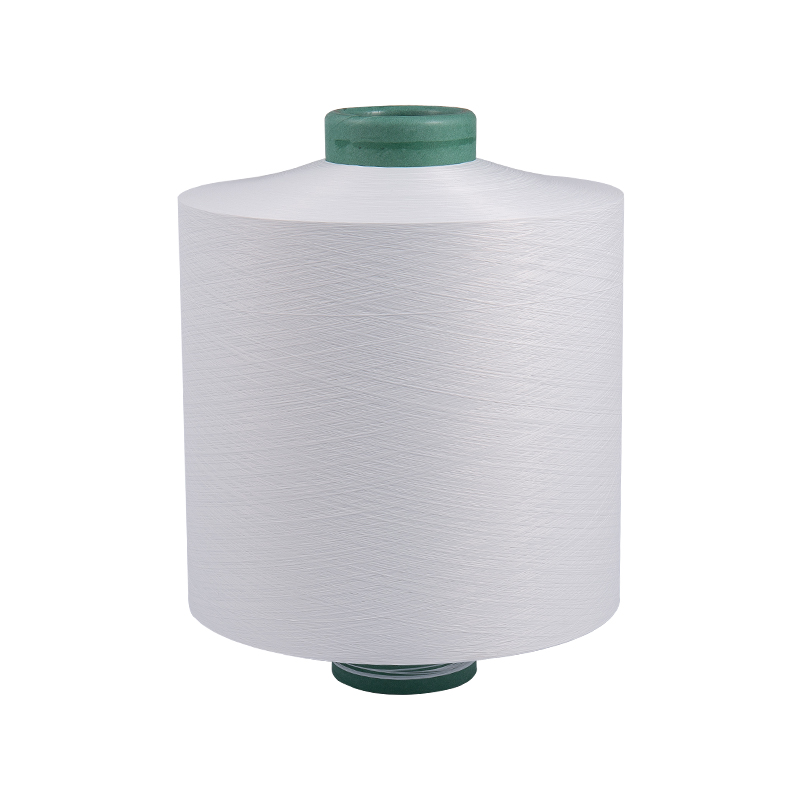
 Semi-Dull DTY Polyester Yarn for Chenille ProjectsSemi-gloss polyester chenille yarn with soft, plush texture and drape for garments, accessories, and home decor; a relevant option to compare for chenille crochet.View Product →
The Value of a Craft That Stays Handmade
Crochet's resistance to automation is not a failure of engineering. It is a reminder that some textile processes are built around touch and adaptation. Hand crochet can be dense and sculptural, or open and lacy. It can change direction mid-row, add a new color, or make a three-dimensional shape without a seam. Those qualities are valuable in fashion, home textiles, accessories, and toys. A machine that could crochet would still need to decide when to follow a pattern exactly and when to adapt to the yarn. That is a high bar.
For yarn makers, the lesson is not to wait for a perfect crochet robot. It is to make yarns that work well in human hands and in the machines that already exist. Consistency, clear specifications, and honest communication about performance matter more than a marketing label. If a yarn is designed for crochet, it should be tested in crochet. If it is designed for chenille or fancy yarn effects, the pile and core should be stable enough for the intended stitch.
Will machines ever crochet? Possibly, in limited forms. Soft robotics, better tactile sensors, and machine learning could bring a specialized crochet machine closer. But a general-purpose machine that matches a skilled crocheter across patterns and yarns remains a research problem. For now, the answer to why machines cannot crochet is that crochet asks a machine to do several hard things at once: hold a moving loop, feel soft yarn, place a hook inside a changing fabric, and correct mistakes in real time. Human hands still do that better.
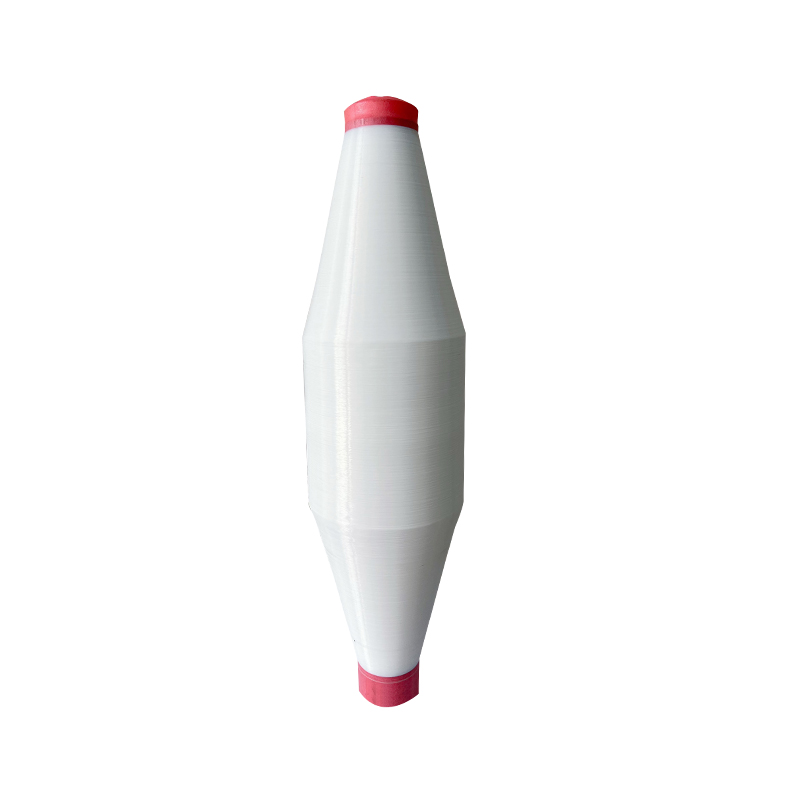
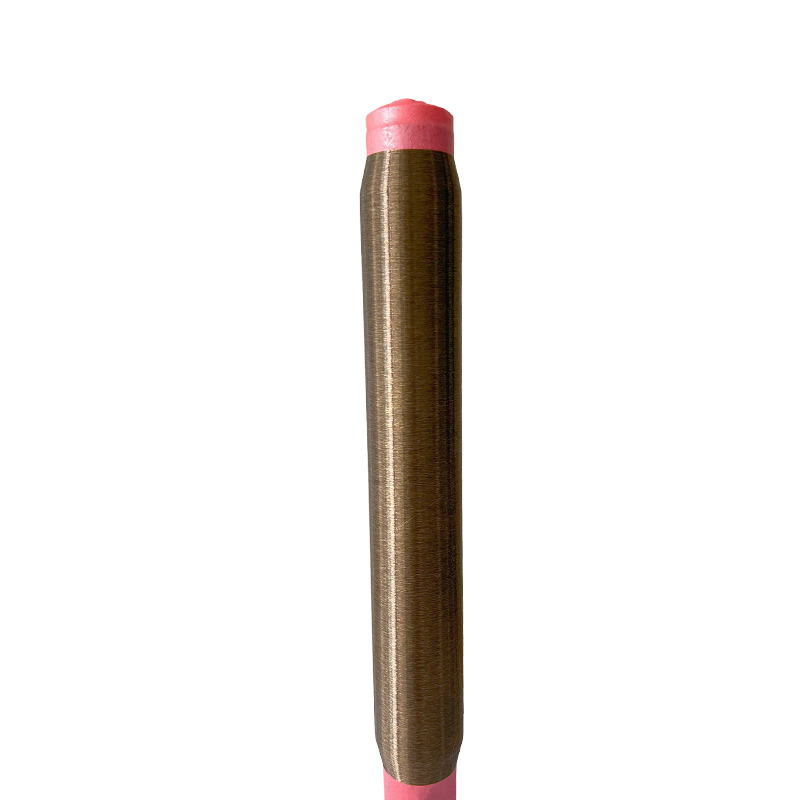
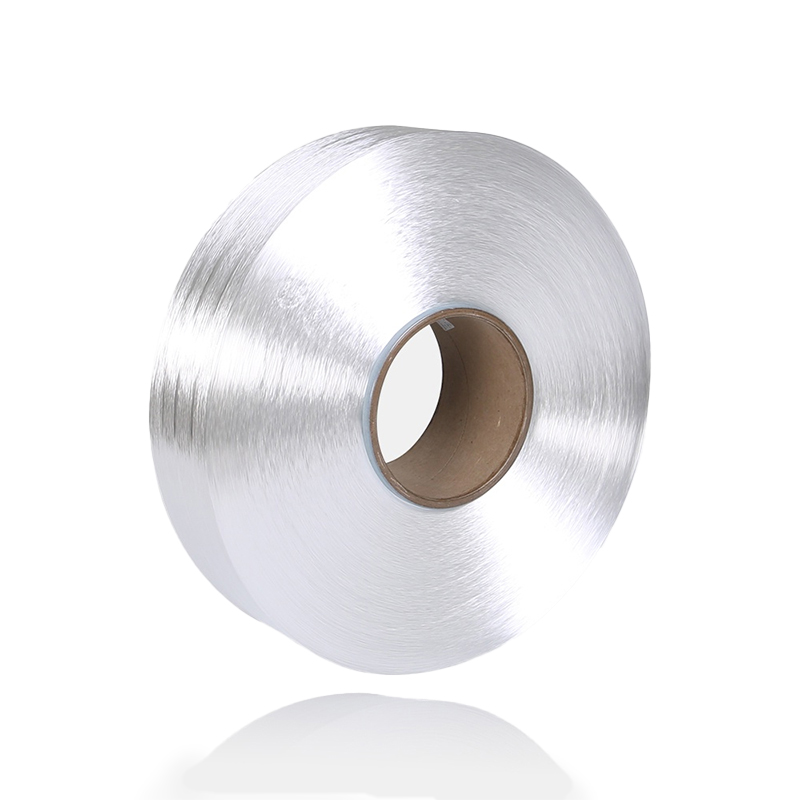
At our mill, we do not claim to automate crochet. We make polyester DTY and related yarns for customers who need consistent raw material, whether the yarn goes into hand crochet, chenille, fancy yarn, or machine-knit fabric. The craft may stay handmade, but the yarn behind it can still be engineered with care.



GLOBAL BUSINESS
Backed by stable production capacity and integrated manufacturing and trading capabilities, Zhenyi Chemical Fiber is committed to serving customers in international markets. Our team provides responsive support throughout product selection, order coordination, export documentation and shipment arrangements. We aim to build long-term partnerships through consistent product quality, clear communication and dependable service.
Ready to Begin?
Categories
Contact Information

 +86-18258373586
 No. 318 Huiye Road, Fengming Subdistrict, Tongxiang, Jiaxing, Zhejiang, China.
Copyright © ZHENYI CHEMICAL FIBER All rights reserved.
