

 English


Industry News
What Makes Special Shape Colored Polyester Monofilament Different?
2026-07-09
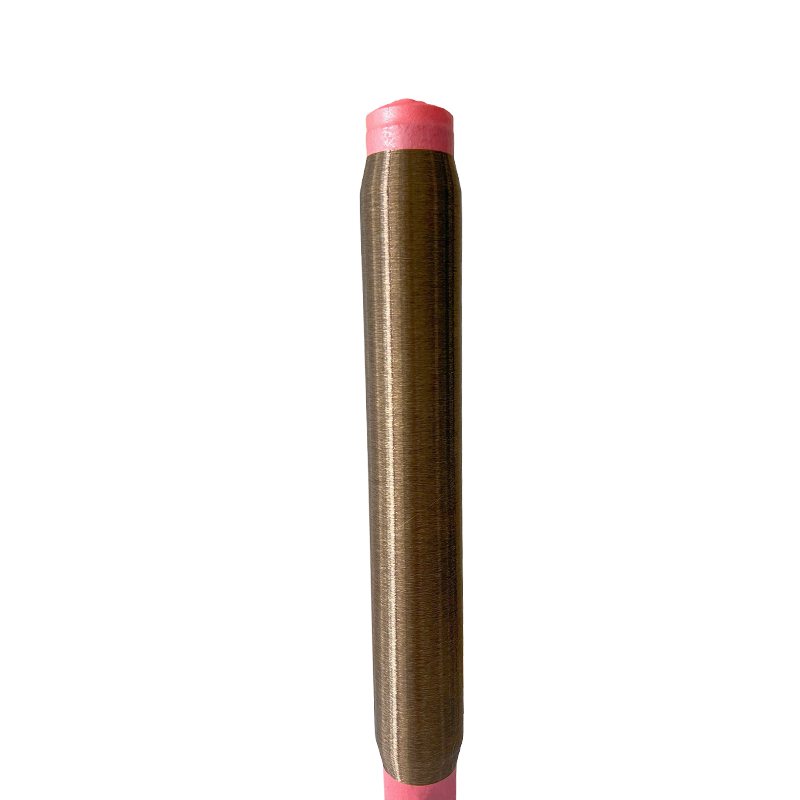
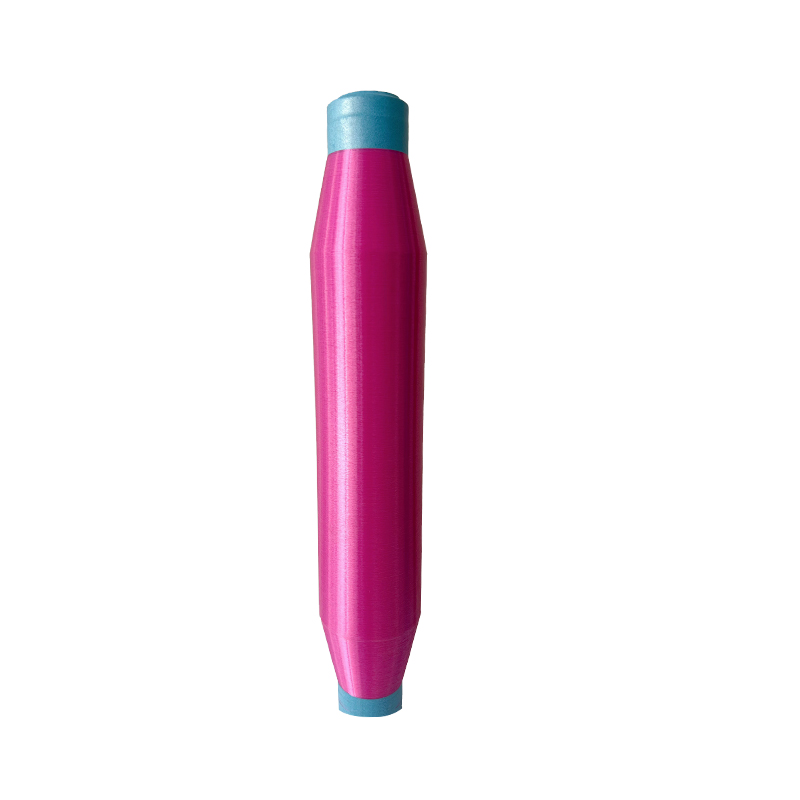
Special shape colored polyester monofilament refers to a category of engineered polyester fiber that departs from the standard round cross-section used in conventional monofilament production, instead being extruded into custom profiles such as flat, triangular, trilobal, or hollow shapes, while also incorporating color directly into the fiber during manufacturing. This combination of shaped cross-section and integrated color gives the resulting yarn distinct mechanical, optical, and functional properties that make it valuable across industries ranging from brush and filtration manufacturing to textile weaving and industrial fabric production. This article explains how special shape monofilament is produced, the range of cross-sectional profiles available, the coloring methods used, and the practical factors buyers should evaluate when selecting the right yarn for a given application.
Content
- 1 What Distinguishes Special Shape Monofilament From Standard Round Fiber
- 2 Common Cross-Sectional Shapes and Their Functional Benefits
- 3 How Color Is Integrated Into the Fiber
- 4 Key Performance Properties to Evaluate
- 5 Common Industry Applications
- 6 Factors to Consider When Sourcing Special Shape Monofilament
- 7 Final Thoughts
What Distinguishes Special Shape Monofilament From Standard Round Fiber
Standard polyester monofilament is extruded through a circular spinneret opening, producing a fiber with a uniform round cross-section. Special shape monofilament, by contrast, is extruded through custom-engineered spinneret dies that shape the molten polymer into non-round profiles as it solidifies. This process fundamentally changes several physical characteristics of the fiber, including its bending stiffness, surface area, light interaction, and how it behaves when woven, knitted, or bundled into brushes and other end products.
Because the cross-sectional shape influences how the fiber flexes and how densely it can be packed together, manufacturers select specific profiles based on the mechanical performance required in the final product. A round fiber, for example, bends uniformly in every direction, while a flat or triangular profile bends more easily along certain axes, which can be an advantage or a limitation depending on the intended use.
Common Cross-Sectional Shapes and Their Functional Benefits
Manufacturers produce special shape monofilament in several distinct cross-sectional profiles, each offering different mechanical and visual characteristics suited to specific applications.
| Cross-Section Shape | Key Characteristic | Common Application |
| Flat/Ribbon | Wide surface, directional stiffness | Decorative textiles, ribbon weaving |
| Triangular/Trilobal | Enhanced light reflection, sparkle effect | Decorative fabrics, sparkling yarns |
| Hollow/Tubular | Lightweight, added bulk without added weight | Insulation textiles, lightweight fabrics |
| Cross/Star-Shaped | Increased surface area, moisture wicking | Sportswear and moisture-management fabrics |
| Oval/Elliptical | Balanced flexibility with directional bending | Brush filaments, industrial screening |
Trilobal and other multi-lobal shapes are particularly popular in decorative and fashion textile applications because their angled facets catch and reflect light differently than a round fiber, producing a subtle sparkle or luster effect that is difficult to achieve with standard round monofilament. Cross-shaped or star-shaped profiles, on the other hand, are chosen more often for functional performance textiles, since their increased surface area improves capillary action and helps move moisture away from the skin in activewear applications.
How Color Is Integrated Into the Fiber
Color in special shape polyester monofilament is typically introduced through one of two primary methods, each with distinct advantages depending on the application's requirements for colorfastness and production flexibility.
Solution Dyeing (Dope Dyeing)
In solution dyeing, pigment is added directly to the molten polyester polymer before it is extruded through the shaped spinneret. This means the color becomes an integral part of the fiber structure itself rather than a surface treatment applied afterward. Fibers produced this way tend to exhibit excellent colorfastness against sunlight, washing, and abrasion, since the pigment is distributed evenly throughout the entire cross-section of the filament rather than sitting only on the outer surface.
Post-Extrusion Dyeing
Alternatively, monofilament can be extruded first in its shaped, undyed form and then dyed afterward using conventional textile dyeing processes. This approach offers more flexibility for producing smaller batches of custom colors without needing to change pigment formulations at the extrusion stage, but the resulting color typically does not penetrate as deeply into the fiber, which can make it more susceptible to fading with prolonged UV exposure or repeated washing compared to solution-dyed alternatives.
Key Performance Properties to Evaluate
When selecting special shape colored polyester monofilament for a specific application, several performance characteristics should be reviewed to ensure the material meets functional requirements beyond appearance alone.
- Tensile strength and elongation, which determine how the fiber performs under tension during weaving, brushing, or industrial processing.
- Bending recovery, particularly important for brush filament applications where the fiber must return to its original shape after repeated flexing.
- Colorfastness rating, especially for outdoor or frequently washed textile applications exposed to sunlight and moisture.
- Diameter consistency along the length of the filament, which affects uniformity in woven or knitted structures.
- Surface friction coefficient, which influences how the fiber interacts with weaving equipment and adjacent yarns during processing.
Common Industry Applications
Special shape colored polyester monofilament serves a wide range of industries due to the combination of custom mechanical properties and built-in color that reduces the need for secondary finishing processes.
- Industrial and cosmetic brush manufacturing, where shaped filaments provide specific stiffness and bristle behavior tailored to the brush's intended use.
- Decorative and fashion textiles, where trilobal or flat profiles add visual texture and light-reflective effects to woven fabrics.
- Screen printing mesh and industrial filtration fabrics, where dimensional stability and consistent filament shape support precise mesh openings.
- Sportswear and performance apparel, where cross-shaped or star-shaped filaments improve moisture management and breathability.
- Fishing line and outdoor sporting goods, where specific cross-sections balance flexibility with abrasion resistance.
Factors to Consider When Sourcing Special Shape Monofilament
Buyers evaluating suppliers for special shape colored polyester monofilament should look beyond the base product specification sheet to understand how well a manufacturer can support consistent, application-specific production. Confirming whether the supplier offers custom spinneret die development is important for buyers with unique cross-sectional requirements not available in standard product catalogs. It is also worth reviewing whether the manufacturer uses solution dyeing or post-extrusion dyeing as the default coloring method, since this directly affects long-term colorfastness expectations for the finished product.
Diameter tolerance and batch-to-batch color consistency are additional factors that matter significantly for large-scale textile or brush production runs, where even minor variation between production lots can create visible inconsistency in the finished goods. Requesting sample yarns for mechanical and colorfastness testing before committing to a full production order is a practical step that helps confirm the material meets the specific performance requirements of the intended application.
Final Thoughts
Special shape colored polyester monofilament offers manufacturers a way to combine engineered mechanical performance with built-in color, reducing the need for separate finishing processes while unlocking properties that standard round fiber cannot achieve. By understanding the available cross-sectional profiles, coloring methods, and key performance characteristics, buyers can select a monofilament that not only meets visual requirements but also performs reliably within the specific mechanical demands of brushes, textiles, filtration products, or other end applications.


GLOBAL BUSINESS
Backed by stable production capacity and integrated manufacturing and trading capabilities, Zhenyi Chemical Fiber is committed to serving customers in international markets. Our team provides responsive support throughout product selection, order coordination, export documentation and shipment arrangements. We aim to build long-term partnerships through consistent product quality, clear communication and dependable service.
Ready to Begin?
Categories
Contact Information

 +86-18258373586
 No. 318 Huiye Road, Fengming Subdistrict, Tongxiang, Jiaxing, Zhejiang, China.
Copyright © ZHENYI CHEMICAL FIBER All rights reserved.
