

 English
 Home / News / Industry News / What Makes Bright Polyester Monofilament the Preferred Choice Across Industrial and Technical Textile Applications?
Industry News
What Makes Bright Polyester Monofilament the Preferred Choice Across Industrial and Technical Textile Applications?
2026-05-08
Content
- 1 What Is Bright Polyester Monofilament?
- 2 Manufacturing Process: From PET Resin to Finished Monofilament
- 3 Key Physical and Optical Properties
- 4 Bright vs. Semi-Dull vs. Full-Dull: Choosing the Right Optical Grade
- 5 Industrial Filtration: The Largest Application Sector
- 6 Screen Printing Meshes: Precision at Microscale
- 7 Decorative Textiles and Ribbon Weaving Applications
- 8 Fishing Lines and Outdoor Technical Applications
- 9 Selecting the Right Bright Polyester Monofilament for Your Application
What Is Bright Polyester Monofilament?
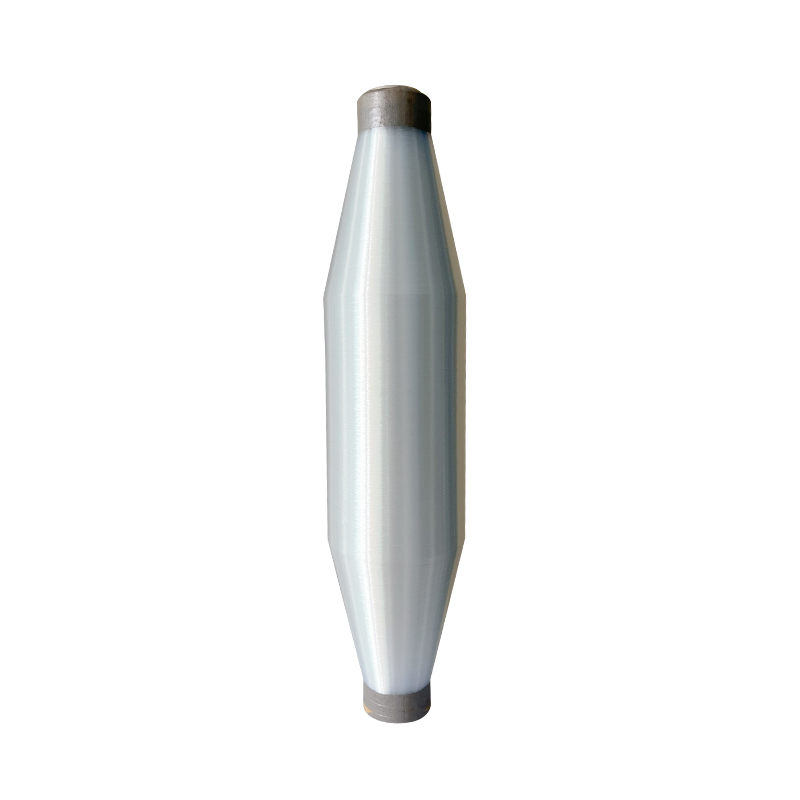
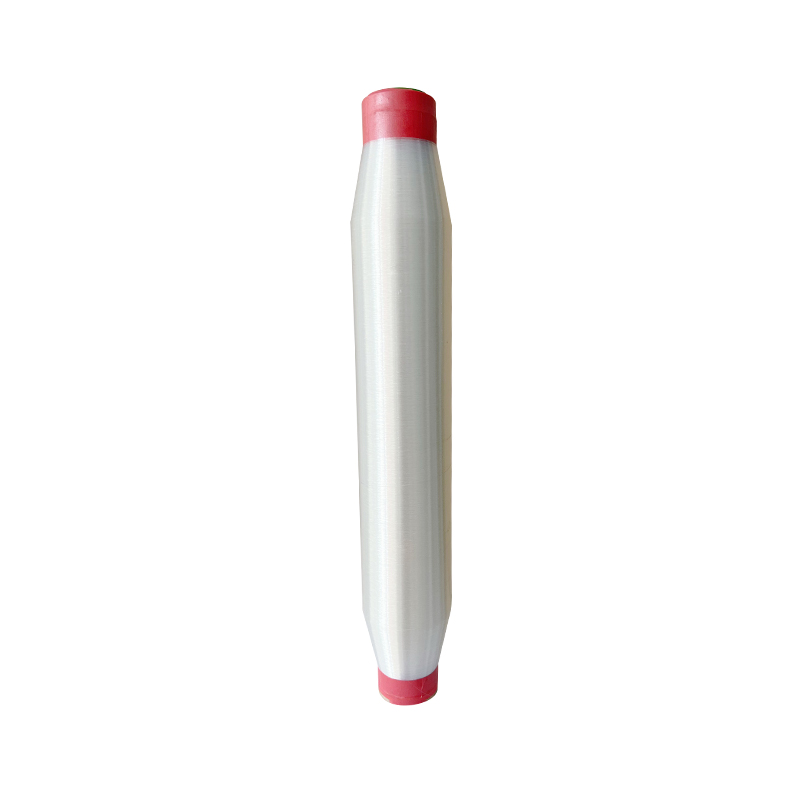
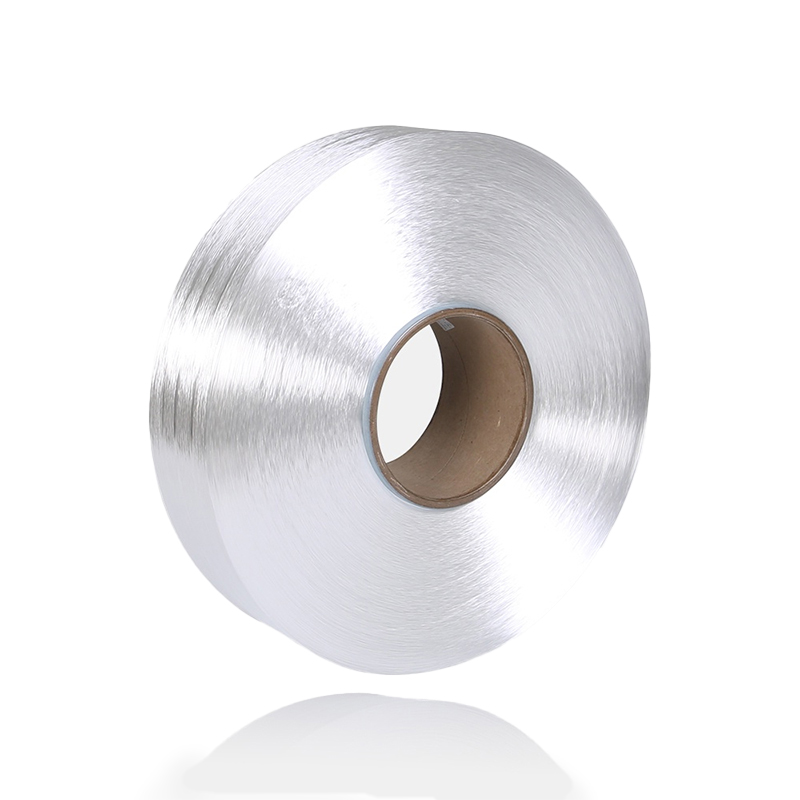
Bright polyester monofilament is a single-strand, continuous filament fiber produced from polyethylene terephthalate (PET) resin that has been formulated without the addition of delustrants — most commonly titanium dioxide — which are used in semi-dull and full-dull variants to scatter light and reduce surface sheen. The absence of these light-scattering additives allows the fiber's surface to reflect incident light directly and uniformly, producing the high-gloss, mirror-like optical appearance that defines the "bright" designation and distinguishes it clearly from its matte counterparts. This optical characteristic is not merely aesthetic: it is a direct consequence of the fiber's molecular and surface structure, and it correlates with a specific set of physical and chemical properties that make bright polyester monofilament distinctly suited to a defined range of technical and decorative applications.
As a monofilament — meaning a single, solid, continuous filament rather than a bundle of fine staple fibers twisted together into a yarn — bright polyester monofilament possesses a uniform circular or shaped cross-section along its entire length, with no internal voids, fiber-to-fiber interfaces, or twist-induced structural irregularities. This homogeneous structure gives it mechanical properties — particularly tensile strength, dimensional stability, and resistance to abrasion — that are superior in many respects to multifilament yarns of equivalent linear density. The combination of high optical brightness, structural uniformity, and excellent mechanical performance places bright polyester monofilament at the intersection of technical performance and visual appeal, making it a material of choice across industries as diverse as industrial filtration, technical weaving, fishing, medical devices, and decorative textiles.
Manufacturing Process: From PET Resin to Finished Monofilament
The production of bright polyester monofilament is a precisely controlled melt-spinning process that begins with the selection and preparation of high-purity PET resin chips. For bright monofilament, the resin must be free of titanium dioxide and other optical modifiers, and it must meet strict intrinsic viscosity (IV) specifications — typically in the range of 0.62 to 0.85 dl/g for standard monofilament grades, with higher IV values used for applications requiring greater tensile strength and toughness. The resin is dried to moisture content below 50 ppm before extrusion to prevent hydrolytic degradation of the polymer chains, which would reduce molecular weight, impair mechanical properties, and introduce color defects in the finished filament.
The dried resin is fed into a single-screw or twin-screw extruder where it is melted at temperatures typically ranging from 270°C to 295°C, depending on the specific PET grade and target viscosity. The molten polymer is metered through a gear pump to ensure a constant, pulsation-free flow rate, then forced through precision-machined spinneret holes of the desired diameter and shape. The extruded filaments pass through a quench zone — typically a water bath or air quench system — where they solidify rapidly into their final cross-sectional shape. The quench conditions critically influence the filament's surface smoothness, internal crystallinity distribution, and optical brightness: faster quenching generally produces a smoother surface and higher gloss.
After quenching, the solidified filaments are drawn — stretched under controlled tension and temperature — to orient the polymer chains along the filament axis, developing the high tensile strength, modulus, and dimensional stability that characterize finished bright polyester monofilament. Drawing ratios typically range from 3:1 to 5:1 depending on the target mechanical properties. Heat setting at elevated temperatures following drawing relieves internal stress, stabilizes the crystalline structure, and locks in the filament's dimensional properties, reducing shrinkage during subsequent processing and end use. The finished monofilaments are wound onto bobbins or spools at controlled tension for shipping and downstream processing.
Key Physical and Optical Properties
The properties of bright polyester monofilament span optical, mechanical, and chemical dimensions, and understanding each dimension is essential for matching the material to its intended application. The following table summarizes the most practically important specifications across these categories:
| Property | Typical Value / Description |
| Diameter Range | 0.06 mm – 2.0 mm (application dependent) |
| Tensile Strength | 4.5 – 7.5 g/den depending on draw ratio |
| Elongation at Break | 15% – 35% |
| Melting Point | ~ 255°C – 265°C |
| Moisture Regain | 0.4% (exceptionally low) |
| Optical Character | High gloss, specular reflectance, transparent to translucent |
| Chemical Resistance | Excellent vs. most acids, alcohols, hydrocarbons; moderate vs. strong alkalis |
| UV Resistance | Good inherently; excellent with UV stabilizer additives |
| Specific Gravity | 1.38 g/cm³ |
The exceptionally low moisture regain of bright polyester monofilament — at just 0.4% compared to 8.5% for cotton or 4.5% for nylon — is one of its most operationally significant properties. Because the filament absorbs virtually no water, its mechanical properties remain essentially constant regardless of ambient humidity or direct water exposure. This dimensional stability under moisture is critical in applications such as papermaking fabrics, filtration meshes, and outdoor technical textiles where consistent performance in wet or humid environments is a fundamental requirement.
Bright vs. Semi-Dull vs. Full-Dull: Choosing the Right Optical Grade
The selection between bright, semi-dull, and full-dull polyester monofilament is not simply a matter of aesthetic preference — it reflects a meaningful technical trade-off between optical performance, UV stability, fiber-matrix interaction in composite applications, and processing behavior that has direct functional consequences in most end uses.
Bright Grade
Contains no TiO₂ delustrant. Produces maximum optical clarity, gloss, and light transmission. Preferred for applications where visual brightness is a product attribute — decorative weaving, fishing lines where visibility aids the angler, screen printing meshes where ink passage must be unobstructed, and optical fiber-adjacent applications. The absence of TiO₂ means bright monofilament has marginally lower UV resistance than semi-dull and full-dull grades, as TiO₂ provides some UV absorption benefit in addition to its light-scattering effect. UV stabilizer packages can be incorporated into the resin to compensate when outdoor durability is required.
Semi-Dull Grade
Contains approximately 0.3% TiO₂. Provides a moderate reduction in surface gloss while retaining good tensile properties. Commonly used in apparel textiles where a softer, less synthetic-looking sheen is preferred, and in technical applications where some reduction in light reflectance improves process camera visibility or reduces glare. The TiO₂ particles act as nucleating agents for PET crystallization, producing a slightly different crystalline microstructure than bright grade and modifying tensile and thermal properties by small but measurable amounts.
Full-Dull Grade
Contains approximately 2.0% TiO₂, producing a completely matte, opaque-white appearance. Used where a natural, cotton-like aesthetic is desired in apparel textiles, where light reflection must be minimized, or where the TiO₂ loading provides specific functional benefits such as enhanced pigment carrier performance in masterbatch applications. Full-dull monofilament is generally not appropriate for filtration mesh or screen printing applications where optical clarity and open area consistency are critical.
Industrial Filtration: The Largest Application Sector
Industrial filtration represents the largest single application sector for bright polyester monofilament globally, with demand driven by the water treatment, food and beverage processing, chemical manufacturing, pharmaceutical, and mining industries. In filtration applications, monofilament is woven into precision meshes — either plain weave, twill weave, or Dutch weave constructions — with controlled opening sizes ranging from a few microns to several millimeters, depending on the particle size distribution to be separated.
Bright polyester monofilament is favored for filtration meshes over multifilament yarns for several technically important reasons:
- The smooth, non-porous surface of monofilament presents no internal fiber interstices where particles can lodge and accumulate, making filtration meshes easier to clean, backwash, and sanitize compared to multifilament equivalents
- The circular cross-section and consistent diameter of monofilament produce precisely defined mesh apertures with low size variation, enabling accurate and repeatable particle retention cut-off specifications
- The dimensional stability of bright polyester monofilament under wet conditions — its negligible moisture absorption and hydrolytic stability — ensures that mesh aperture sizes remain consistent in continuous wet processing environments
- Excellent chemical resistance to the acids, solvents, and sanitizing agents commonly used in industrial filtration circuits extends service life and reduces replacement frequency
- High tensile strength and abrasion resistance support the mechanical stresses of filter press operation, drum filtration, and belt filtration processes where the mesh is subjected to continuous tension and surface contact with filter cake
Screen Printing Meshes: Precision at Microscale
Screen printing — including textile screen printing, graphic arts printing, and electronics circuit board printing — is one of the most technically demanding applications for bright polyester monofilament, placing extreme requirements on diameter consistency, surface smoothness, dimensional stability, and mesh geometry precision. Screen printing meshes are woven from bright polyester monofilament in thread counts ranging from approximately 40 threads per centimeter for coarse graphic applications to over 200 threads per centimeter for fine electronics printing, with filament diameters as small as 30–40 microns for the finest mesh counts.
The brightness of the monofilament is specifically advantageous in screen printing applications because it allows photosensitive emulsions — which are exposed to UV light through the mesh to create the printing stencil — to be processed with precision. The consistent optical transparency of bright filaments ensures uniform UV light penetration through the mesh structure during emulsion exposure, producing sharp, accurately defined stencil edges. Semi-dull filaments, with their TiO₂ content scattering the UV exposure light, produce less sharp emulsion edge definition and are therefore not preferred for fine-detail screen printing applications.
Tension stability is equally critical in screen printing meshes — a mesh that relaxes and loses tension after being stretched onto the printing frame will produce dimensional inaccuracy in the printed image, which is unacceptable in multicolor printing where precise registration between successive print stations is required. High-draw-ratio bright polyester monofilament, with its well-oriented crystalline structure and low creep rate, provides the tension retention performance required for professional-grade screen printing applications.
Decorative Textiles and Ribbon Weaving Applications
Beyond industrial and technical applications, bright polyester monofilament occupies an important niche in decorative textiles where its high-gloss optical character is a primary product attribute rather than a secondary consideration. In ribbon weaving, gift wrap production, decorative fabric manufacturing, and fashion trim applications, the specular reflectance of bright monofilament creates a lustrous, metallic-adjacent visual effect that enhances product perceived value and visual appeal.
Bright monofilament used in decorative woven fabrics is typically incorporated as a weft or warp accent yarn, interlaced with matte or semi-dull ground yarns to create contrast effects where the bright monofilament highlights catch and reflect light while the surrounding fabric maintains a softer appearance. This combination is extensively used in evening wear fabrics, home furnishing textiles, curtain sheers, and decorative ribbons where the interplay of glossy and matte elements creates visual depth and complexity that a uniformly matte or uniformly bright fabric cannot achieve.
The stiffness of bright polyester monofilament — significantly greater than multifilament yarns of equivalent linear density due to the solid cross-section — contributes a structural quality to woven decorative fabrics that helps them maintain shape, drape crisply, and resist the limpness that can affect lightweight multifilament fabrics. This stiffness characteristic makes bright monofilament particularly well-suited to ribbon applications where a firm, self-supporting structure with excellent bow-forming ability is commercially desirable.
Fishing Lines and Outdoor Technical Applications
Fishing line represents one of the most familiar consumer applications for polyester monofilament, though it should be noted that nylon monofilament has historically dominated this market segment due to its superior knot strength and shock absorption. Bright polyester monofilament nevertheless finds application in specific fishing contexts — particularly in fly fishing leaders, trolling lines, and applications where minimal stretch and high visibility are priorities — where its lower elongation, greater stiffness, and resistance to water absorption provide functional advantages over nylon.
In outdoor technical applications more broadly — agricultural netting, anti-bird mesh, greenhouse shading fabrics, sports facility nets, and construction safety mesh — bright polyester monofilament is selected for its combination of UV resistance, dimensional stability in wet environments, and long service life under continuous outdoor exposure. When formulated with UV stabilizer packages incorporated during extrusion, bright polyester monofilament achieves outdoor service lives of five to ten years or more depending on UV exposure intensity, making it a cost-effective long-term solution for outdoor technical applications where frequent replacement would be operationally disruptive and economically costly.
Selecting the Right Bright Polyester Monofilament for Your Application
With bright polyester monofilament available across a broad range of diameters, tensile specifications, cross-sectional profiles, and additive packages, effective product selection requires matching the filament specification precisely to the mechanical, optical, and chemical demands of the intended application. The following criteria should guide the selection process:
- Diameter and diameter tolerance: For filtration and screen printing applications, diameter consistency is as important as nominal diameter — specify maximum allowable coefficient of variation (CV%) for diameter as part of the procurement specification, not just the target diameter value
- Tensile strength and elongation balance: High-strength, low-elongation grades suit filtration and screen printing where dimensional stability is paramount; moderate-strength, higher-elongation grades suit decorative weaving and fishing applications where flexibility and knot performance matter
- UV stabilizer requirements: Specify UV-stabilized grades for any outdoor application; standard bright grades without UV packages will degrade unacceptably under prolonged UV exposure
- Chemical environment compatibility: For filtration applications in aggressive chemical environments — concentrated acids, strong alkalis, or specific organic solvents — verify chemical resistance data against the specific process chemistry rather than relying on general PET chemical resistance ratings
- Cross-sectional profile: Round cross-sections are standard for most applications; trilobal, oval, and other specialty profiles are available for specific optical or weaving performance requirements and should be considered where the standard round profile does not fully meet application needs
Partnering with a monofilament manufacturer who offers detailed technical datasheets, consistent lot-to-lot quality control data, and application engineering support is the most reliable route to successful material specification — ensuring that the bright polyester monofilament selected delivers its full performance potential in the demanding industrial and technical applications where it excels.
GLOBAL BUSINESS
Backed by stable production capacity and integrated manufacturing and trading capabilities, Zhenyi Chemical Fiber is committed to serving customers in international markets. Our team provides responsive support throughout product selection, order coordination, export documentation and shipment arrangements. We aim to build long-term partnerships through consistent product quality, clear communication and dependable service.
Ready to Begin?
Categories
Contact Information

 +86-18258373586
 No. 318 Huiye Road, Fengming Subdistrict, Tongxiang, Jiaxing, Zhejiang, China.
Copyright © ZHENYI CHEMICAL FIBER All rights reserved.
