

 English
 Home / News / Industry News / What Are the Key Differences Between Semi-Dull and Full-Dull Polyester Monofilament, and Which Applications Suit Each?
Industry News
What Are the Key Differences Between Semi-Dull and Full-Dull Polyester Monofilament, and Which Applications Suit Each?
2026-04-27
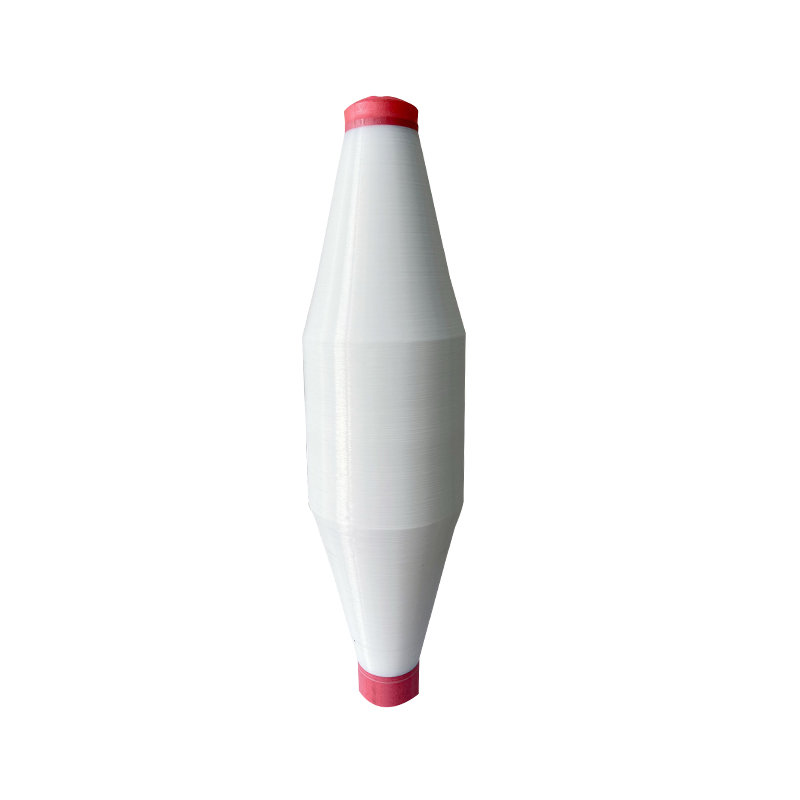
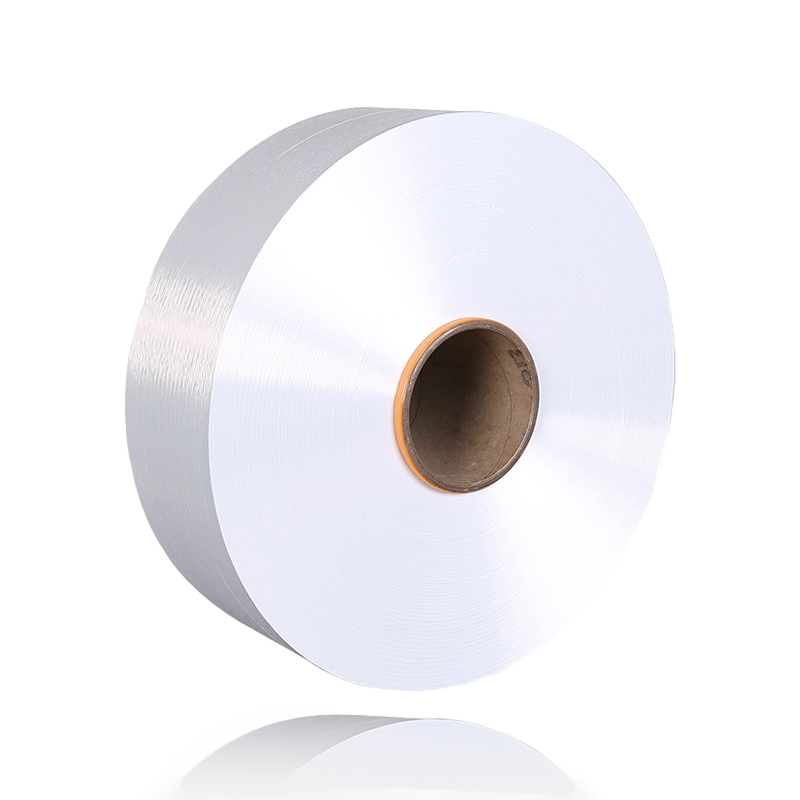
Polyester monofilament is a single-strand continuous fiber extruded from polyethylene terephthalate (PET) resin, widely used across industrial filtration, technical textiles, papermaking fabrics, fishing lines, and specialty weaving applications. Within this product family, the degree of optical brightness — commonly described as luster — is one of the most functionally significant variables in specifying the right monofilament for a given application. Two of the most commonly specified luster grades are semi-dull and full-dull polyester monofilament. Although both are produced from the same base polymer, the differences in their titanium dioxide (TiO₂) content and resulting optical, surface, and processing characteristics create distinct performance profiles that make each grade better suited to specific end uses. Understanding these differences in practical terms is essential for engineers, fabric designers, and procurement specialists making monofilament selection decisions.
Content
- 1 How Luster Is Controlled in Polyester Monofilament Production
- 2 Key Physical and Optical Differences Between the Two Grades
- 3 Side-by-Side Specification Comparison
- 4 Primary Applications of Semi-Dull Polyester Monofilament
- 5 Primary Applications of Full-Dull Polyester Monofilament
- 6 Selecting the Right Grade: A Practical Decision Guide
How Luster Is Controlled in Polyester Monofilament Production
The luster of a polyester monofilament is determined primarily by the concentration of titanium dioxide (TiO₂) particles incorporated into the PET polymer melt before extrusion. TiO₂ is an inorganic white pigment that acts as an optical diffuser: when light strikes the fiber surface, the TiO₂ particles scatter it rather than allowing it to reflect specularly, reducing the bright, glassy appearance characteristic of fully transparent polyester. The higher the TiO₂ concentration, the more light is scattered, and the flatter and more opaque the fiber's visual appearance becomes.
Polyester monofilament is manufactured across three primary luster grades defined by TiO₂ content. Bright (or super-bright) monofilament contains essentially no TiO₂ — typically less than 0.1% — and has a glassy, highly reflective surface. Semi-dull monofilament contains approximately 0.3% to 0.5% TiO₂ by weight, giving it a soft sheen that reduces glare without eliminating luminosity entirely. Full-dull monofilament contains approximately 2.0% to 2.5% TiO₂, producing a thoroughly matte surface with minimal light reflection. These TiO₂ loading levels are not arbitrary — they represent standardized industry benchmarks refined through decades of textile production to hit consistent optical and performance targets reproducibly across manufacturing batches.
Beyond their visual effect, TiO₂ particles also act as micro-abrasives within the fiber cross-section. At the TiO₂ levels used in full-dull monofilament, this has measurable effects on the fiber's drawing behavior, tensile modulus, and dyeability, all of which are discussed in detail below.
Key Physical and Optical Differences Between the Two Grades
The contrast between semi-dull and full-dull polyester monofilament goes beyond surface appearance. The differences in TiO₂ content produce measurable divergences in several performance-relevant properties that directly influence how each grade behaves in production and end use.
Light Reflectance and Visual Appearance
Semi-dull monofilament reflects approximately 60–75% less specular light than bright polyester monofilament, giving it a soft, natural-looking sheen similar to silk. It remains visually luminous under direct light and retains a degree of translucency that makes it suitable for applications where a refined, quality appearance is desired without the harshness of a fully glossy surface. Full-dull monofilament, by contrast, reflects very little specular light — its surface appears consistently flat, chalky, and opaque under most lighting conditions, effectively eliminating any shine or sparkle from the finished fabric or structure in which it is incorporated.
Tensile Strength and Draw Ratio
The TiO₂ particles in full-dull monofilament act as stress concentration points within the polymer matrix during the drawing process that orients molecular chains and develops tensile strength. As a result, full-dull monofilament typically achieves slightly lower maximum draw ratios than semi-dull monofilament of equivalent diameter and PET intrinsic viscosity, leading to modestly lower tenacity values — generally 3–8% lower tensile strength at comparable diameters. For most industrial applications, this difference is within acceptable engineering tolerances, but in high-load technical applications where every unit of tensile strength matters, it is a specification variable worth accounting for.
Dyeability and Color Development
TiO₂ is white and highly opaque. In full-dull monofilament, the high TiO₂ content creates a white background within the fiber structure that modifies how disperse dyes are perceived optically after dyeing. Deep, saturated colors — especially navy, black, and dark red — are more difficult to achieve in full-dull monofilament because the TiO₂ white base desaturates the dye color, requiring higher dye concentrations to achieve equivalent depth of shade compared to semi-dull material. Semi-dull monofilament, with its lower TiO₂ loading, dyes to deeper shades more efficiently and produces cleaner, more saturated colors at standard dye concentrations.
Side-by-Side Specification Comparison
The table below summarizes the principal differences between semi-dull and full-dull polyester monofilament across the specifications most relevant to industrial and textile applications.
| Property | Semi-Dull Polyester Monofilament | Full-Dull Polyester Monofilament |
|---|---|---|
| TiO₂ Content | 0.3–0.5% | 2.0–2.5% |
| Surface Appearance | Soft sheen, gentle luster | Flat matte, no shine |
| Translucency | Moderate translucency retained | Opaque |
| Relative Tenacity | Higher (reference grade) | 3–8% lower at equivalent diameter |
| Deep Dyeability | Good — clean, saturated colors | Moderate — deeper shades require higher dye load |
| UV Resistance | Good | Good — TiO₂ provides mild UV screening |
| Needle/Guide Wear in Weaving | Low to moderate | Slightly higher (TiO₂ abrasion effect) |
| Typical Cost Premium | Standard pricing reference | Slight premium due to higher TiO₂ loading |
Primary Applications of Semi-Dull Polyester Monofilament
Semi-dull polyester monofilament occupies the broadest application space within the monofilament category, functioning as a practical default grade that balances visual refinement with mechanical performance across a wide range of industries.
Technical Fabrics and Industrial Filtration
In industrial woven fabrics — including papermaking forming fabrics, press felts, and filtration screens — semi-dull monofilament is commonly specified because its slightly modified surface compared to bright polyester reduces inter-yarn slippage at fabric crimp points, improving dimensional stability in the woven structure. Its tensile strength profile is well matched to the high-load, continuous-motion environments of paper machine clothing, where forming fabrics must maintain precise mesh apertures under sustained tension and hydrodynamic stress. The soft luster of semi-dull monofilament also facilitates visual inspection of fabric uniformity and weave defects during quality control, as the surface reflects inspection lighting more evenly than the highly specular bright grade.
Apparel Fabrics and Fashion Textiles
In woven and knitted fashion textiles, semi-dull monofilament is the preferred luster grade when a natural, refined appearance is required without the artificial gloss of bright polyester. Sheer fabrics for blouses, linings, and eveningwear incorporate semi-dull monofilament to achieve a silk-like visual quality — soft luminosity without mirror-like reflectance. The grade's superior dyeability relative to full-dull also makes it the choice for colored fashion applications, particularly in mid-tone and saturated color ranges where color accuracy and consistency are commercially important. Stiffened fabrics for structured garments, interlinings, and hat brims also make use of semi-dull monofilament for its combination of rigidity, smooth aesthetics, and good color acceptance.
Fishing Lines and Outdoor Technical Applications
Semi-dull polyester monofilament is used in fishing lines and agricultural nets where moderate light scatter reduces visibility to fish or reduces glare reflection that might disturb users in outdoor environments. Its higher tenacity relative to full-dull also supports applications in aquaculture netting and crop protection mesh, where tensile load resistance and dimensional stability under UV exposure are primary specification drivers. The partial translucency retained in semi-dull grade allows visual inspection of mesh integrity without the fully opaque appearance that would mask early signs of fiber degradation.
Primary Applications of Full-Dull Polyester Monofilament
Full-dull polyester monofilament is the grade of choice whenever a completely non-reflective appearance is a primary performance requirement, rather than a secondary aesthetic preference. Its applications are more specialized than those of semi-dull material, but within those niches it is often the only specification that meets the end-use requirement.
Screen Printing Mesh and Precision Technical Screens
Full-dull polyester monofilament is the standard specification for screen printing mesh fabric — the woven mesh stretched over frames for textile, graphic, and electronics screen printing. In this application, the flat matte surface of full-dull monofilament is functionally critical: it minimizes light diffusion and halation around image edges during UV photoemulsion exposure, producing sharper stencil definition and more accurate fine-detail reproduction. Bright or semi-dull monofilament in printing mesh would scatter UV light laterally within the mesh structure during exposure, undercutting stencil edges and degrading print resolution — a problem severe enough to render these grades essentially unsuitable for precision printing applications.
Outdoor Furniture Fabrics and Sun Protection Textiles
Woven outdoor furniture fabrics — used for garden chairs, shade sails, pergola covers, and lounge upholstery — frequently specify full-dull polyester monofilament to achieve the flat, non-reflective surface aesthetic that matches contemporary outdoor design preferences. The high TiO₂ content in full-dull monofilament also provides a degree of inherent UV screening that contributes to the fabric's long-term color retention and structural longevity under continuous outdoor UV exposure. For shade structures rated to UV protection factor (UPF) standards, the TiO₂ loading in full-dull monofilament contributes measurably to the fabric's UPF performance calculation.
Velcro-Type Hook and Loop Components and Specialty Fastenings
Full-dull monofilament is also used in the loop component of woven hook-and-loop fasteners and in specialty webbings where a non-reflective finish is required for medical, military, or tactical textile applications. In these contexts, the absence of surface sheen is a functional requirement — reflective textile surfaces are unacceptable in surgical settings where reflections interfere with lighting, or in tactical gear where surface glint creates a visibility risk. The matte opacity of full-dull monofilament satisfies these zero-reflectance specifications that semi-dull material cannot reliably meet.
Selecting the Right Grade: A Practical Decision Guide
Choosing between semi-dull and full-dull polyester monofilament comes down to clearly identifying which performance parameters are most critical for the intended application. The following questions provide a systematic framework for making the correct specification decision.
- Is zero surface reflectance a hard requirement? Applications in screen printing mesh, anti-glare technical fabrics, tactical gear, and surgical textiles require full-dull. If a soft, reduced-gloss appearance is acceptable, semi-dull covers the requirement at better tensile performance and dyeability.
- Are deep or saturated colors part of the product specification? Semi-dull monofilament dyes to richer, cleaner colors at standard dye concentrations. If the product will be dyed in dark or vivid shades, semi-dull reduces dye cost and improves color accuracy.
- Is maximum tensile strength a primary engineering requirement? Semi-dull monofilament provides marginally higher tenacity at equivalent diameters. For high-load technical applications where safety factors are tight, this difference merits consideration.
- Will the fabric be used for extended outdoor UV exposure? Both grades perform well under UV, but full-dull's higher TiO₂ content provides slightly stronger intrinsic UV screening. For shade fabrics and outdoor technical structures with long design service lives, full-dull has a marginal UV durability advantage.
- Does the application involve precision photoemulsion or UV exposure processing? Full-dull is the unambiguous choice. No amount of process adjustment compensates for the halation problem that semi-dull or bright monofilament creates in photographic stencil fabrication for screen printing.
In summary, semi-dull polyester monofilament is the broader-purpose, higher-performance grade suited to industrial fabrics, fashion textiles, filtration, and most color-dyeing applications where refined appearance is valued alongside mechanical strength. Full-dull polyester monofilament is the specialist grade required wherever complete optical flatness, maximum UV opacity, or photographic precision is the defining performance criterion. Correctly matching the luster grade to the application's optical and mechanical requirements is a straightforward specification decision once the functional logic behind each grade's TiO₂ loading is clearly understood.

GLOBAL BUSINESS
Backed by stable production capacity and integrated manufacturing and trading capabilities, Zhenyi Chemical Fiber is committed to serving customers in international markets. Our team provides responsive support throughout product selection, order coordination, export documentation and shipment arrangements. We aim to build long-term partnerships through consistent product quality, clear communication and dependable service.
Ready to Begin?
Categories
Contact Information

 +86-18258373586
 No. 318 Huiye Road, Fengming Subdistrict, Tongxiang, Jiaxing, Zhejiang, China.
Copyright © ZHENYI CHEMICAL FIBER All rights reserved.
