

 English
 Home / News / Industry News / Polyester DTY Yarn Properties, Applications, and Processing Characteristics
Industry News
Polyester DTY Yarn Properties, Applications, and Processing Characteristics
2026-02-12
Content
- 1 Understanding Polyester DTY Yarn and Its Texturing Process
- 2 Key Physical and Mechanical Properties of Polyester DTY Yarn
- 3 Common Applications of Polyester DTY Yarn in Textile Manufacturing
- 4 Dyeing Performance and Color Consistency
- 5 Comparison Between Polyester DTY Yarn and Other Polyester Yarn Types
- 6 Processing Considerations in Knitting and Weaving
- 7 Quality Evaluation Criteria for Polyester DTY Yarn
Understanding Polyester DTY Yarn and Its Texturing Process
Polyester DTY yarn, short for Draw Textured Yarn, is a widely used filament yarn produced through a continuous texturing process that combines drawing, twisting, heating, and cooling. This process modifies smooth polyester filaments into yarns with controlled crimp, bulk, and elasticity. The resulting yarn retains the strength and stability of polyester while gaining enhanced softness and flexibility, making it suitable for a broad range of textile applications.
The DTY process allows manufacturers to adjust yarn characteristics such as crimp level, elongation, and surface texture by controlling process parameters. As a result, polyester DTY yarn can be engineered to meet different fabric performance requirements, from lightweight apparel to functional home textiles.
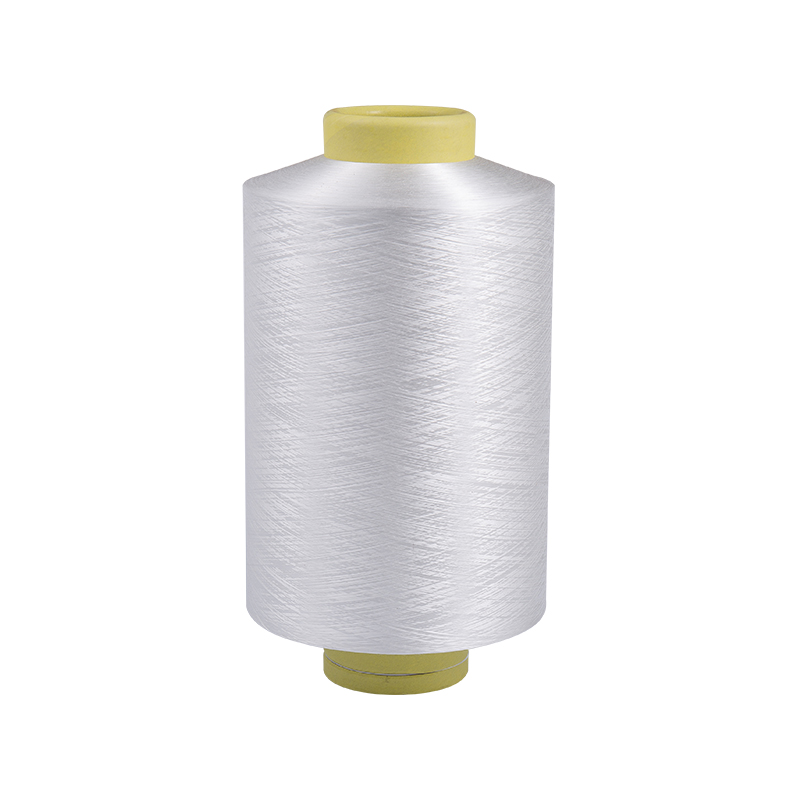
Key Physical and Mechanical Properties of Polyester DTY Yarn
Polyester DTY yarn combines the inherent durability of polyester with texturing-induced comfort features. Its physical and mechanical properties influence fabric behavior during weaving, knitting, and end use.
- Stable tensile strength suitable for high-speed textile processing
- Controlled elasticity that improves fabric resilience and shape retention
- Uniform crimp distribution contributing to consistent fabric appearance
- Low moisture absorption with reliable dimensional stability
These properties allow polyester DTY yarn to perform reliably in both circular knitting and warp knitting environments, supporting stable fabric formation and reduced defect rates.
Common Applications of Polyester DTY Yarn in Textile Manufacturing
Polyester DTY yarn is selected for applications where a balance between comfort, durability, and appearance is required. Its versatility supports use across multiple textile segments.
- Knitted apparel such as sportswear, casual wear, and inner layers
- Upholstery and decorative fabrics requiring moderate elasticity
- Curtains and home textiles where bulk and drape are important
- Blended fabrics combined with cotton or spandex for functional performance
The adaptability of polyester DTY yarn allows it to meet different market requirements without significant changes to downstream fabric production processes.
Dyeing Performance and Color Consistency
Polyester DTY yarn is typically dyed using disperse dyes, benefiting from polyester’s stable molecular structure. The textured surface increases dye uptake uniformity, helping achieve even coloration across fabric surfaces.
Consistent crimp formation supports predictable dye penetration, reducing shade variation during batch dyeing. This stability is particularly important for large-scale apparel production where color consistency directly affects product acceptance.
Comparison Between Polyester DTY Yarn and Other Polyester Yarn Types
Understanding how polyester DTY yarn differs from other polyester yarns helps manufacturers select suitable materials for specific fabric structures.
| Yarn Type | Surface Texture | Elasticity | Typical Use |
| DTY | Textured, crimped | Moderate | Knitted and comfort fabrics |
| FDY | Smooth | Low | Woven fabrics |
| POY | Semi-oriented | Low | Further processing |
Processing Considerations in Knitting and Weaving
When using polyester DTY yarn in knitting or weaving, tension control and machine settings play an important role in maintaining yarn integrity. The textured structure responds differently to stress compared with smooth filament yarns, requiring balanced feed tension to prevent uneven loops or fabric distortion.
Proper yarn storage and conditioning before production also help stabilize crimp recovery, supporting consistent fabric quality throughout the manufacturing process.
Quality Evaluation Criteria for Polyester DTY Yarn
Evaluating polyester DTY yarn quality involves examining both visual and performance-related factors. Uniform crimp, consistent linear density, and stable elongation behavior are commonly assessed during incoming inspection.
Yarn quality directly influences downstream fabric appearance, hand feel, and long-term durability, making careful selection an important step for textile manufacturers focused on consistent production outcomes.



GLOBAL BUSINESS
Backed by stable production capacity and integrated manufacturing and trading capabilities, Zhenyi Chemical Fiber is committed to serving customers in international markets. Our team provides responsive support throughout product selection, order coordination, export documentation and shipment arrangements. We aim to build long-term partnerships through consistent product quality, clear communication and dependable service.
Ready to Begin?
Categories
Contact Information

 +86-18258373586
 No. 318 Huiye Road, Fengming Subdistrict, Tongxiang, Jiaxing, Zhejiang, China.
Copyright © ZHENYI CHEMICAL FIBER All rights reserved.
