

 English
 Home / News / Industry News / Where Can Special-Shaped Shiny Polyester Monofilament Be Used and What Makes It Visually and Functionally Superior?
Industry News
Where Can Special-Shaped Shiny Polyester Monofilament Be Used and What Makes It Visually and Functionally Superior?
2026-04-09
Content
- 1 What Is Special-Shaped Shiny Polyester Monofilament?
- 2 The Aesthetic Appeal: Light Interaction and Visual Brilliance
- 3 Core Functional Advantages Over Conventional Monofilament
- 4 Application Scenarios in Fashion and Apparel Textiles
- 5 Decorative and Interior Textile Applications
- 6 Industrial and Technical Application Scenarios
- 7 Cross-Sector Performance Comparison by Application Type
- 8 Selecting the Right Cross-Section Profile for Specific End Uses
What Is Special-Shaped Shiny Polyester Monofilament?
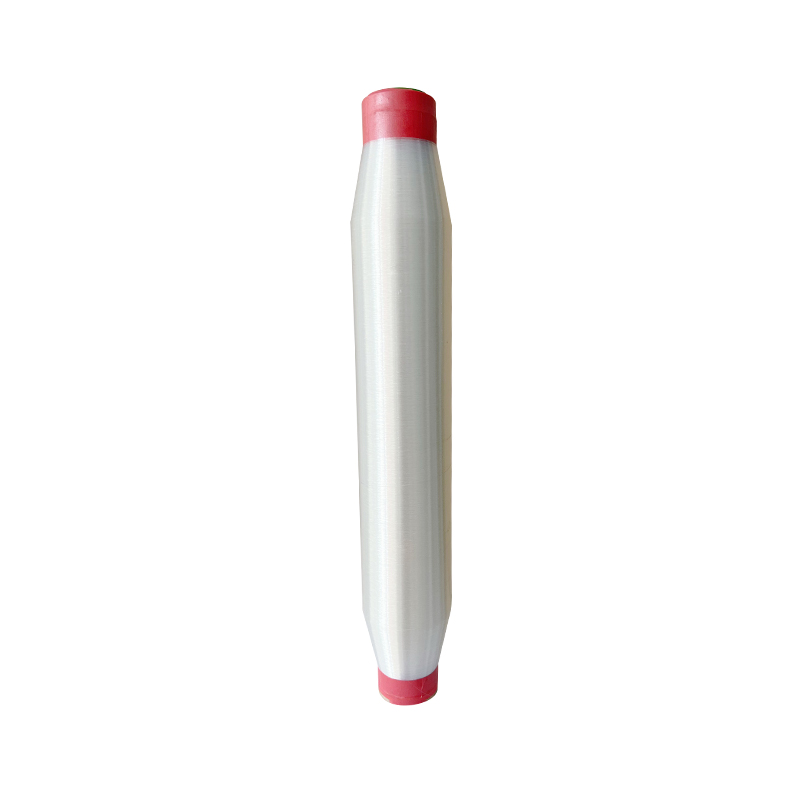
Special-shaped shiny polyester monofilament is a single-strand synthetic fibre extruded from polyethylene terephthalate (PET) polymer through a spinneret die that produces a non-circular cross-sectional geometry. Unlike conventional round monofilament — where the circular cross-section distributes light reflections uniformly in all radial directions — special-shaped variants are manufactured with trilobal, flat, ribbon, hexagonal, or other polygonal profiles that interact with incident light in fundamentally different ways. These geometric cross-sections create multiple planar facets along the filament's length, each acting as a micro-mirror that reflects, refracts, and scatters light at different angles simultaneously, producing the characteristic high-luster, multidirectional brilliance that distinguishes this material from both standard monofilament and conventional multifilament yarns.
The shiny appearance is further enhanced by the optical properties inherent to polyester: PET has a refractive index of approximately 1.57–1.64 depending on crystallinity and draw ratio, which is significantly higher than that of nylon (1.52–1.54) or polypropylene (1.49), resulting in stronger internal reflection and a more intense surface lustre at equivalent filament dimensions. Combined with the geometric cross-section, this optical characteristic makes special-shaped shiny polyester monofilament one of the most visually dynamic single-fibre materials available to textile designers and industrial fabricators.
The Aesthetic Appeal: Light Interaction and Visual Brilliance
The aesthetic value of special-shaped shiny polyester monofilament is inseparable from its geometry. To understand why it produces a visually richer effect than round monofilament or flat metallic yarns, it is necessary to consider how the filament's cross-section interacts with light at different angles of incidence and observation.
Multidirectional Reflection and the Sparkle Effect
A round monofilament produces a single specular highlight — a bright point of reflected light that moves predictably as the viewing angle changes. A flat ribbon filament produces a broad, mirror-like reflection across its width but is directionally dependent, appearing brilliant when its flat face is oriented toward the light source and almost invisible when viewed edge-on. Special-shaped cross-sections — particularly trilobal and hexagonal profiles — simultaneously present multiple planar and curved surfaces at different orientations along the filament length as it twists and undulates within a fabric structure. This means that at any given viewing angle, some facets are oriented to produce specular reflections while others scatter light diffusely, and the combination shifts dynamically as the fabric moves or the viewing angle changes. The result is the characteristic animated sparkle — a multiplicity of brief, bright reflections distributed across the fabric surface — that gives special-shaped shiny monofilament its distinctive visual personality.
Colour Depth and Tonal Richness
When special-shaped polyester monofilament is dyed — using disperse dyes applied under heat and pressure — the combination of the dye colour and the geometric light-scattering effect produces a perceived colour depth that exceeds what the same dye concentration would achieve on round fibre. The multiple facets create internal light paths of different lengths through the coloured polymer, generating subtle tonal gradations within a single filament that observers perceive as richness or depth rather than flat, uniform colour. This optical quality is highly valued in fashion and decorative textile applications where colour vibrancy and perceived quality are primary selection criteria.
Core Functional Advantages Over Conventional Monofilament
Beyond its aesthetic properties, special-shaped shiny polyester monofilament offers a set of functional characteristics that distinguish it from round monofilament and from metallic or glass-based lustrous alternatives, making it the preferred material in applications where both performance and appearance are specified.
Improved Fabric Cover and Handle
The non-circular cross-section of special-shaped monofilament produces a higher surface-area-to-mass ratio than a round filament of equal linear density. When woven or knitted into a fabric, this geometry creates more contact area per unit of fibre mass, resulting in better coverage — the ability to fill the fabric plane with less material weight. In practical terms, this means a fabric woven from special-shaped monofilament achieves a fuller, more opaque appearance at lighter fabric weights compared to a round monofilament fabric of equivalent linear density. For applications where lightweight construction is important alongside visual fullness — such as sheer curtain fabrics, lightweight fashion textiles, and decorative net structures — this property directly reduces material consumption without compromising the visual or tactile quality of the finished product.
Wicking and Moisture Transport Enhancement
Trilobal and other multi-lobal cross-section profiles create longitudinal channels along the filament surface — the grooves between the lobes — that function as capillary pathways for moisture transport. When incorporated into active sportswear or functional lining fabrics, these capillary channels facilitate the lateral spreading and evaporation of perspiration more efficiently than smooth round monofilament, which relies entirely on surface tension at its curved outer surface. This wicking enhancement from the geometric cross-section supplements any hydrophilic surface treatment applied to the filament, providing a passive, permanent moisture management mechanism that does not degrade with washing as surface-only treatments can.
Mechanical Properties and Dimensional Stability
The draw ratio and molecular orientation achievable in polyester monofilament extrusion produce tenacity values of 4.0–7.0 cN/dtex depending on the specific polymer grade and processing parameters — sufficient for demanding weaving and knitting applications without the brittleness concerns associated with glass or ceramic lustrous fibres. The inherent stiffness of polyester monofilament, combined with the structural rigidity contributed by the non-circular cross-section's higher second moment of area compared to a round profile of equal mass, provides good dimensional stability in open-structure fabrics such as mesh and lace, where individual filaments must maintain their position within the fabric structure under handling and use stresses.
Application Scenarios in Fashion and Apparel Textiles
The fashion and apparel sector represents the broadest and most visually demanding application domain for special-shaped shiny polyester monofilament. The material's combination of lustrous brilliance, colour depth, and lightweight construction opens application possibilities across multiple product categories.
- Evening and occasionwear fabrics: Special-shaped monofilament is woven into organza, chiffon, and jacquard structures for evening dresses, bridal wear, and formalwear where the animated sparkle effect produces visual drama under artificial lighting conditions typical of event environments. The monofilament's stiffness also contributes to the characteristic crispness and body of organza weaves.
- Activewear and performance fabrics: Trilobal polyester monofilament incorporated into running, cycling, and gym apparel combines the moisture-wicking benefit of the multi-lobe capillary channels with a premium visual finish that differentiates performance garments in a crowded market segment. The sheen characteristic of these fabrics under studio and arena lighting is a deliberate aesthetic choice in premium sportswear design.
- Lingerie and intimate apparel: The lightweight, high-coverage properties of special-shaped monofilament make it a preferred component in the sheer mesh and lace structures used in lingerie, where it provides translucency control, structural integrity, and lustrous surface quality simultaneously at minimal fabric weight.
- Hosiery and legwear: Flat and ribbon-profile polyester monofilament in fine deniers (15–40 dtex) is used in hosiery knitting to produce the characteristic sheen of fashion tights and stockings, providing a more durable and consistently lustrous alternative to nylon monofilament at competitive cost.
Decorative and Interior Textile Applications
Interior textiles represent a major application domain for special-shaped shiny polyester monofilament, where the material's aesthetic properties are exploited in products that require sustained visual appeal over long service lives in demanding installation environments.
Curtain and Sheer Fabric Production
Sheer curtain fabrics woven from special-shaped polyester monofilament produce a distinctive luminous quality when backlit by daylight — the geometric cross-sections scatter and refract the transmitted light in complex patterns that create visual interest and a sense of depth within what is structurally a simple open-weave construction. This optical quality is highly valued in premium residential and hospitality interior design, where curtain fabrics must perform as decorative elements in their own right rather than purely as light-filtering or privacy screens. Polyester monofilament's inherent UV and moisture resistance also ensures that these curtain fabrics maintain their dimensional stability and lustre in window installations exposed to direct sunlight and condensation over periods of years.
Embroidery Threads and Decorative Trims
Special-shaped shiny polyester monofilament in fine to medium deniers (30–150 dtex) is twisted or plied into embroidery threads and decorative trims for upholstery, cushion covers, table linens, and wall textiles. The high abrasion resistance of polyester monofilament — typically superior to that of metallic lurex threads and significantly better than silk — ensures that embroidered details and woven trims incorporating this material maintain their visual integrity through repeated handling, dry cleaning, and exposure to domestic wear conditions that would degrade softer or less chemically stable lustrous fibres.
Industrial and Technical Application Scenarios
Beyond aesthetic applications, the functional properties of special-shaped polyester monofilament make it suitable for a range of technical and industrial end uses where the combination of geometric cross-section and polyester's material characteristics delivers specific engineering benefits.
- Filter media fabrication: Flat and ribbon-profile polyester monofilament is woven into industrial filter fabrics for liquid and air filtration applications. The flat cross-section produces a more uniform, tightly controllable pore geometry than round monofilament at equivalent fabric weight, improving the filtration precision and the cake release characteristics of the filter medium — properties valued in food processing, pharmaceutical manufacturing, and chemical separation applications.
- Papermaking forming fabrics: Flat polyester monofilament is a primary component of forming fabrics used in papermaking machines, where the controlled pore structure of the flat-profile weave provides the drainage uniformity and surface smoothness required for consistent paper formation at high machine speeds.
- Optical and display components: Trilobal and hexagonal polyester monofilament is incorporated into light-diffusion films and privacy screens for display applications, where the geometric cross-sections produce controlled light-scattering patterns that manage viewing angles and screen brightness in electronic display systems.
- Reflective safety textiles: High-refractive-index polyester monofilament with flat or polygonal cross-sections is woven into retroreflective safety fabric components, where the geometric facets contribute to the directional light-return efficiency of the retroreflective system in personal protective equipment and road safety textile applications.
Cross-Sector Performance Comparison by Application Type
| Application Scenario | Primary Cross-Section Used | Key Property Exploited | Advantage vs. Round Monofilament |
|---|---|---|---|
| Evening and bridal fabric | Trilobal / hexagonal | Multidirectional sparkle | Richer visual brilliance |
| Performance activewear | Trilobal | Capillary moisture wicking | Better moisture management |
| Sheer curtain fabrics | Flat / ribbon | Light scattering, coverage | Higher cover at lower weight |
| Industrial filter fabrics | Flat | Controlled pore geometry | More uniform filtration |
| Embroidery and trims | Trilobal / hexagonal | Abrasion resistance, lustre | Longer aesthetic service life |
| Reflective safety textiles | Flat / polygonal | Directional light return | Improved retroreflectivity |
Selecting the Right Cross-Section Profile for Specific End Uses
Specifying special-shaped shiny polyester monofilament for a given application requires matching the cross-section geometry to the dominant performance requirement of the end use. The trilobal profile is the most versatile option for fashion and decorative applications, delivering balanced sparkle, moderate wicking enhancement, and good processability on standard weaving and knitting equipment. The flat or ribbon profile is preferred where high coverage, controlled light diffusion, or precise filtration geometry is the primary objective — its broad face maximises surface area per unit mass at the cost of more directionally dependent reflectance. The hexagonal profile represents an intermediate choice with more facets than a trilobal but better packing efficiency than a ribbon, making it suited to dense woven structures where the combination of full coverage and multidirectional reflection is required simultaneously.
Linear density selection — the fineness of the monofilament measured in decitex or denier — further differentiates product performance within each cross-section family. Fine deniers (15–50 dtex) are specified for hosiery, lingerie mesh, and sheer fabrics where handle softness and transparency are critical. Medium deniers (50–150 dtex) suit fashion outerwear, curtain fabrics, and embroidery applications. Coarse deniers (150 dtex and above) are appropriate for industrial filter fabrics, structured decorative weaves, and technical applications where mechanical rigidity is required alongside the optical or geometric cross-section benefits. By combining cross-section geometry with appropriate linear density, formulators and fabric designers can access a wide performance space from a single fibre chemistry — which is a significant practical advantage of special-shaped polyester monofilament as a material platform.


GLOBAL BUSINESS
Backed by stable production capacity and integrated manufacturing and trading capabilities, Zhenyi Chemical Fiber is committed to serving customers in international markets. Our team provides responsive support throughout product selection, order coordination, export documentation and shipment arrangements. We aim to build long-term partnerships through consistent product quality, clear communication and dependable service.
Ready to Begin?
Categories
Contact Information

 +86-18258373586
 No. 318 Huiye Road, Fengming Subdistrict, Tongxiang, Jiaxing, Zhejiang, China.
Copyright © ZHENYI CHEMICAL FIBER All rights reserved.
