

 English


Industry News
Polyester vs Acrylic Fabric: Properties, Comparison, and How to Block
2026-03-23
Content
- 1 Polyester and Acrylic: Two Synthetic Fibers That Are Frequently Confused
- 2 Polyester Is a Synthetic Fiber: What That Means at the Molecular Level
- 3 What Is Acrylic Fabric Made Of
- 4 Acrylic Fabric vs. Polyester: A Practical Comparison
- 5 Is Acrylic or Polyester Better? It Depends on the Application
- 6 How to Block Polyester Yarn
- 7 Care and Maintenance: Polyester and Acrylic in Daily Use
Polyester and Acrylic: Two Synthetic Fibers That Are Frequently Confused
Polyester and acrylic are both synthetic fibers derived from petrochemical processes, both are washable, both resist moisture, and both are widely used in apparel, home textiles, and industrial applications. The surface similarities are real, and the two fibers are often marketed alongside each other or blended with natural fibers in similar product categories. But their molecular structure, physical properties, performance characteristics, and the ways in which they should be handled in production and care are meaningfully different.
Understanding what each fiber is made from, how it behaves in use, and where one outperforms the other is the basis for making informed decisions in fabric selection, garment care, and textile specification -- whether you are a consumer choosing between sweater options, a knitter deciding which yarn to work with, or a buyer sourcing fabric for a specific end use. This guide covers the chemistry, properties, practical performance, and comparative evaluation of both fibers, alongside the specific question of how to block polyester yarn -- a technique that applies the physical properties of these synthetic fibers in a practical textile craft context.
Polyester Is a Synthetic Fiber: What That Means at the Molecular Level
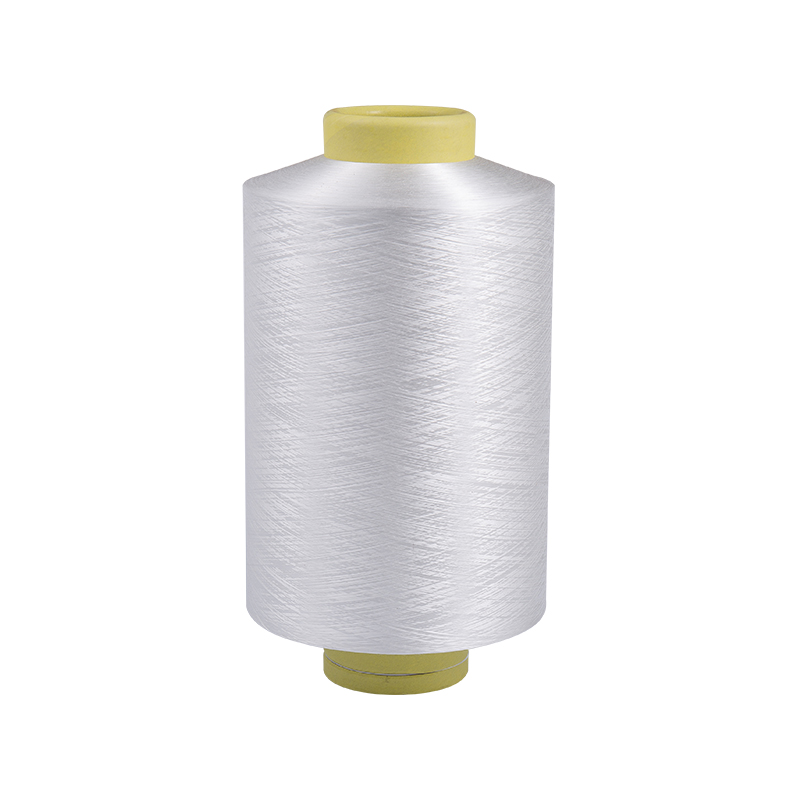
Polyester is a synthetic fiber produced by the polymerization of petrochemical-derived monomers into long-chain polymer molecules that are then extruded through spinnerets to form continuous filaments or staple fiber lengths. The term polyester describes a family of polymers linked by ester bonds (chemical bonds formed between a hydroxyl group and a carboxyl group with the elimination of water), but in the textile industry, polyester almost universally refers to polyethylene terephthalate (PET) -- the specific polyester formed from ethylene glycol and terephthalic acid.
How Polyester Is Made
PET polyester is produced in a two-stage process. First, ethylene glycol and terephthalic acid (or dimethyl terephthalate) are reacted at elevated temperature in the presence of a catalyst to produce polyethylene terephthalate polymer in the form of chips or pellets. The polymer chips are then melted and extruded through a spinneret -- a metal plate with multiple precisely sized holes -- to form continuous filaments that are cooled, drawn (stretched to orient the molecular chains and increase tensile strength), and wound onto bobbins. Polyester filament yarn can be used directly for weaving or knitting, or it can be cut into short staple lengths and processed like natural fiber for spinning into spun yarn.
The molecular orientation achieved by drawing the filaments is the key step that gives polyester its high tensile strength: the long PET polymer chains align along the fiber axis during stretching, and the regular, closely packed chain structure that results has a higher degree of crystallinity and therefore higher mechanical strength and thermal stability than an undrawn fiber. This orientation is also the property that makes polyester fibers thermally stable in use -- they resist deformation and maintain their shape up to temperatures approaching their glass transition temperature -- but it also means that once the fiber has been heat-set into a specific shape, it requires heat to reshape it.
Physical Properties of Polyester Fiber
The molecular structure of PET gives polyester fiber a specific set of physical properties that determine its performance in textiles:
- Low moisture absorption: Polyester absorbs less than 0.4% of its weight in moisture under standard conditions. This near-hydrophobic character means polyester fabrics dry quickly, resist water staining, and do not lose strength when wet -- but also that perspiration is not absorbed into the fiber and moisture must be moved across the fabric surface by wicking construction to be comfortable next to skin during physical activity.
- High tensile strength and abrasion resistance: Polyester is one of the strongest textile fibers in common use, with breaking tenacities of 4 to 8 grams per denier depending on grade and drawing conditions. It resists abrasion well, which contributes to its durability in high-wear applications such as workwear, sportswear, bags, and upholstery.
- Good chemical resistance: Polyester resists most household chemicals, dilute acids, and alkalis, and is not affected by the solvents and oxidizing agents present in most domestic care products. This makes it easy to launder and relatively tolerant of cleaning error.
- Excellent shape retention and wrinkle resistance: The high crystallinity of oriented polyester gives fabrics good dimensional stability and resistance to creasing, which is why polyester or polyester blends are standard in formalwear, workwear, and any application where press retention through the day is required.
- Low dye affinity in standard acid and reactive dye systems: The dense, hydrophobic structure of polyester resists penetration by the dye molecules used for natural and some synthetic fibers. Polyester requires disperse dyes applied at high temperature and pressure (thermosol process or high-temperature exhaust dyeing) for deep, fast color. This dyeing complexity is a production consideration but does not affect the end user.
- Susceptibility to static charge buildup: The low moisture content of polyester means it does not dissipate electrostatic charge efficiently, leading to static cling in fabrics, particularly in dry environments. Antistatic finishes and fiber modifications address this in performance and specialty applications.
What Is Acrylic Fabric Made Of
Acrylic fabric is made from acrylic fiber, which is a synthetic fiber produced by the polymerization of acrylonitrile (a small molecule derived from propylene, itself a petrochemical product) into polyacrylonitrile (PAN), a polymer chain in which every repeat unit contains a nitrile (CN) group. The nitrile groups in the PAN chain create strong intermolecular attractions between adjacent chains, giving the fiber its bulk, resilience, and resistance to compression.
The Polymerization and Spinning Process
Acrylonitrile is typically copolymerized with small amounts of one or two other monomers (vinyl acetate, methyl acrylate, or similar comonomers) to modify the polymer's dyeability, softness, and processing characteristics. The proportion of acrylonitrile in the polymer must be at least 85% by weight for the fiber to be classified as acrylic under the definitions used in the United States (Federal Trade Commission fiber content rules) and Europe (EU Regulation No. 1007/2011 on textile fiber names).
Unlike polyester, which is melt-spun directly from the molten polymer, acrylic cannot be melt-spun because PAN degrades before it melts. Acrylic fiber is produced by solution spinning: the polymer is dissolved in a solvent (dimethylformamide, dimethyl sulfoxide, or sodium thiocyanate solution depending on the manufacturer and process), and the solution is extruded through spinnerets into a coagulation bath where the polymer precipitates from solution as solid filaments. The filaments are drawn, washed, crimped (to add bulk and handle), and cut to staple lengths for spinning into yarn.
The crimping step is particularly important for acrylic fiber destined for the knitwear and blanket markets: the three-dimensional crimp imparted to the fiber creates bulk, traps air between fibers in the yarn structure, and produces the fluffy, wool-like texture that makes acrylic a widely used alternative to wool in sweaters, blankets, and craft yarns.
Physical Properties of Acrylic Fiber
The nitrile-rich molecular structure of acrylic fiber produces a distinct property profile compared to polyester:
- Soft, wool-like bulk and warmth: Acrylic fiber has a lower density than polyester (approximately 1.17 g/cm3 vs. 1.38 g/cm3 for PET), and its crimped staple structure traps more air per unit weight. This makes acrylic fabrics feel lighter and warmer than equivalent-weight polyester fabrics, and gives acrylic knitwear its characteristic soft, voluminous handle that closely resembles wool.
- Good colorfastness with acid dyes: The cationic dyeability imparted by the comonomer content of standard acrylic fiber allows dyeing with basic (cationic) dyes that produce bright, saturated colors with good light fastness. The color range and vibrancy achievable on acrylic exceeds what can be practically achieved on polyester in many standard dyeing operations.
- Good UV resistance: Acrylic resists degradation from ultraviolet light exposure better than most natural fibers and comparable to polyester, making it suitable for outdoor textiles, awning fabrics, and outdoor furniture covers.
- Moderate tensile strength: Acrylic is weaker than polyester in tensile strength (breaking tenacity typically 2 to 3 grams per denier compared to 4 to 8 for polyester) and more prone to pilling -- the formation of small fiber balls on the fabric surface from abrasion -- particularly in knitwear. Pilling is the most common consumer complaint about acrylic fabric and is inherent to its staple fiber, lower-strength character.
- Low moisture absorption: Like polyester, acrylic absorbs little moisture (approximately 1 to 2% under standard conditions), giving it quick-dry properties and resistance to mildew and odor retention in most non-athletic use contexts.
- Poor heat resistance compared to polyester: Acrylic has a lower softening temperature than polyester and is significantly more sensitive to heat in laundering, drying, and ironing. High-temperature drying can cause irreversible shrinkage and distortion of acrylic fabrics, and acrylic cannot be ironed at the temperatures used for cotton or polyester.
Acrylic Fabric vs. Polyester: A Practical Comparison
The comparison between acrylic fabric and polyester is best understood by looking at how the differences in their molecular structure translate into differences in practical performance across the dimensions that matter to the end user -- warmth, comfort, durability, care, and value.
| Property | Acrylic Fabric | Polyester Fabric |
|---|---|---|
| Base polymer | Polyacrylonitrile (PAN), min. 85% acrylonitrile | Polyethylene terephthalate (PET) |
| Fiber production | Solution spinning | Melt spinning |
| Warmth (insulation) | Higher (bulk traps more air) | Lower in standard construction |
| Texture and handle | Soft, wool-like, fluffy | Smooth (filament) or softer (staple) |
| Tensile strength | Moderate | High |
| Pilling resistance | Lower (more prone to pilling) | Higher (stronger fiber resists pill formation) |
| Heat resistance | Lower (sensitive to heat in washing and drying) | Higher (tolerates higher wash and dry temperatures) |
| Moisture wicking | Limited | Better (especially in performance constructions) |
| UV resistance (outdoor use) | Good | Good |
| Color vibrancy | Excellent (bright, saturated with cationic dyes) | Good (disperse dyes, good fastness) |
| Typical applications | Sweaters, blankets, craft yarn, fleece, carpets | Sportswear, workwear, upholstery, linings, geotextiles |
Is Acrylic or Polyester Better? It Depends on the Application
The question of whether acrylic or polyester is better has no universal answer because the two fibers are optimized for different performance requirements. The better choice in each context is determined by what properties matter most for the specific application.
When Acrylic Is the Better Choice
Acrylic is the better fiber when warmth, softness, and a wool-like aesthetic are the primary requirements. In knitwear, sweaters, winter accessories (scarves, hats, gloves), and blankets, acrylic delivers the bulk, insulation, and soft drape of wool at a significantly lower price point, with the added practical advantages of machine washability and resistance to moth damage. For craft knitting and crochet, acrylic yarn is the dominant choice precisely because it combines workability, color range, washability, and cost in a way that wool, alpaca, and other premium yarns cannot match for everyday or children's projects.
Acrylic is also the better choice for applications where outdoor color retention is the primary requirement alongside reasonable durability -- outdoor furniture fabrics made from solution-dyed acrylic (where the pigment is incorporated into the fiber during production rather than applied to the finished fabric) are among the most fade-resistant textiles available, and brands such as Sunbrella have made solution-dyed acrylic a standard for premium outdoor fabric.
When Polyester Is the Better Choice
Polyester is the better fiber when durability, performance moisture management, dimensional stability, or high-temperature tolerance are the primary requirements. In sportswear and activewear, polyester microfiber constructions engineered for moisture wicking outperform acrylic because polyester's lower moisture absorption allows the fabric surface to remain drier and the fiber construction to channel perspiration away from the skin. In workwear, upholstery, and high-wear casual wear, polyester's higher tensile strength and better abrasion and pilling resistance translate to longer garment life and better appearance retention.
Polyester is also the better choice when the fabric will be subjected to regular high-temperature laundering -- in healthcare, hospitality linen, and industrial workwear where thermal disinfection or high-temperature washing is part of the care protocol, polyester's higher heat tolerance makes it the more suitable fiber. Acrylic at the same wash temperature would shrink and deform.
Blends: Getting the Best of Both
Many commercial fabrics and yarns blend acrylic and polyester to combine the warmth and softness of acrylic with the strength and shape retention of polyester. Acrylic-polyester blends are common in fleece fabrics, knitwear, and craft yarns, and the blend ratio can be adjusted to emphasize either the warmth and handle of the acrylic end or the durability and structural stability of the polyester end depending on the product requirement.
How to Block Polyester Yarn
Blocking is the process of wetting, shaping, and drying a knitted or crocheted piece to set it to its intended finished dimensions and shape. It is a standard finishing step for handknitted garments and accessories made from natural fibers -- wool in particular responds dramatically to blocking, opening up the stitch pattern, evening out the tension, and producing the smooth, professional finish that distinguishes a blocked piece from an unblocked one.
Polyester yarn presents a specific challenge for blocking because of its molecular structure. Wool and other natural fibers can be blocked with water alone -- the moisture swells the fiber, the piece can be reshaped under tension, and the fiber sets to its new shape as it dries. Polyester cannot be blocked this way. The highly oriented, crystalline structure of PET polyester is essentially unaffected by water at room temperature, and a wet polyester piece pinned to a blocking board will simply dry back to its pre-blocking shape with no permanent change.
Why Polyester Requires Heat to Block
Polyester is a thermoplastic fiber -- its molecular structure can be temporarily disrupted and reset by heat, but not by water. The glass transition temperature of PET (approximately 70 to 80 degrees Celsius) is the threshold above which the polymer chain segments in the amorphous regions of the fiber become mobile enough to rearrange under applied stress. If the fiber is heated above this temperature, reshaped while hot, and then cooled while held in the new shape, the fiber sets permanently in that configuration. This is the principle used in industrial heat-setting of polyester fabrics to fix dimensional stability, pleat retention, and crease resistance.
For handknitters and crocheters working with polyester yarn, this means that effective blocking requires applying heat -- specifically steam heat -- to the pinned piece rather than water alone.
Step-by-Step: How to Block Polyester Yarn with Steam
Steam blocking is the recommended method for blocking polyester yarn. It applies the heat needed to temporarily soften the polymer while simultaneously introducing moisture that prevents scorching of the fiber surface. The following process produces effective results on most polyester and polyester-blend yarns:
- Prepare the blocking surface: Use a padded blocking mat, foam interlocking tiles, or a folded towel on a flat, heat-tolerant surface. The surface must accept blocking pins and be stable enough to hold the pinned piece undisturbed during cooling.
- Measure and pin the piece to finished dimensions: Pin the knitted or crocheted piece to the blocking surface at the target finished dimensions using rustproof blocking pins or blocking wires. For lace patterns, pin each individual point or scallop to define the lace structure fully. The piece should be stretched or eased to the intended measurement, not beyond it.
- Apply steam with a steam iron or garment steamer: Hold a steam iron or garment steamer 2 to 5 centimeters above the surface of the pinned piece without touching the fabric. Apply steam evenly across the entire piece, moving the iron or steamer slowly to avoid concentrating heat in one area. The goal is to introduce steam heat throughout the fiber without pressing or distorting the stitch structure. Do not press the iron directly onto the fabric -- direct contact at iron temperatures will permanently flatten the stitch texture and may scorch or melt the fiber.
- Allow the piece to cool completely before removing pins: The fibers are resetting to their new configuration as they cool below the glass transition temperature. Removing pins while the piece is still warm -- or while it is still damp from the steam -- will allow the piece to spring back toward its original shape before the new configuration is set. Cooling time is typically 30 minutes to several hours depending on the weight and construction of the piece.
- Remove pins and assess the result: After the piece has cooled fully and been removed from the pins, the blocked dimensions and stitch definition should be noticeably improved over the unblocked state. If the piece has not held its shape adequately, a second round of steam blocking at slightly higher steam intensity can be applied, taking care not to exceed the fiber's safe heat tolerance.
Blocking Results on Polyester vs. Natural Fibers
The blocking response of polyester yarn is more limited than that of wool. Wool can be stretched substantially during blocking -- up to 20 to 30% beyond its original dimensions in some cases -- and will hold those stretched dimensions permanently once dry. Polyester, even with steam, will not stretch as readily or hold as large a dimensional change. The primary benefit of blocking polyester is evening out tension inconsistencies, opening up lace patterns, and smoothing the surface appearance of the finished piece rather than achieving significant dimensional adjustment.
Acrylic yarn responds to steam blocking similarly to polyester but with slightly lower heat tolerance -- the same steam-and-cool method applies, but care must be taken not to over-expose acrylic to high-temperature steam, which can permanently alter the texture and softness of the fiber. Craft knitters sometimes refer to deliberately killing acrylic yarn -- exposing it to high-temperature steam or direct iron contact to permanently set it and eliminate its stretch -- as a finishing technique for specific applications such as toys and amigurumi that benefit from a firmer, non-stretchy fabric.
Blocking Polyester Blends
Yarns that blend polyester with wool, cotton, or other natural fibers can be blocked using a combination of wet and steam methods, but the blocking response will reflect the blend composition. A predominantly wool yarn with a small polyester content will block well with the standard wet method, with the polyester proportion providing additional shape retention after blocking. A predominantly polyester yarn with a small natural fiber content will require the steam method, with the natural fiber component providing some additional moisture response. In all cases, the most heat-sensitive component of the blend (which for wool-polyester blends is the wool) sets the upper limit for safe blocking temperature.
Care and Maintenance: Polyester and Acrylic in Daily Use
Knowing the correct care approach for polyester and acrylic fabrics extends their useful life and prevents the most common forms of damage. The two fibers have different sensitivities, and the care instructions on garment labels reflect these differences.
Washing Polyester
Polyester garments and fabrics can generally be washed at 40 to 60 degrees Celsius in a standard washing machine. Higher temperatures are not typically needed for hygiene purposes -- polyester does not harbor odor-causing bacteria in the fiber itself -- and very high temperatures (above 60 degrees Celsius) can cause some shrinkage in loosely constructed fabrics. Tumble drying at medium heat is generally safe for polyester, though high heat settings over time can cause pilling and surface degradation of the fiber. Polyester is highly susceptible to odor retention from synthetic sebum and body oils, which are not fully removed by standard cool water washing -- higher water temperatures, longer wash cycles, or specialist sportswear detergents formulated to penetrate hydrophobic fiber surfaces are more effective for odor removal from polyester activewear.
Washing Acrylic
Acrylic fabrics should be washed at 30 to 40 degrees Celsius -- cool to warm water -- to prevent shrinkage and distortion. Machine washing at the gentle or delicate cycle setting is recommended for knitwear and heavier acrylic fabrics to prevent excessive agitation that would cause felting-like compaction of the staple fiber structure. Tumble drying at low heat or air-drying flat is recommended; high heat tumble drying causes irreversible shrinkage and can permanently change the texture and feel of acrylic knitwear. Acrylic should not be wrung out -- twisting wet acrylic can stretch or distort the fabric permanently.
Ironing and Heat Exposure
Polyester can be ironed at low to medium heat settings (typically marked as the synthetic setting on an iron temperature dial), with a pressing cloth used to prevent direct iron contact that would cause glazing or melting of the fiber surface. Acrylic should not be ironed directly -- it melts at low iron temperatures -- and steam ironing without contact (holding the iron above the fabric surface) is the safest approach for acrylic garments that need wrinkle removal. Neither fiber should be exposed to high heat from a barbecue, campfire, or similar source -- both will melt rather than char as natural fibers would.

GLOBAL BUSINESS
Backed by stable production capacity and integrated manufacturing and trading capabilities, Zhenyi Chemical Fiber is committed to serving customers in international markets. Our team provides responsive support throughout product selection, order coordination, export documentation and shipment arrangements. We aim to build long-term partnerships through consistent product quality, clear communication and dependable service.
Ready to Begin?
Categories
Contact Information

 +86-18258373586
 No. 318 Huiye Road, Fengming Subdistrict, Tongxiang, Jiaxing, Zhejiang, China.
Copyright © ZHENYI CHEMICAL FIBER All rights reserved.
