

 English
 中文简体
中文简体 Español
 عربى
عربى
 Home / News / Industry News / What Makes Semi-Bright Polyester Monofilament Ideal for Industrial Applications?
Industry News
What Makes Semi-Bright Polyester Monofilament Ideal for Industrial Applications?
2026-06-04
Content
- 1 Understanding Semi-Bright Polyester Monofilament
- 2 Key Properties of Semi-Bright Polyester Monofilament
- 3 Manufacturing Process and Material Composition
- 4 Comparison with Other Polyester Monofilament Types
- 5 Major Industrial Applications
- 6 Advantages Over Alternative Materials
- 7 Factors to Consider When Selecting Semi-Bright Polyester Monofilament
- 8 Future Trends and Market Outlook
Understanding Semi-Bright Polyester Monofilament
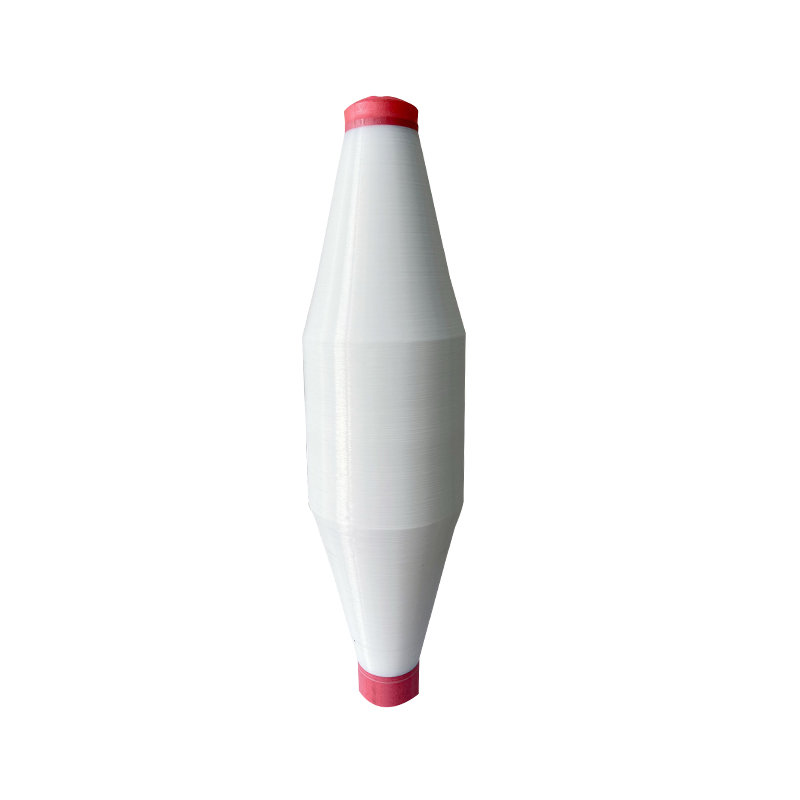
Semi-Bright Polyester Monofilament is a single-strand synthetic filament produced from polyester polymers and engineered to provide a balanced appearance between glossy and dull finishes. The term "semi-bright" refers to the controlled reduction of luster achieved during manufacturing, typically through the addition of titanium dioxide. This characteristic creates a softer visual appearance while maintaining the strength, durability, and chemical resistance that polyester materials are known for.
Due to its excellent mechanical properties and consistent performance, Semi-Bright Polyester Monofilament has become an important material in numerous industrial sectors. It is widely used in filtration fabrics, screen printing meshes, industrial textiles, papermaking fabrics, agricultural nets, and various technical applications where durability and dimensional stability are essential.
Manufacturers often choose semi-bright variants because they offer an attractive combination of functionality and appearance. The reduced gloss minimizes reflection while preserving the performance characteristics required in demanding environments.
Key Properties of Semi-Bright Polyester Monofilament
The popularity of Semi-Bright Polyester Monofilament stems from its unique combination of physical and chemical properties. These characteristics allow the material to perform reliably under various operating conditions.
- High tensile strength that enables long-term use in demanding industrial applications.
- Excellent abrasion resistance that helps maintain structural integrity during repeated use.
- Low moisture absorption, allowing consistent performance in humid environments.
- Good dimensional stability under varying temperatures and mechanical loads.
- Resistance to many chemicals, oils, and solvents commonly encountered in industrial processes.
- Balanced semi-bright appearance that reduces glare and improves visual uniformity.
These features make the material suitable for applications that demand both aesthetic consistency and high-performance functionality. The ability to maintain strength while resisting environmental influences contributes significantly to its widespread use.
Manufacturing Process and Material Composition
Polymer Preparation
The production of Semi-Bright Polyester Monofilament begins with high-quality polyester resin. The polymer is carefully selected to ensure consistency in viscosity, molecular weight, and purity. These factors directly influence the final filament's mechanical properties and processability.
Melt Extrusion
During extrusion, the polyester resin is melted and forced through precision spinnerets. The molten polymer forms continuous single filaments that are immediately cooled and solidified. This stage determines the initial diameter and shape of the monofilament.
Drawing and Orientation
The newly formed filament undergoes a drawing process where it is stretched under controlled conditions. Drawing aligns the polymer molecules, significantly increasing tensile strength, stiffness, and dimensional stability. Proper molecular orientation is essential for achieving the desired performance characteristics.
Luster Modification
To create the semi-bright appearance, manufacturers add carefully measured quantities of titanium dioxide during polymer preparation. This additive scatters light and reduces surface shine, resulting in a softer and more uniform finish without compromising mechanical performance.
Comparison with Other Polyester Monofilament Types
Different polyester monofilament variants are available to meet specific application requirements. Understanding their differences helps buyers select the most appropriate material.
| Property | Bright Polyester | Semi-Bright Polyester | Full-Dull Polyester |
| Luster | High | Moderate | Low |
| Visual Reflection | Strong | Balanced | Minimal |
| Industrial Usage | Specialized | Extensive | Specific |
| Appearance | Glossy | Balanced | Matte |
Semi-Bright Polyester Monofilament occupies a practical middle ground, providing reduced reflection without sacrificing the versatility required for large-scale industrial use.
Major Industrial Applications
Filtration Systems
One of the most significant applications of Semi-Bright Polyester Monofilament is industrial filtration. The material's strength, chemical resistance, and precise diameter control allow manufacturers to create filtration fabrics capable of separating particles with high efficiency. Industries such as water treatment, chemical processing, food production, and pharmaceuticals rely on polyester monofilament filters for dependable performance.
Screen Printing Mesh
Screen printing operations require mesh materials with excellent dimensional stability and consistent opening sizes. Semi-Bright Polyester Monofilament provides the necessary precision while reducing unwanted light reflection during inspection and production processes. This contributes to improved print quality and process control.
Papermaking Fabrics
Modern papermaking machines operate under demanding conditions involving moisture, tension, and continuous movement. Polyester monofilament fabrics are commonly used in forming, pressing, and drying sections. Their durability and resistance to hydrolysis help ensure long service life and stable paper production.
Agricultural Nets
Agricultural applications benefit from the weather resistance and durability of Semi-Bright Polyester Monofilament. It is frequently incorporated into protective nets, shade structures, crop support systems, and anti-insect barriers. The material withstands prolonged outdoor exposure while maintaining structural performance.
Industrial Fabrics
Many technical textiles require a combination of flexibility, strength, and wear resistance. Polyester monofilaments are woven into conveyor belts, safety products, reinforcement materials, and other engineered fabrics where reliability is critical.
Advantages Over Alternative Materials
When compared with other synthetic and natural materials, Semi-Bright Polyester Monofilament offers several important advantages that contribute to lower operating costs and improved performance.
- Long service life reduces replacement frequency and maintenance requirements.
- Superior dimensional stability helps maintain product consistency.
- Excellent resistance to moisture prevents swelling and distortion.
- Reliable performance across a wide range of temperatures.
- Good compatibility with automated manufacturing processes.
- Cost-effective balance between performance and production efficiency.
These advantages explain why polyester monofilaments continue to replace less durable materials in many industrial environments where operational efficiency is a priority.
Factors to Consider When Selecting Semi-Bright Polyester Monofilament
Choosing the appropriate monofilament specification requires careful evaluation of the intended application. Several technical parameters influence overall performance and suitability.
- Filament diameter and tolerance requirements.
- Required tensile strength and elongation characteristics.
- Exposure to chemicals, moisture, or ultraviolet radiation.
- Operating temperature range.
- Fabrication methods and weaving requirements.
- Desired visual appearance and reflection characteristics.
Collaborating with experienced suppliers can help ensure that the selected filament meets both technical and commercial objectives. Detailed performance testing is often recommended before full-scale implementation.
Future Trends and Market Outlook
Demand for high-performance industrial materials continues to grow as manufacturing processes become more advanced and quality standards become stricter. Semi-Bright Polyester Monofilament is expected to remain an important material due to its adaptability, durability, and cost efficiency.
Manufacturers are increasingly investing in process optimization, precision diameter control, and sustainable production techniques. Enhanced recycling technologies and improved energy efficiency are also shaping the future of polyester monofilament manufacturing.
As industries seek materials that combine reliability with long-term value, Semi-Bright Polyester Monofilament will continue to play a vital role in filtration, industrial textiles, agriculture, printing, and many other technical applications. Its balanced appearance, strong mechanical performance, and broad application range make it a preferred choice for organizations focused on efficiency, durability, and product quality.

GLOBAL BUSINESS
Backed by stable production capacity and integrated manufacturing and trading capabilities, Zhenyi Chemical Fiber is committed to serving customers in international markets. Our team provides responsive support throughout product selection, order coordination, export documentation and shipment arrangements. We aim to build long-term partnerships through consistent product quality, clear communication and dependable service.
Ready to Begin?
Categories
Contact Information

 +86-18258373586
 No. 318 Huiye Road, Fengming Subdistrict, Tongxiang, Jiaxing, Zhejiang, China.
Copyright © ZHENYI CHEMICAL FIBER All rights reserved.
